
Link: https://www.ictbusiness.biz / business / ai-changes-how-software-is-created
AI Changes How Software Is Created
Ericsson Nikola Tesla no longer views artificial intelligence solely as a tool that helps developers write code, but as part of the entire software development lifecycle. At the upcoming ENT Technology Days, taking place from 21 to 25 September, artificial intelligence will also be among the central topics.
Siniša Krajnović, PhD, President of the Management Board of ENT, sees the transformation brought about by artificial intelligence through products, internal processes, and changes in the way work itself is performed, while Jelena Jurišić, Director of Technology of the ENT Group (CTO), explains how specialized AI agents are now part of analysis, design, implementation, testing, and verification. In such a model, autonomy increases gradually, with quality control and human decision-making at critical points. At the same time, the change does not diminish the importance of engineers, but increasingly shifts their role toward architecture, domain understanding, and the management of complex automated systems.
At 5:42 a.m., no one has opened a laptop yet, but part of a software project has already progressed. One AI agent has reviewed a business requirement and identified ambiguities. A second has transformed it into structured development requirements. A third searches for contradictions and gaps, a fourth compares the requirements with the technical design, a fifth converts the design into code, a sixth prepares test scenarios, and a seventh verifies whether every important decision can be traced back to the original requirement.
Such a scenario effectively illustrates the idea behind a new approach to software development. AI agents have not been introduced to produce as much code as possible. Each has a clearly defined role, an expected outcome that can be verified, and boundaries within which it operates, while decisions at critical points remain the responsibility of humans.
The change is far broader than a situation in which a developer asks generative AI to write a particular function. It is a model in which specialized digital agents work alongside people in the development team. This also changes the very question of development capacity: it is no longer important only how many developers participate in a project, but also how much additional engineering capability can be created by AI agents working together with them.
For Ericsson Nikola Tesla, Croatia’s largest ICT company, where more than 2,000 of its nearly 3,000 experts are engaged in software development and related engineering activities, this is no longer a theoretical question. The transformation has already begun.
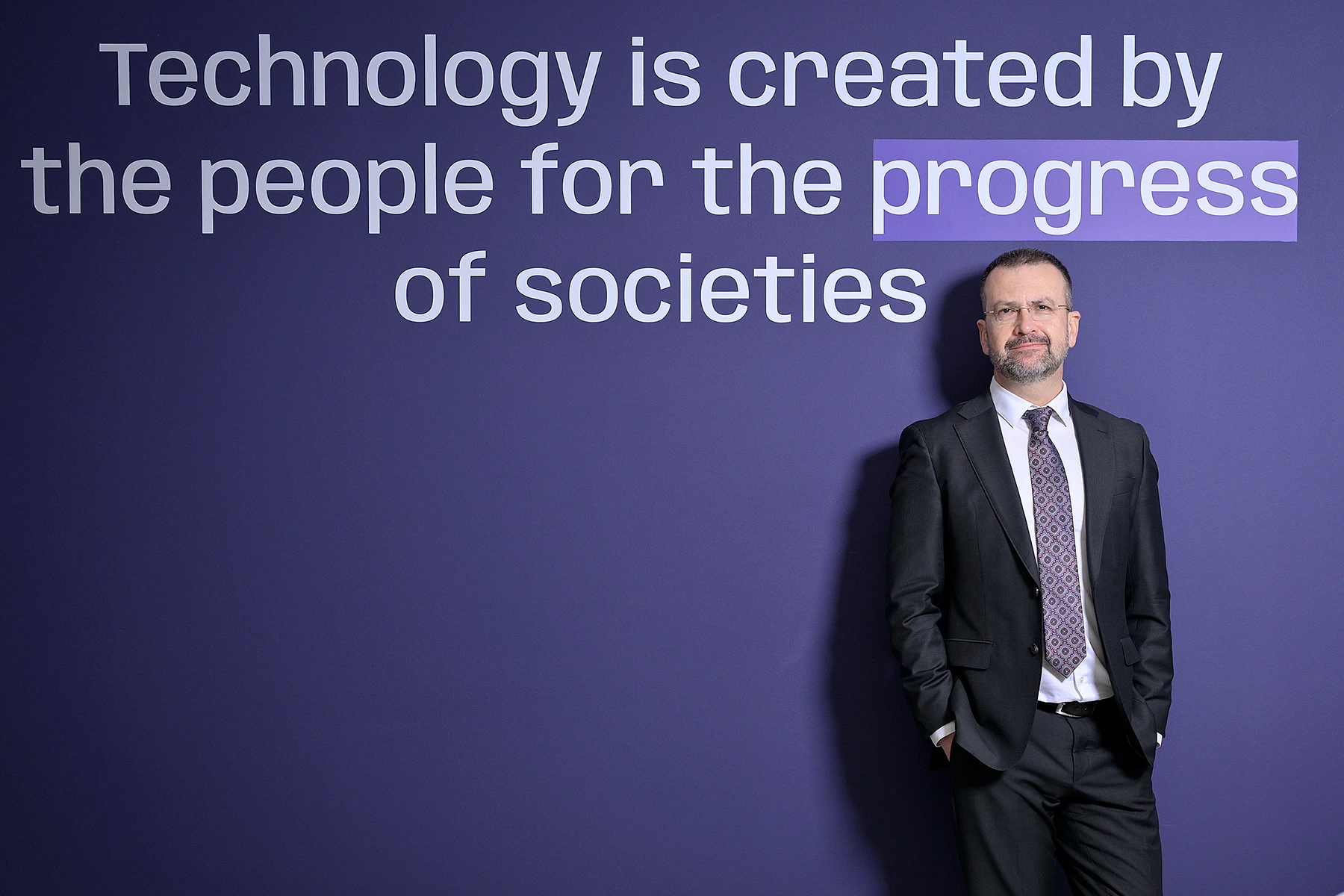
Siniša Krajnović, President of the Management Board of Ericsson Nikola Tesla, places the change in a much broader context than simply introducing new AI tools.
“For us, AI transformation is not about introducing a few new tools. It is already taking place in three interconnected areas. The first is the development of AI capabilities in solutions and products for our customers. The second is the use of AI in our own processes to become faster, deliver higher quality, and operate more efficiently. The third goes even deeper: we are changing the way software is created,” emphasizes Krajnović.
Such a change is not taking place separately from technology users. It is precisely their needs, business processes and expectations that represent an important part of the direction in which the company develops new solutions.
Krajnović points out that customers are one of the main reasons why the company continuously challenges itself to find better ways of working. He is particularly encouraged by working with customers who have a clear vision and seek to be leaders in using technology to improve business processes, enhance service quality, support better decision-making and create new business opportunities.
“At the ENT Technology Days, we will place a special emphasis on artificial intelligence, automation and new digital capabilities,” says Krajnović.
Technology, however, is only one part of the transformation. The other is organizational and relates to the way new technology is introduced, validated and gradually deployed throughout the company.
The transformation began with a central team of people who recognized the potential of artificial intelligence early on and were willing to experiment.
“Someone has to pave the way, test what works and create a framework within which new technology can be safely scaled,” explains Krajnović.
Such an initial team is only the first step. The real impact emerges when experience begins to spread throughout the organization. For that reason, Agentic SDLC is not something that is designed once and then considered complete. It evolves together with the people who use it.
Through real projects, engineers discover where artificial intelligence delivers the greatest value, where additional control is required, what can be automated, and in which areas human expertise remains irreplaceable.
And it is precisely this process that becomes an important source of continuous improvement. Each new use case, each identified weakness and each high-quality solution can improve ways of working beyond the boundaries of a single project or a single team.
Knowledge is therefore no longer accumulated solely through individual experience. It can be shared across the entire engineering system.
“This ability to learn collectively is one of the greatest strengths of the approach we are building,” underlines Krajnović.
Jelena Jurišić, Director of Technology at ENT Group (CTO), further explains the technological aspect of this transformation. The key difference between the conventional use of generative AI and the approach being developed by the company is that artificial intelligence does not stop at code generation.
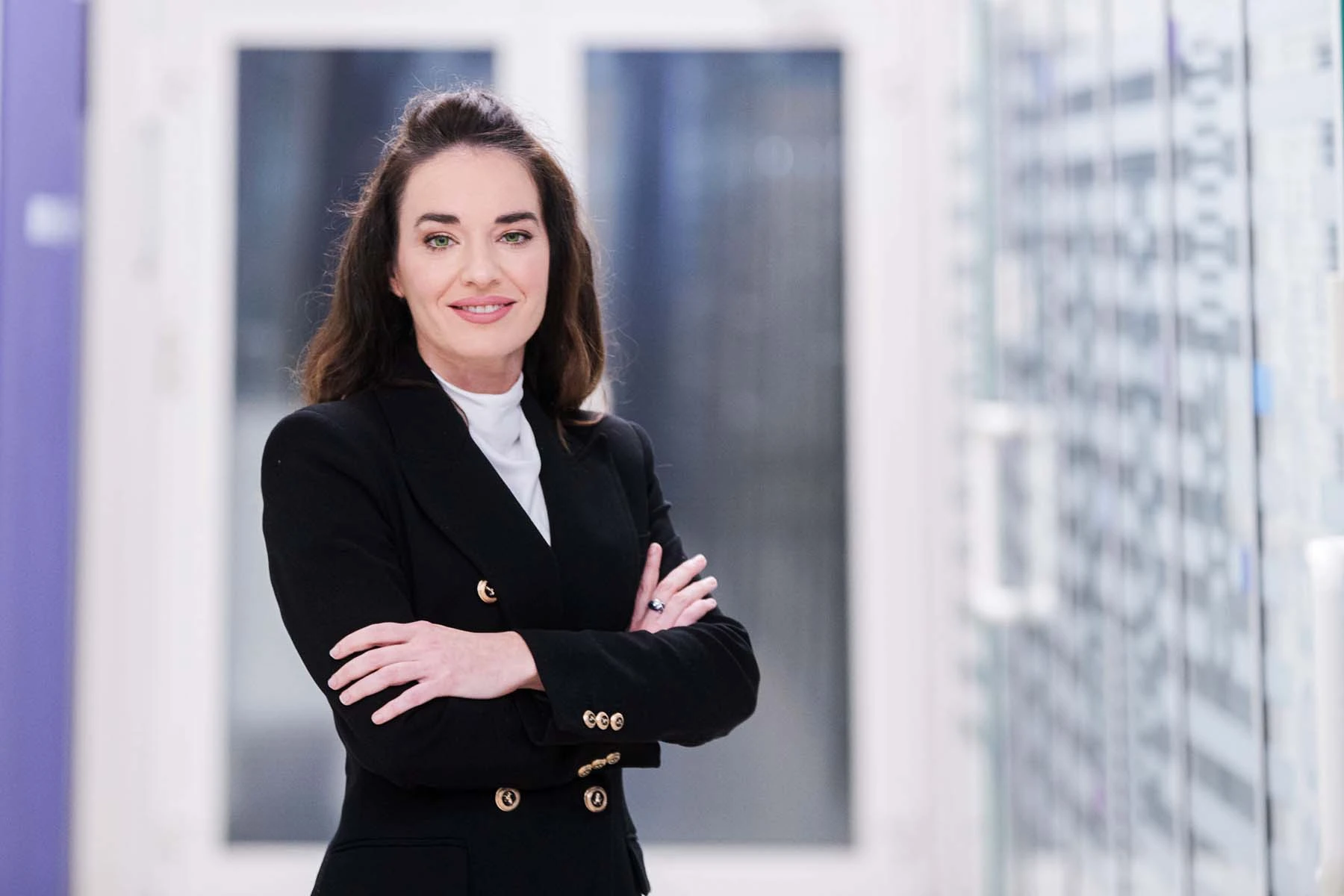
“Code generation is the most visible aspect of generative AI, but it is not necessarily the most important one. The development of serious software begins long before the first line of code and ends much later,” says Jurišić.
Behind the final code lie analysis, requirements, design, architecture, implementation, testing, verification, documentation, and traceability. This is precisely why Ericsson Nikola Tesla is moving toward an Agentic SDLC in which specialized AI agents participate in different stages of the software development lifecycle.
One agent may analyze scope, another may structure requirements, a third may independently verify them, while other agents may assist with design, implementation, verification or documentation.
“AI is no longer just a tool that assists an individual developer. It is becoming a part of the way an entire development team plans, builds, validates and delivers software,” explains Jurišić.
At the same time, the expansion of artificial intelligence across the development process raises one of the most important questions of the entire concept: how much control should be entrusted to an automated system.
Krajnović warns that speed alone is not evidence of a successful transformation.
“Speed in itself is not transformation. If we do something twice as fast but lose control over quality, we have not made progress,” he notes.
For that reason, the model being developed by Ericsson Nikola Tesla is not conceived as a system in which artificial intelligence independently determines the next step or independently concludes that the outcome meets the required level of quality.
Jurišić explains that each agent has a limited scope of responsibility, while the process itself defines the sequence of activities, expected outcomes, and the points at which quality control or human decision-making is required.
“Our principle is simple: autonomy must grow together with evidence,” emphasizes Jurišić.
Such a development of artificial intelligence inevitably changes the question of the role of people. If AI can take over some of the tasks traditionally performed by developers, particularly writing portions of program code, the question arises whether the developer will become less important.
Krajnović believes exactly the opposite.
“The developer of the future will not be less important because AI can write part of the code. Their value will increasingly shift toward architectural decisions, domain understanding, solving complex problems, quality assurance and managing increasingly capable automated systems,” he highlights.
A similar change applies to architects, analysts, QA specialists and engineering leaders. For this reason, in addition to investing in technology, the company is placing a strong emphasis on the people who will use that technology.
The breadth of interest within the company is also reflected in concrete figures. More than 300 ideas were submitted through this year’s Innovation Challenge, while more than 80 participants were organized into 17 teams at the ENT AI Hackathon.
In large engineering organizations, the agentic approach becomes particularly important because the greatest challenge is often not writing a single functionality but maintaining alignment and consistency across the many components of a complex system.
Requirements must be aligned with one another, APIs must follow the data model, implementation must correspond to the design, and testing must confirm that what was planned has in fact been delivered.
Jelena Jurišić sees this complexity precisely as an area in which artificial intelligence can bring new value.
“AI can continuously connect and validate a large number of artifacts, identify deviations and inconsistencies earlier and reduce the need for subsequent modifications,” she emphasizes.
This represents a shift from AI whose primary role is content generation toward a system that can help maintain consistency, quality and traceability throughout the entire software development lifecycle.
Such an approach, according to Ericsson Nikola Tesla, also allows Croatia to strengthen its position in the AI transformation.
Siniša Krajnović notes that technological leadership no longer depends solely on the location of a global company’s headquarters. It increasingly depends on the concentration of knowledge, the quality of people, and an organization’s ability to transform new technology into real value.
Ericsson Nikola Tesla has a strong engineering foundation and, according to Krajnović, the company’s R&D center holds a leading position among Ericsson’s development centers in terms of quality, delivery and innovation. Its teams have spent decades developing complex software and building competencies for 5G and future 6G technologies.
“It is precisely this combination of knowledge, experience and scale that gives us a strong position among the leaders of AI transformation in Croatia and beyond,” noted Krajnović.
The success of the transformation will not be measured by the number of AI tools in use, the number of prompts written or the number of agents deployed.
Jelena Jurišić points out that the important metrics are those linked to actual engineering outcomes: how much time passes from an idea to a high-quality solution, how many iterations are required, how early issues are detected, how complete traceability is, and how much human time can be redirected toward activities where people create the greatest value.
In this way, the ultimate vision of the transformation returns to where the story began, not to the number of AI tools, but to the way an organization creates technology.
“Our vision is not a company that has simply adopted AI. We want to be a company that has learned to work in an entirely new way because of AI. We are already changing how we conceive, develop, verify and deliver software, how we improve our own processes and how we create new value for customers. We are building an organization in which people and intelligent agents together create engineering capability unlike anything we have had before,” emphasizes Krajnović. For him, this change in mindset may be the most important part of the entire process.
“For decades, Ericsson Nikola Tesla has participated from Croatia in the creation of technology used around the world. Today, we are entering a new chapter in which we are no longer transforming only products and processes; we are transforming the very capability to create technology. And we are already building that chapter from Croatia, together with our people and customers, for Croatia and for the world,” concluded Krajnović.