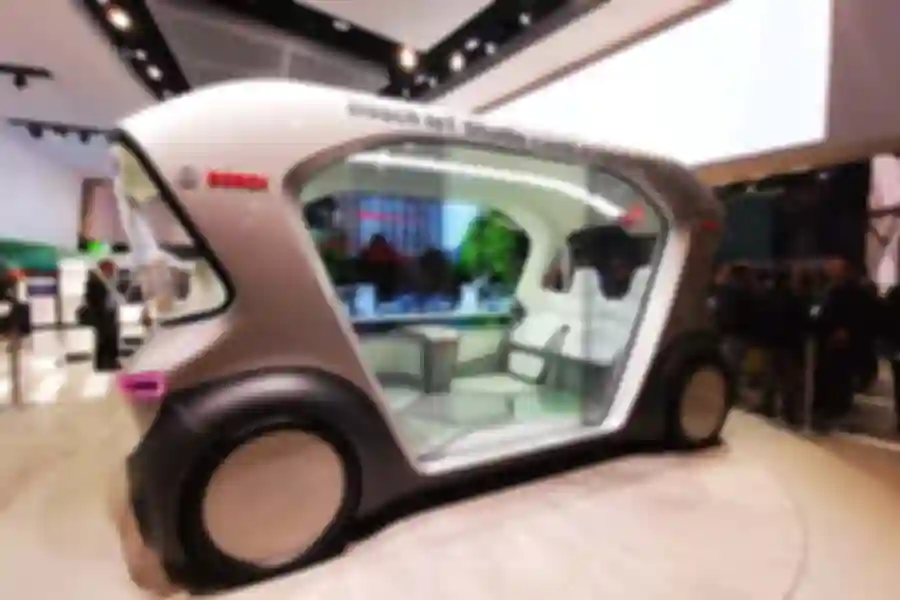
“Like a Bosch“ is the tagline of a new global image campaign the supplier of technology and services launched at CES. The campaign aims to get the message across that Bosch is the leading provider of connected products and solutions.
The main plank of the campaign is a hip-hop video clip featuring a protagonist who is a savvy IoT user. Bosch is entering new territory with its “Like a Bosch“ campaign; the decidedly different approach and tone marks a departure for the company, which was founded in 1886. This move capitalizes on a rash of “like a boss“ videos and memes that have gone viral on the internet, attracting tens of millions of clicks.
These videos feature everyday people who stage bizarre stunts, perform impressive athletic feats, or find their way out of predicaments with technical finesse. The corporate “Like a Bosch“ campaign changes a few letters in order to put a fresh spin on this internet phenomenon. The young man in the Bosch video is always on top of things, thanks to connected solutions from Bosch. Smartphone in hand, he operates his car, lawn mower, or coffee machine in a cool, smart, and confident way, he’s in charge of things “like a Bosch.“
“We’ve picked up on a global internet sensation and reinterpreted it with a humorous touch,“ says Boris Dolkhani, head of brand management at Bosch. “Where the internet of things is concerned, all roads lead to Bosch. That’s the campaign’s clear message.“ The company aims to spark a viral IoT movement, spreading this message across all the relevant communication channels in order to reach a mass audience.
Bosch is counting on its 400,000 or more associates to further the cause by liking and sharing these videos. Further clips featuring products for the two IoT domains of connected mobility and connected living are to follow later in the year. The image campaign created by Jung von Matt, a Hamburg, Germany-based advertising agency, is to be rolled out across digital and social media channels.
Automated systems and bots now generate more than half of internet traffic, forcing hosting companies to manage performance, security, and infrastructure costs at the same time. Ivan Čačija argues that business users are no longer buying only storage and computing resources, but the availability and performance of their own operations. AI will reshape both data-centre management and infrastructure requirements, while regional providers can compete through local presence, predictable costs and hybrid models. Fastserver sees its partnership with Blackwall as part of a broader shift towards an integrated platform combining infrastructure, security, traffic protection and automation.
The President of the European Commission, Ursula von der Leyen, has unveiled comprehensive plans to restrict children’s access to social media platforms through the proposed EU Kids Act.
Ericsson Nikola Tesla no longer views artificial intelligence solely as a tool that helps developers write code, but as part of the entire software development lifecycle. At the upcoming ENT Technology Days, taking place from 21 to 25 September, artificial intelligence will also be among the central topics.
Siniša Krajnović, PhD, President of the Management Board of ENT, sees the transformation brought about by artificial intelligence through products, internal processes, and changes in the way work itself is performed, while Jelena Jurišić, Director of Technology of the ENT Group (CTO), explains how specialized AI agents are now part of analysis, design, implementation, testing, and verification. In such a model, autonomy increases gradually, with quality control and human decision-making at critical points. At the same time, the change does not diminish the importance of engineers, but increasingly shifts their role toward architecture, domain understanding, and the management of complex automated systems.