Orange Gets EC Approval to Buyout Partner in MasOrange
The European Commission gave the green light for Orange to buy out its joint venture partner in Spanish operator MasOrange.

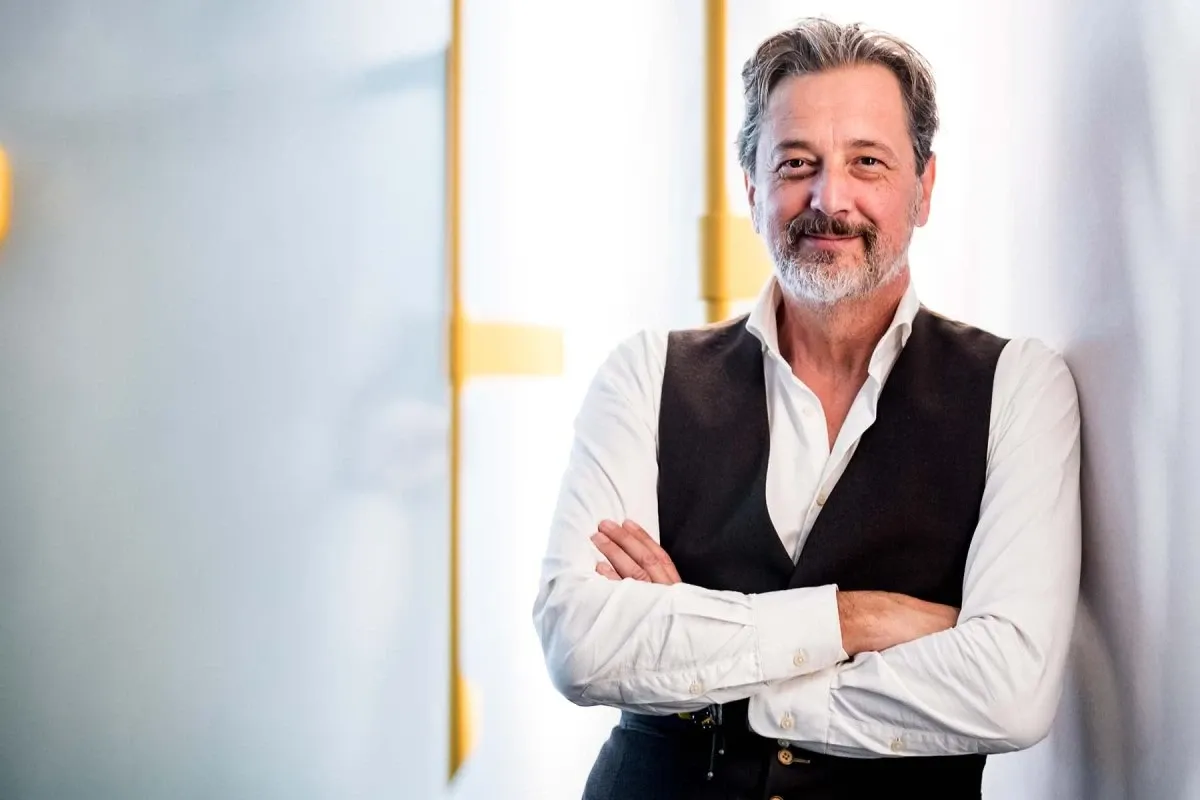
There is a term that has been appearing increasingly often in strategic discussions over the past few years, and is understood increasingly less often: resilience. In corporate language, resilience is often reduced to security copies, backup plans, and supplier diversification. For ICTbusiness Media – ICTbusiness.info, Rik Vera, a futurist engaged in strategic thinking under conditions of permanent uncertainty, considers that definition insufficient and actually wrong.
In his words, a resilient organization, according to Vera, is not one that absorbs a shock and returns to its previous state, but one that uses the shock as a learning mechanism and emerges from it with new capacities. That is a difference that changes everything: from the way teams and processes are structured, to how organizations think about partnerships, data, and competitive advantage. In an interview with ICTbusiness.info, Vera goes through the ecosystem economy as a framework that is increasingly replacing the logic of the value chain, through what generative AI and platformization are changing in the rules of competition, and through what he considers the greatest psychological obstacle for leaders – the conviction that they must own the customer and control value instead of sharing it.
Chief executives who built their careers on planning, control, and system optimization are today facing a paradox: precisely those skills that brought them to the top may be keeping them trapped in a logic that no longer works. In 2026, as AI agents increasingly take over routine decision-making and platforms and ecosystems redesign industry after industry, the question of what remains for leaders is becoming ever more urgent.
How can organizations build antifragile strategies that not only absorb disruptions but also use them to create new value in the ecosystem economy?
Most companies still design strategies for a world that no longer exists. They try to predict the future and protect themselves against it. That creates robustness, not antifragility.
Antifragile organizations do the opposite. They assume that shocks will happen and design their organization so that every shock becomes a learning mechanism. This requires three things.
First, short feedback loops with the outside world. Markets, technologies, and customers are evolving faster than internal planning cycles. Companies that continuously listen and adapt will learn faster than those that try to control.
Second, ecosystem thinking. Value is no longer created inside a single company but across networks of partners, platforms, data, and capabilities. The question is no longer “what do we produce?” but “what ecosystem do we enable?”
Third, a culture that rewards experimentation. If failure is punished, people will protect the system. If learning is rewarded, people will explore.
Antifragile companies don't resist chaos. They use chaos as an innovation engine.
In 2026, marked by constant geopolitical and technological shocks, how can C-level executives be convinced to stop building merely robust systems?
Executives often believe stability is the objective. It isn’t.
The world has moved from predictable change to permanent volatility. Robust systems survive shocks. Antifragile systems learn from them.
The problem is psychological. Leaders built their careers in an era where control and planning were rewarded. Today, those skills are no longer enough.
The shift happens when leaders realize one thing:
The real risk is not disruption.
The real risk is being perfectly optimized for a world that no longer exists.
Once executives understand that their current success formulas are becoming liabilities, they become much more open to experimentation, ecosystems, and adaptive structures.
If AI agents take over operational management, what remains for human leaders?
AI will automate many decisions and operational processes. That’s inevitable.
But leadership was never supposed to be about managing spreadsheets and workflows.
Human leaders must move up one level. Their role becomes:
AI optimizes systems.
Humans give them direction and meaning.
In the future, managers will manage fewer processes and more possibilities.
How can leaders develop a culture of radical curiosity and experimentation?
Curiosity is not a personality trait. It is a design choice.
Organizations that kill curiosity usually do three things:
If leaders want curiosity, they must reverse those incentives.
Reward questions, not only answers.
Reward exploration, not only execution.
Reward learning speed, not only performance.
Children are naturally curious.
Organizations slowly train people not to be.
Leadership is about re-instating curiosity into the system.
How are global trends like generative AI and platformization changing competitive advantage?
For decades, companies competed through scale, efficiency, and products.
In the next decade, competitive advantage will increasingly come from three sources:
Ecosystem position: your role in networks of partners and platforms.
Data intelligence: how well you learn from interactions.
Human creativity: the ability to combine technologies in unexpected ways.
The winners will not necessarily be the companies with the best products. They will be the companies that sit at the center of value networks.
How can ecosystem thinking be applied to traditional industries?
Traditional industries often think in terms of value chains. But value chains are linear.
The world has become networked. Take mobility. The future is not about cars. It is about mobility ecosystems, including software, energy, infrastructure, insurance, data, and services.
Healthcare is not about hospitals anymore.
It is about health ecosystems connecting prevention, diagnostics, data, AI, and lifestyle.
Companies must stop asking: “What product do we sell?” And start asking: “What problem do we solve together with others?”
What competencies do leaders need to identify new sources of value?
Three stand out.
Systems thinking: understanding how industries and technologies interact.
Curiosity: constantly exploring signals outside the organization.
Imagination: connecting ideas that seem unrelated.
Technology creates possibilities. Human imagination turns possibilities into value.
How can organizations redesign structures to leverage unexpected change?
The traditional hierarchy was built for efficiency and control. Future organizations must be designed for adaptability. This means:
In other words, companies must start behaving more like ecosystems themselves.
How can traditional companies compete when value is created in ecosystems?
The biggest barrier is psychological. Many leaders still think they must own the customer. But in ecosystems, value is shared.
Companies that try to control everything become slow and isolated. Companies that enable others to create value around them become indispensable. The future belongs to orchestrators, not owners.

The European Commission gave the green light for Orange to buy out its joint venture partner in Spanish operator MasOrange.

An acquisition of Telecom Italia’s wholesale unit Sparkle was cleared by the European Commission’s competition authority.

This week, Infobip marked the 20th anniversary of its founding.