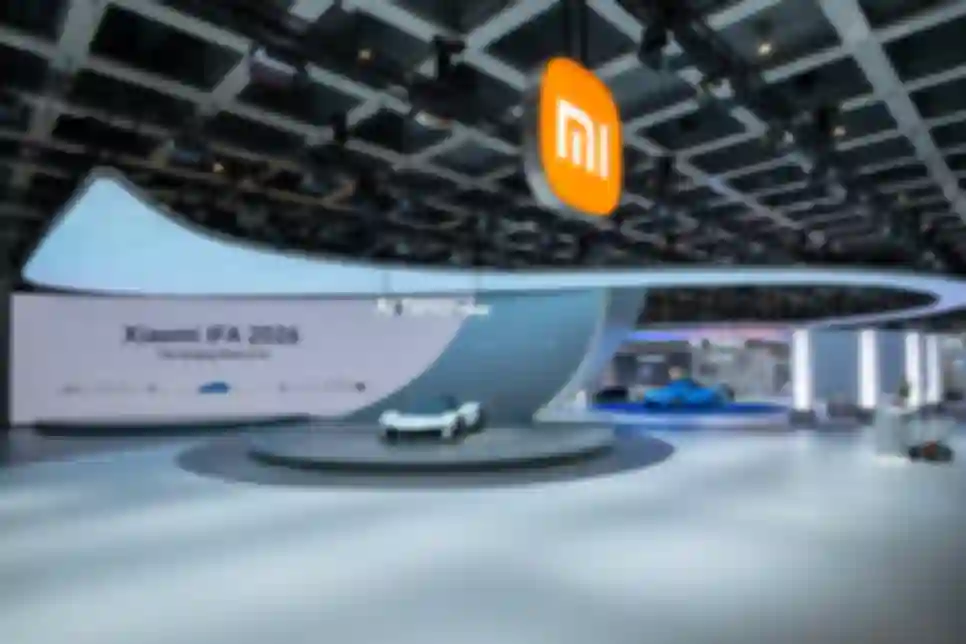
Xiaomi has made a significant debut at IFA 2026 in Berlin, occupying a standalone exhibition space of over 3,300 square meters, its largest overseas presence to date. Featuring a collection of more than 380 products alongside forward-looking technological demonstrations, the exhibit showcases the comprehensive reach of the "Human × Car × Home" smart ecosystem. The display highlights Xiaomi's focus on personal, home, and mobility sectors, illustrating how integrated AI can coordinate across diverse environments to deliver more intuitive and seamless experiences for users in their daily lives.
"This year's IFA marks a significant milestone in Xiaomi's global journey," said Xu Fei, CMO of Xiaomi. "Over the years, we have expanded from smartphones into smart home and smart vehicles, while investing deeply in foundational technologies including AI, operating systems, chips, and smart manufacturing. Today, these businesses and capabilities are coming together through our 'Human × Car × Home' smart ecosystem, which we are presenting at scale to a global audience at IFA. Europe is an important market in Xiaomi's global strategy. With Mijia expanding at scale across Europe and Xiaomi Auto expected to enter the European market in 2027, the three core parts of our ecosystem will begin to come together in the region. This goes beyond bringing more products to Europe. It is about bringing Xiaomi's technology and ecosystem capabilities to more users across the region."
The exhibition is structured around three primary zones: AI Tomorrow, AI Today, and the Human x Car x Home Product Portfolio. These areas guide visitors from conceptual future technologies to the intelligent solutions available in the current market. Specifically, the AI Tomorrow section explores the future of intelligent mobility through the Xiaomi Vision Gran Turismo, showcasing the intersection of automotive design and performance technology. Meanwhile, the AI Today zone focuses on practical applications, utilizing the Xiaomi SU7 Max and various home settings to demonstrate how AI effectively coordinates personal devices, vehicles, and smart home hardware around real-world needs.
Spanish telecommunications group Telefónica and Portuguese telecommunications and IT company NOS Comunicações have agreed to strengthen their cooperation in developing advanced digital technologies for European defense and security applications. The agreement covers secure communications, advanced connectivity and digital services intended to support military operations, autonomous systems and other emerging defense requirements. The partnership also reflects the growing importance of telecommunications infrastructure in Europe's efforts to strengthen technological sovereignty and improve interoperability between national defense systems.
Artificial intelligence is no longer a specialised experiment in web development; it is part of programmers’ daily work. “There is no job in which we do not use artificial intelligence,” Hrvoje Nekić, CEO of WEB Marketing, tells ICTbusiness Media – ICTbusiness.info. He sees the change as both a productivity opportunity and the beginning of a different relationship between users and software.
Daytona, the technology company led by Croatian entrepreneur Ivan Burazin, has raised $60 million in a Series B funding round that values the business at $1 billion. The round was led by FirstMark Growth and brings total capital raised to $91 million. The company is building infrastructure that enables autonomous AI agents to execute complex digital tasks in their own computing environments.