

Google Set to Launch Its AI Chips into Orbit
Google has announced plans to deploy a selection of its artificial intelligence processors into orbit this week.

Google has announced plans to deploy a selection of its artificial intelligence processors into orbit this week.

A coalition including Volvo, Daimler Truck, Toyota, Bosch, Air Liquide, TotalEnergies, TEAL Mobility, and MB Energy announced strategies to accelerate the implementation of hydrogen-powered vehicles across Europe.

At its annual Apsara conference, Alibaba introduced a suite of new Qwen AI models alongside what it called China’s most powerful AI processor and an agentic smartphone solution.

Qualcomm has introduced its latest flagship mobile platforms, which the company asserts will facilitate a wide array of intelligent capabilities.

The United Kingdom Atomic Energy Authority (UKAEA) and the Princeton Plasma Physics Laboratory (PPPL) have agreed to link their respective supercomputing platforms to accelerate the development of fusion energy through the use of AI.

Xiaomi has introduced its new Xring O3 smartphone processor, a move that highlights the Chinese manufacturer’s continued efforts to decrease its dependence on third-party chip suppliers.

OpenAI has just unveiled benchmark data for "Jalapeno," its custom inference chip developed with Broadcom.

Anthropic confirmed it is building an in-house silicon team to design custom chips for its Claude AI model.

Equipped with a fuel-cell power module (FCPM) from Bosch, an Irizar bus has been transporting passengers through the Spanish capital for several weeks now.

Converting a conventional data center into AI-ready infrastructure requires several times more electrical power, liquid cooling, and substantially greater structural load capacity.

Samsung added three new foldable smartphones to its lineup at the Galaxy Unpacked event in London.

Samsung announced redesigned screen technology intended to cut crease visibility and improve the durability of foldable smartphones.

A1 teamed up with Nokia and weather forecast service Skyfora to detect interference affecting Global Navigation Satellite Systems (GNSS) through sensors.

IBM unveiled a major semiconductor breakthrough with the introduction of the world’s first sub-1-nanometer (nm) chip technology, featuring a revolutionary transistor architecture at the 0.7 nm, or 7 angstrom, node.
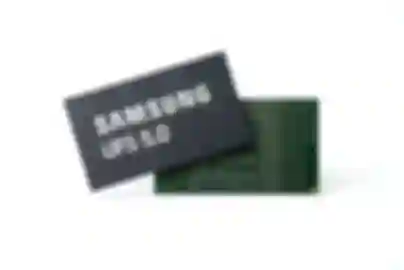
Samsung developed the industry’s fastest Universal Flash Storage (UFS) 5.0 solution, which will help enable seamless and highly efficient AI services on future mobile devices.
NVIDIA powers more than 400 of the world’s 500 fastest supercomputers, 81% of the TOP 500, according to the latest rankings.

Samsung announced that it has begun shipping the industry’s first 12-layer HBM4E samples to major global customers.

In recent years, Moore's Law, which has guided the semiconductor industry for more than five decades, has faced severe physical limits and diminishing economic returns.

IBM and the US Department of Commerce (DoC) announced a Letter of Intent to build an American quantum chip foundry.

Samsung and Google unveiled a pair of smart glasses designs set to be released in selected markets later this year.


