


EU Outlines Plans for Social Media Limits
The President of the European Commission, Ursula von der Leyen, has unveiled comprehensive plans to restrict children’s access to social media platforms through the proposed EU Kids Act.
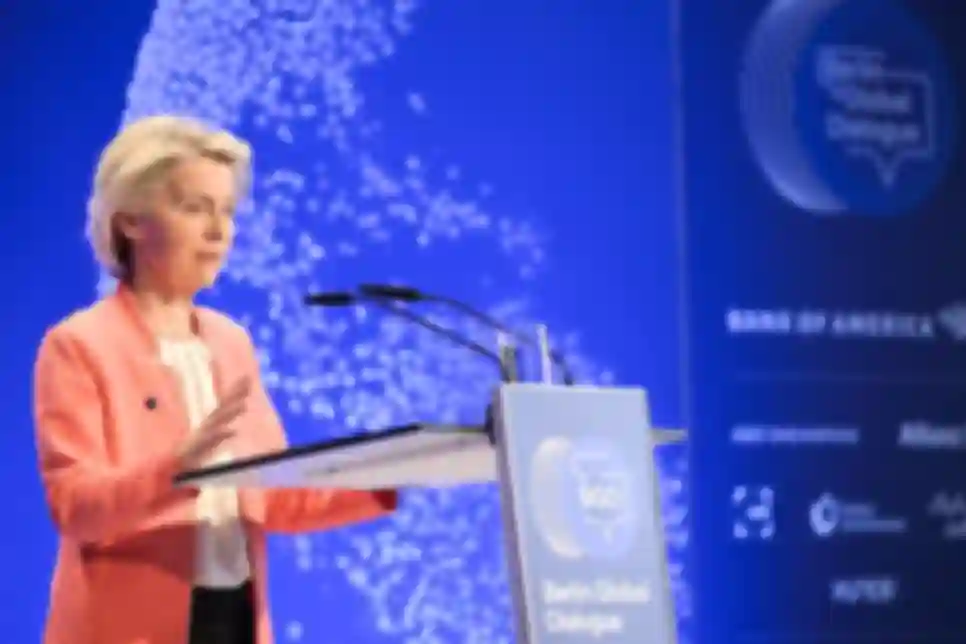
The President of the European Commission, Ursula von der Leyen, has unveiled comprehensive plans to restrict children’s access to social media platforms through the proposed EU Kids Act. This regulatory initiative is being introduced amidst escalating concerns regarding the impact of addictive digital services and the rapid advancement of capable artificial intelligence systems on younger demographics.
“What we are witnessing is a great capture of our children. A capture of their attention, their focus, their minds,” von der Leyen told the European Parliament during her annual State of the Union address. Under the proposed EU Kids Act, children under the age of 13 would be banned from social media, while those under 15 would be prohibited from holding personal accounts. Instead, users aged 13 to 15 would only be permitted to use "mini accounts" managed by parents, featuring restricted functionalities and strict time limits. Platforms will also need to introduce further safety layers for teenagers between 15 and 18. "We are reversing the burden of proof," the EC President noted, stating that "platforms will have to prove that they are safe”.
Von der Leyen highlighted that young Europeans currently average four to six hours of daily screen time, citing the adverse effects of addictive features, harmful content, and cyberbullying on mental health and suicide rates. “We do not have to accept addictive features. We do not have to accept children being drawn into ever more extreme content. We do not have to accept that girls have their photos used for AI-generated sexualised images,” she argued.
These measures are central to the EU Kids Act, which is scheduled for formal proposal by the Commission today. The legislation would mandate age verification across a broad spectrum of digital services, including social media, video platforms, app stores, online gaming, and AI-driven tools. Additionally, the EC is developing a separate Digital Fairness Act to combat addictive design elements across the wider digital economy.
The address also prioritized the role of artificial intelligence, which von der Leyen characterized as "the second tipping point of our times." She cautioned that increasingly sophisticated models could introduce significant security threats, including advanced hacking and the potential for self-improving systems to cause widespread harm. To mitigate these risks, she announced plans to collaborate with international partners like the UK and Canada on model verification, early warning systems, and AI security, while also advocating for enhanced European computing power and investment in domestic AI firms.
Von der Leyen urged the region to leverage AI to enhance key sectors like healthcare, manufacturing, and agriculture, while insisting on the necessity of human oversight. “Our approach is clear. We want AI… But above all, we want AI with human agency.” These remarks coincide with growing global concerns about the speed of AI development, following calls from the heads of Anthropic and OpenAI for a more measured approach to frontier AI as researchers warn of existential risks.
The President of the European Commission, Ursula von der Leyen, has unveiled comprehensive plans to restrict children’s access to social media platforms through the proposed EU Kids Act.
Ericsson Nikola Tesla no longer views artificial intelligence solely as a tool that helps developers write code, but as part of the entire software development lifecycle. At the upcoming ENT Technology Days, taking place from 21 to 25 September, artificial intelligence will also be among the central topics.
Siniša Krajnović, PhD, President of the Management Board of ENT, sees the transformation brought about by artificial intelligence through products, internal processes, and changes in the way work itself is performed, while Jelena Jurišić, Director of Technology of the ENT Group (CTO), explains how specialized AI agents are now part of analysis, design, implementation, testing, and verification. In such a model, autonomy increases gradually, with quality control and human decision-making at critical points. At the same time, the change does not diminish the importance of engineers, but increasingly shifts their role toward architecture, domain understanding, and the management of complex automated systems.

The CEOs of Anthropic and OpenAI, Dario Amodei and Sam Altman, have issued a joint call for the industry to moderate the current pace of frontier AI development.


