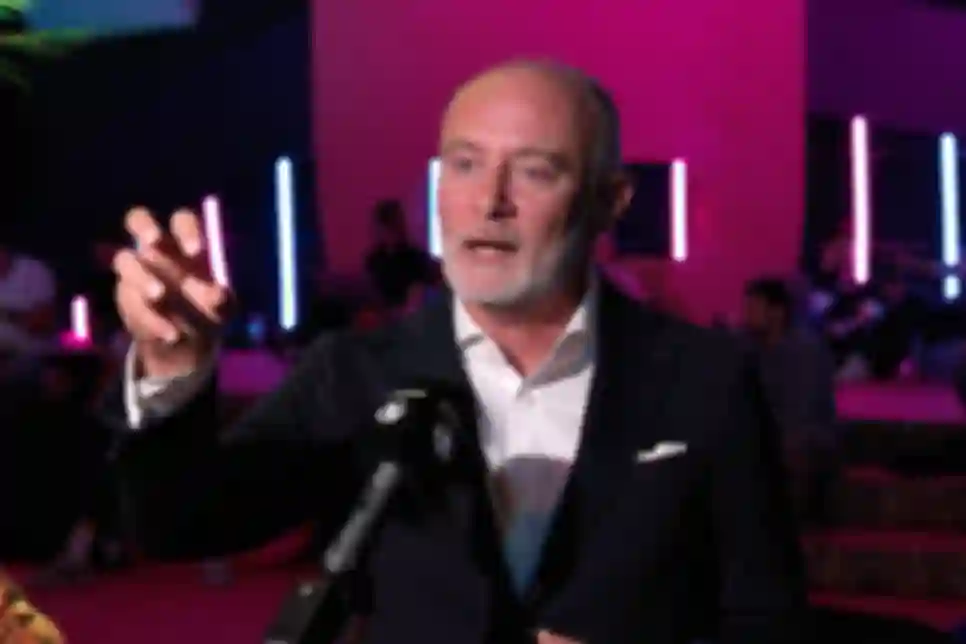
In the current technology cycle, telecom operators can no longer be viewed only through fixed and mobile networks. Their role is expanding towards infrastructure for the digital transformation of other industries, while they are also transforming the way they work internally. Daniel Šimić, Director for the Business Customer Segment at A1 Hrvatska, says telecoms are turning to artificial intelligence in two directions: as a technological foundation for customers and as organisations embedding AI into their own processes, products and hiring.
“Telecoms are turning towards AI in two directions,” Šimić tells ICTbusiness Media – ICTbusiness.info & ICTbusiness TV. The first direction comes from the natural role of telecoms: providing infrastructure for the transformation of all industries. The second is the internal and market-facing use of AI within the operator itself. A1 started addressing this topic four to five years ago, when it became clear that AI was no longer only an experiment for technology teams.
The impulse did not come only from the technology side, but also from global business leadership. The company first explored prototypes and now has products and solutions in live use in which AI improves customer interaction. Šimić points especially to customer support, where AI is used to make each interaction faster, more precise and closer to a conversation with the most experienced agent. “AI is now practically used in every interaction,” he says.
This shift also affects business customers. Starting from its data centre, ICT services and modern infrastructure, A1 has expanded its offer to solutions that require greater computing capacity and a European regulatory framework. Through its partnership with Exoscale, a sovereign European cloud provider, A1 offers cloud services from a local data centre and capacity for specific projects, including AI and specialised solutions. Šimić believes telecoms can position themselves well because AI requires strong infrastructure.
The transformation is not simple because it changes people as well as technology. Šimić does not expect the human role to disappear, but he says recruitment and skills profiles are changing. Companies need people who can learn quickly and adapt because technologies are changing in very short cycles. “Practically every three months, we can talk about different technologies,” he says. Deep expertise in a technology that is fifteen years old is no longer enough unless it is accompanied by the ability to move quickly to new tools.
Yet the human element remains crucial precisely where technology reaches the customer. AI can support personalisation, faster handling of requests and better answers, but the company must know how to use it properly. Šimić says AI has to be taught how to reach the customer in the right way, meaning how to personalise communication without losing sight of the customer’s actual need. He sees this as one of the main changes across the system.
Telecom digitalisation has been underway for years. Much of what was once manual is now digitalised, raising productivity and reducing the time needed for routine work. Šimić says A1 was an early adopter of robots and chatbots and is now applying the same approach to AI, internally and externally. Startups also provide ideas and show where customer experience can still improve.
Operationally, this means that an employee who once manually handled paperwork, searched for a phone colour or reconciled information with SAP can now focus on more demanding tasks. Digitalisation frees up time for solving real customer problems. “Everything that used to be on paper is now much faster,” Šimić says. In many processes, paper has almost disappeared, showing how much the telecom has changed internally.
Šimić expects this direction to continue. Telecoms will have to invest in infrastructure supporting AI, cloud and data-intensive projects, while also constantly changing their own processes to become faster and easier for customers to understand. Success will not depend only on the network or the data centre, but on the ability to connect technology with a concrete business problem and allow people, freed from routine, to take on more complex and valuable work.