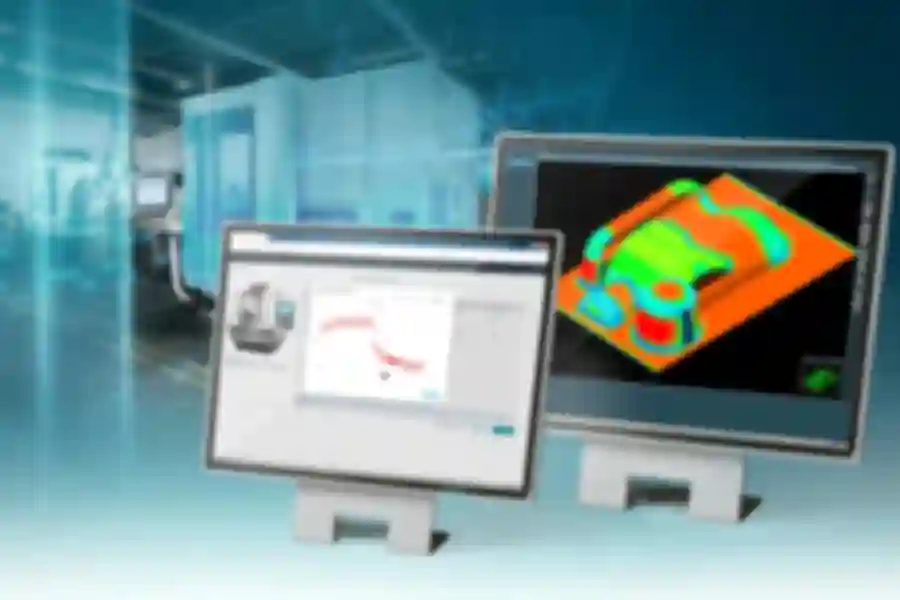
Siemens will be showcasing new applications for Sinumerik Edge, the machine-level platform specifically targeting the machine tool industry, at the Hannover Messe 2019.
Visitors will have the chance to experience the edge application Analyze MyWorkpiece /Capture, which enables real-time data surrounding every aspect of workpiece machining to be recorded. Coordinated to work with this application is the CNC shopfloor management application Analyze MyWorkpiece /Toolpath, which allows the acquired data to be visualized and analyzed. Siemens will also be showcasing an edge application in the field of machine condition monitoring in the form of its new Analyze MyMachine /Condition. The new application allows machine tool users to record all kinds of workpiece, tool and tool path data with a high temporal resolution.
With its Sinumerik Edge portfolio, Siemens is providing a machine-level platform designed specifically for machine tools featuring a range of software applications capable of capturing high-frequency data generated during machine tool operation, which is then processed, analyzed and forwarded to higher-level systems. Using the platform approach means that the edge applications offer practically unlimited scope in terms of their function within a secured ecosystem. Other benefits provided by the platform include simple connection to the Sinumeric controller, a security infrastructure and the facility for users to program their own edge applications.
With its new edge applications Analyze MyWorkpiece /Capture and Analyze MyMachine /Condition as well as the Optimize My Machining /Trochoidal application designed to significantly extend tool life by means of trochoidal milling, Siemens is now offering applications which address the three main value drivers of edge computing in the machine tool sector: Process quality, machine condition and productivity improvement.
Telecom operators approach AI from two directions: as providers of infrastructure for the digital transformation of other industries and as organisations embedding AI into their own processes. A1 Hrvatska has moved from prototypes to concrete products, from customer support to sovereign European cloud services. Daniel Šimić says workforce profiles are also changing, with fast learning, customer understanding and adaptability becoming more important.
Burra was created as a platform for consolidating IT services companies in Southeast Europe, with a commercial focus on Western Europe and the United States. Its first members, Devōt, Tacta and CoreLine, continue to run their existing businesses while integration is planned gradually, primarily through new projects. Sven Marušić says the aim is not to turn founders into corporate employees, but to build a larger organisation in which they remain shareholders and drivers of growth.
Telecom operators are no longer using AI only for network optimisation and routine operations. They are applying it to faster product development and customer conversations. Matija Ražem says AI enables prototypes in hours, quicker market testing, and automation of many standard support questions. The next step may be a world where personal digital agents interact with agents from telecoms, banks and other large organisations.