


Anthropic to Research an In-House Chip to Power Claude
Anthropic confirmed it is building an in-house silicon team to design custom chips for its Claude AI model.
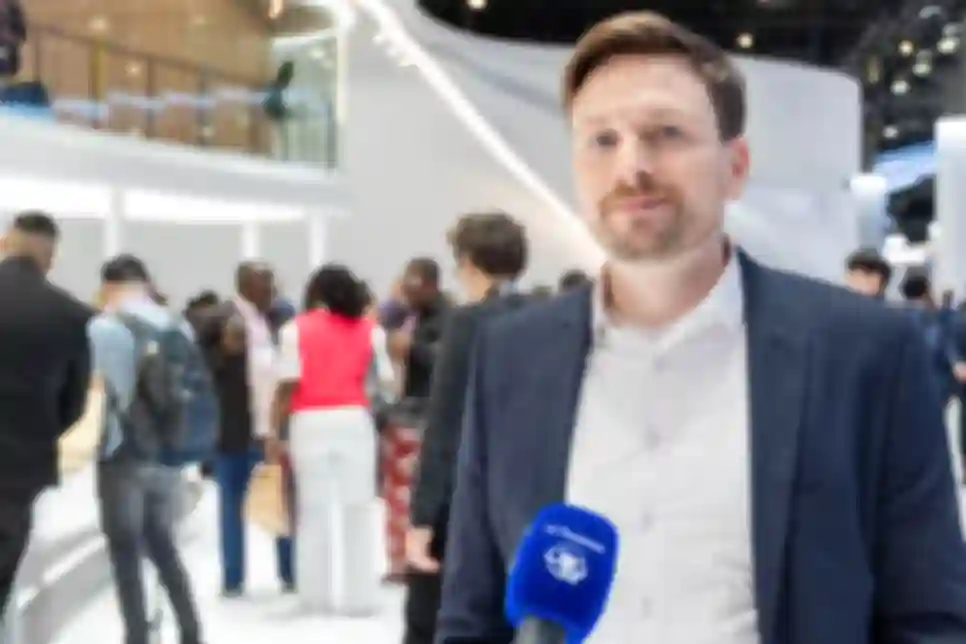
Huawei sees the next stage of consumer-device competition in Europe at the intersection of openness, health functions, local data processing, and new hardware form factors. Andreas Zimmer, Head of Ecosystem Strategy for Europe, argues that innovation only matters when it solves a real user problem, and that this principle now runs through the company’s strategy, from wearables to foldable smartphones.
Zimmer says Huawei does not frame product development as a race for abstract technological novelty. Instead, it starts with a simpler question: what exactly does the user need solved? “For us, innovation is solving a real problem that users have,” he says, pointing to the latest GT Runner 2 as a clear example. In his view, the product was not built by starting from engineering ambition alone, but by first listening to runners across global markets. “We tried to understand what is important for runners and then build the product around those requirements,” Zimmer explains.
That user-first logic also extends to collaboration with elite athletes. Zimmer notes that Huawei worked with marathon champion Eliud Kipchoge to better understand what a top runner expects from a smartwatch. The broader implication is that product relevance increasingly comes from how closely a device fits real-life use cases rather than from a standalone list of specifications. In a maturing device market, differentiation is no longer created solely through chipsets, battery sizes, or display technology, but through the quality of the experience built around the user.
Wearables sit at the centre of that strategy. Zimmer says that “accessibility is the most important aspect of our wearable strategy,” and he uses the term in a broader sense than simple affordability. For Huawei, accessibility also means technical openness. The company develops its smartwatches and other wearables as platform-agnostic products, allowing them to work across different smartphone ecosystems rather than locking users into a single brand. “Whether you use an iPhone, a Samsung phone, or something else, you can pair our wearables with that phone,” he says. That, he argues, is ultimately about consumer choice. “We give choice back to the user,” Zimmer says, describing this as one of the foundations of Huawei’s strong position in the wearables segment.
Huawei is also trying to push wearables beyond lifestyle tracking and further into healthcare-related use cases. Zimmer says “medical-grade features are super important,” highlighting the Watch D2, which he describes as still the only smartwatch with medically certified blood-pressure measurement. For Huawei, that is not just a product differentiator. It is also part of a wider response to the pressure facing healthcare systems across Europe. “We think wearables can actually be one of the solutions to empower users and patients to take more care of their health,” Zimmer says. In that model, wearables could also help doctors by enabling some patients to be monitored at home rather than occupying hospital capacity unnecessarily.
That ambition inevitably raises questions around regulation, privacy, and the handling of sensitive health data. Here, Zimmer is explicit. “Privacy is obviously the number one thing,” he says. According to him, all health data from European users stays in Europe and is processed only in Europe. Accuracy, he adds, is treated as a non-negotiable product requirement, especially in devices with medical certification. “We don’t launch inaccurate products,” Zimmer says, stressing that medical certification itself is designed to ensure a minimum level of precision before such a device reaches the market.
Artificial intelligence is another layer in Huawei’s long-term product thinking, but Zimmer presents it less as a recent trend and more as an embedded design philosophy. AI, he says, has been part of Huawei’s product strategy “for many, many years,” including earlier generations of smartphones with camera scene recognition. What matters most now is where that intelligence runs. “Our focus has always been and still remains to have as much of the AI on the edge,” Zimmer says. In practical terms, that means keeping as much processing as possible on the device itself rather than sending data to the cloud. Huawei applies that logic to camera functions, power management, and other everyday features, while leaving users free to choose external AI applications when they want more advanced generative capabilities.
Zimmer takes a similarly broad view of sustainability. It is not limited to the use of solar and wind energy in manufacturing, although that remains part of the equation. Just as important, he argues, is device durability. “If the device doesn’t break, then you can keep using it,” he says, adding that longer lifecycles can also make it easier for products to stay within families or pass on to other users. That is why Huawei is trying to bring the same durability mindset into foldable devices. “Our goal was to build a foldable device that is as sustainable as possible because it is durable,” Zimmer says. In other words, sustainability is increasingly being defined not only by how a device is made, but by how reliably it survives long-term use.
Looking five years ahead, Zimmer expects the overall smartphone market to remain relatively stable in volume because it is already mature and “almost everyone already has a smartphone.” But stable volumes do not mean strategic stagnation. On the contrary, he sees innovation as the main force that will separate brands in the next phase of the market. “If you can’t sell more devices, then you have to sell devices that are different and add new features and new experiences,” he says. Huawei’s role in Europe, as he sees it, will be to keep pushing hardware boundaries through new form factors, including foldables, while continuing to invest in the functions consumers still value most. Among those constants, one remains particularly strong: people still want a smartphone that can capture a great photo anytime and anywhere.

Anthropic confirmed it is building an in-house silicon team to design custom chips for its Claude AI model.

Equipped with a fuel-cell power module (FCPM) from Bosch, an Irizar bus has been transporting passengers through the Spanish capital for several weeks now.

Converting a conventional data center into AI-ready infrastructure requires several times more electrical power, liquid cooling, and substantially greater structural load capacity.


