Amazon Leo Launches 29 More Satellites
A United Launch Alliance (ULA) rocket successfully deployed 29 Leo satellites into low Earth orbit for Amazon.


The quality of a mobile network today is no longer demonstrated solely through technical specifications, but through the real experience of users in their everyday use. That is precisely why international awards that operators win on the basis of millions of measurements carry particular weight in a highly competitive market, Danijela Bistrički Morović, Member of the Management Board and CTO of Telemach, points out for ICTbusiness Media – ICTbusiness.info.
Telemach returned from this year’s Mobile World Congress in Barcelona with two Ookla awards, for the best and fastest mobile network in Croatia. At the same time, the company also won an Opensignal award for consistent mobile network quality, placing it among the ten best networks in the world. The particular value of these awards lies in the fact that they are not the result of laboratory tests, but of the analysis of actual network use. This means that quality is measured where it matters most, in the everyday work, communication, and digital habits of users.
Behind such results are years of investment in modernization, capacity expansion, and the development of 5G infrastructure. Traffic growth, expanded coverage, and the strengthening of the fiber network further confirm that the domestic market is entering a new phase of development. In such circumstances, the network is no longer just infrastructure, but a platform on which the digital lives of citizens and the operations of companies are built.
Q: Telemach has gained another recognition for the quality of its mobile network. Which recognition did you return with from this year’s Mobile World Congress?
The global authority for measuring telecommunications network performance, Ookla, awarded us two prizes – for the best and the fastest mobile network in Croatia. Such recognition means a great deal to us because it is based on real user experience and more than 5 million measurements in real-life conditions.
The analysis of our mobile networks was carried out during the last six months of 2025, and the results are based on a large number of tests performed by users themselves. The award for the best mobile network takes into account overall performance, such as speed, latency, and the quality of web browsing and video content, while the recognition for the fastest mobile network measures network throughput and responsiveness, that is, download and upload speeds in combination with latency. In other words, this is not a laboratory test, but the everyday use of a mobile network – and there, Telemach is number one.
It is also a confirmation that years of investment in modernization, capacity expansion, and network optimization have been recognized precisely where it matters most – by users. We are especially pleased that the recognition comes at a time when the market is very competitive, and user expectations are high when it comes to speed, stability, and availability.
This is not the only recognition we have received for the quality of our network. In addition to the Ookla award, at this year’s Mobile World Congress in Barcelona, we also won an Opensignal award for consistent mobile network quality, which placed us among the ten best mobile networks in the world. This continues the continuity of multi-year global recognitions arriving at our address.
But perhaps the most important indicator is that for three years in a row, we have been the operator to which the highest number of mobile users have switched. High user expectations also mean greater investment in infrastructure.
Q: How much has it progressed at Telemach since entering the market?
If we look at the period since the end of 2019, traffic on our network has increased more than threefold, while we have increased network capacity as much as sixfold in order to keep up with that growth. Today, with all technologies, we cover more than 99 percent of Croatia’s population, thereby creating the foundations for the digitalization of practically the entire country.
When it comes to 5G, coverage on the 700 MHz frequency has reached almost 100 percent of the population, while 5G in the C-band covers around 65 percent of the population, delivering very high speeds and capacity where they are needed most.
The growth of 5G traffic is also interesting. During 2025, 5G accounted for around one-third of total traffic, while in December that share reached 40 percent. This clearly shows that users adopt technology very quickly when it brings them real value.
Q: Why do investments in 5G and fiber remain an absolute priority?
Because the network today is the foundation of the digital society. In recent years, we have seen strong traffic growth – from video content and cloud services to business applications.
Our focus was not only to expand coverage, but to build network capacity and resilience in parallel. The goal is for users not to experience congestion even at times of peak load. We therefore view investments in 5G and fiber as a long-term investment – not only in technology, but also in the competitiveness of the economy and the quality of life.
When it comes to fiber, we were the last to enter the fixed services market, but we brought the most advanced technology and the fastest fiber internet to Croatia. It is currently available to more than 330 thousand households, with a very competitive price-to-quality ratio.
Q: How important are automation and energy efficiency in network development?
As networks grow, it is equally important to take sustainability into account. By introducing the latest functionalities in the radio network, we are increasing energy efficiency and significantly reducing electricity consumption.
It is also important to emphasize that all the energy we use is procured from renewable sources, which means that the growth of network capacity and quality does not come with a higher carbon footprint.
Automation and Artificial Intelligence are already being used, and looking ahead, they will play an increasingly important role in network management – from optimization and traffic management to faster identification and resolution of potential issues, often even before users notice them at all.
Q: How are user habits changing, and what does that mean for the future development of the network?
The network today is no longer only a matter of speed; it has become a platform for digital life and business. There are more and more applications that are sensitive to latency, and users expect a seamless experience, without interruptions and slowdowns.
The fact that 5G already carries more than one-third of total traffic shows that we are in the midst of digital transformation. That is why in 2026 the focus will be on further strengthening capacity, optimization, and the integration of 5G, fiber, and advanced digital solutions, so that we can maintain a high level of quality and respond to the increasingly demanding needs of the market.
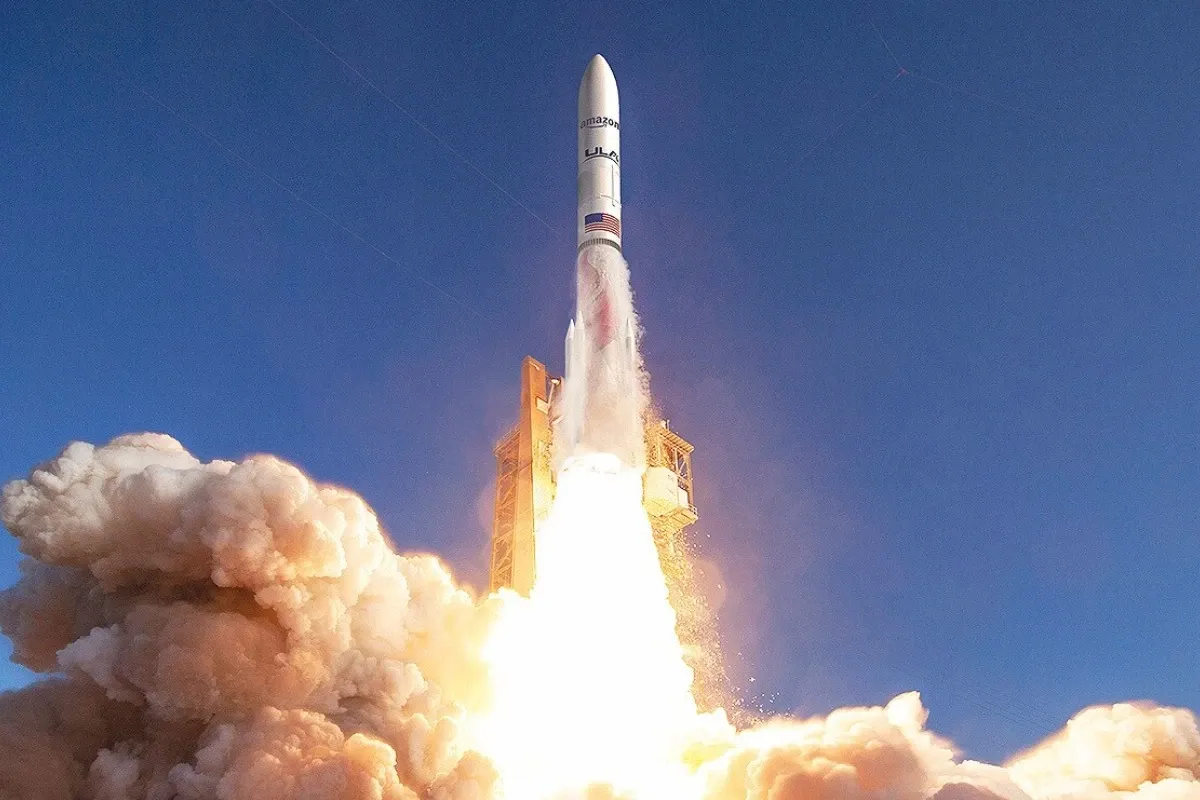
A United Launch Alliance (ULA) rocket successfully deployed 29 Leo satellites into low Earth orbit for Amazon.

VMO2 and VodafoneThree announced they would use the technology designed to disable smartphones stolen from their retail stores.
Ericsson, Telia, and other partners have opened a test center in Sweden that would focus on the development of AI, 5G, and 6G technologies.