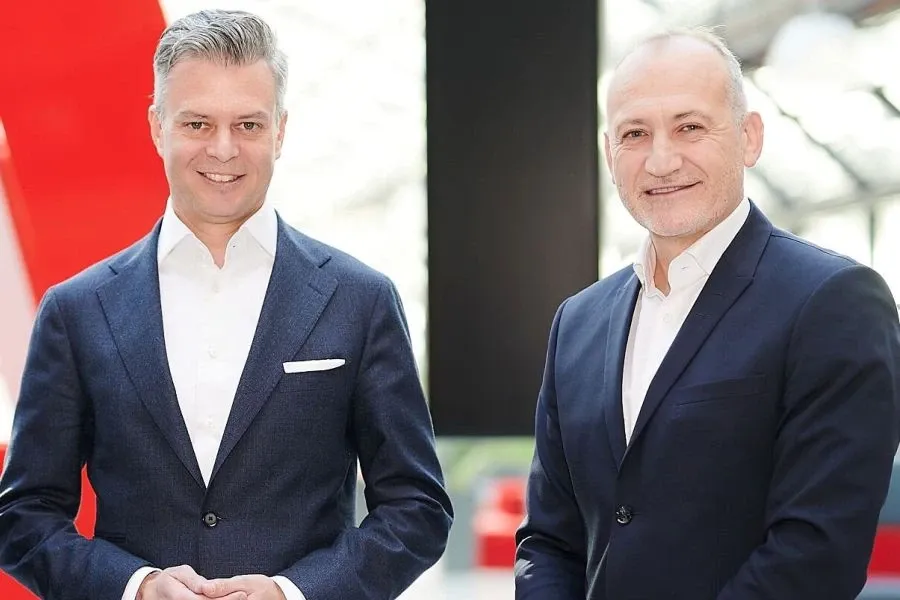
At a time when much of the business world still behaves as if it is enough to layer new technology on top of an existing model, futurist and business thinker Rik Vera argues that this is precisely the strategic mistake companies can no longer afford. His core message is blunt: the rule “let’s do business as we’ve always done” no longer applies. That mindset, he says, may help a company survive for a few more years, but it offers no long-term answer to a world that has already changed. In his view, businesses must stop trying to “act like it was yesterday” and instead ask a far harder question: if they were starting from scratch today, how would they design the company?
Vera does not see technology as the answer in itself, but as part of a broader redesign of the organisation. If companies simply “put that on top of what they’re already doing”, then nothing truly changes. That is why he insists the real issue is “how do I rearrange my company” so that people, AI, and technology work together in a model capable of delivering better customer interaction and greater internal flexibility. In a world where seamless digital experiences will become a commodity, he believes competitive differentiation will come from somewhere else. “What’s the differentiator? It’s people,” Vera says, arguing that companies that still put humans “in front of your company to speak for your company” will stand apart.
He is equally direct when talking about agility and resilience, concepts that companies like to celebrate but rarely embed in practice. Vera uses the metaphor of Kryptonite: organisations can claim they want to be agile, but if they remain constrained by hierarchy, excessive control, slow movement, and poor access to data, that internal “Kryptonite” will neutralise every ambition. “You can dream about being agile, but it’s never going to happen,” he says, stressing that agility is not created through slogans but by removing what stands between the company and genuine adaptability. That, he adds, takes courage.
His view of change management is equally pragmatic. Rather than reacting to every new technology and trend, Vera advocates a more disciplined approach through his “three boxes” methodology. The premise is that there are too many “waves of change” for any company to pursue all of them at once. Leaders, therefore, need to develop judgment because “timing is a muscle”. Some changes should simply be observed for now, some should move into active attention, and some already represent direct threats. In that model, strategy becomes less about instinct and more about training the ability to distinguish what is still green, what is turning orange, and what is already red.
When it comes to artificial intelligence, Vera leaves little room for understatement. AI, he says, will change so much that the real question is “what is it not going to change?” He answers that almost everything will shift except “basic human emotions”. That is why the true North Star must still be customers and people. At that point, his argument moves beyond technology into business philosophy: the more deeply companies enter a world where machines can mimic creativity, curiosity, and even aspects of consciousness, the more urgently they will need to ask what it really means to be human. For companies looking for direction in the AI era, that may be his most important point of all: the future will not belong to those that merely adopt new technology, but to those that use it to redesign the organisation, the customer relationship, and the human value at its core.