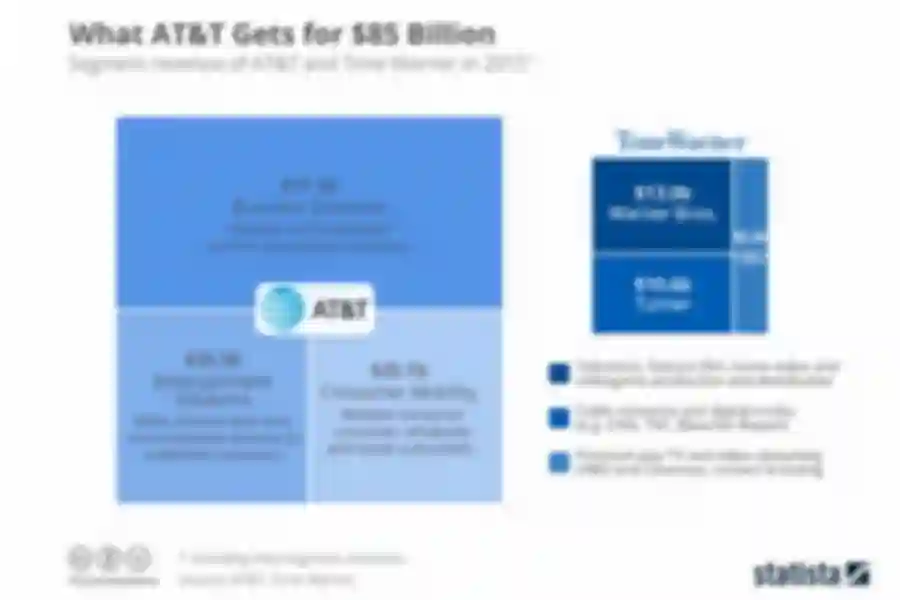
U.S. telecom giant AT&T has agreed to acquire Time Warner in a deal worth $85 billion. The deal would put AT&T in control of world-famous media brands such as CNN, TNT and HBO alongside Warner Bros. Entertainment, the world’s largest film and television studio in charge of franchises such as Harry Potter, Game of Thrones and the DC Comics universe.
Interestingly, the Time Warner deal would mark the second multi-billion dollar acquisition in as many years for AT&T. In July 2015, the company completed the $49 billion acquisition of DIRECTV, making it the largest pay-TV provider in the United States and the world. Adding Time-Warner-owned HBO and Warner Bros. to the mix would give AT&T control over the entire value chain, from content production to its marketing and distribution to people’s homes and mobile devices. While that could open up interesting possibilities such as distributing premium content exclusively to AT&T subscribers or exempting Time Warner’s pay-TV services from data caps, it is all but certain that such anti-competition practices would be forbidden by regulators should they greenlight the deal at all.
Ivan Bešlić believes the Croatian IT industry is no longer talking primarily about crisis, but about transformation driven by artificial intelligence. Unit Croatia wants to transfer market experience to members and policymakers faster because official statistics lag behind real change. AI is already changing work methods, enabling internal tools and automating tasks that were previously too slow or too costly.
OpenAI has delineated a series of principles regarding how autonomous organizations should evaluate the safety of their most sophisticated artificial intelligence models.
The European Commission has introduced a regulatory framework for data centers that would mandate disclosures regarding their energy and hydraulic efficiency.