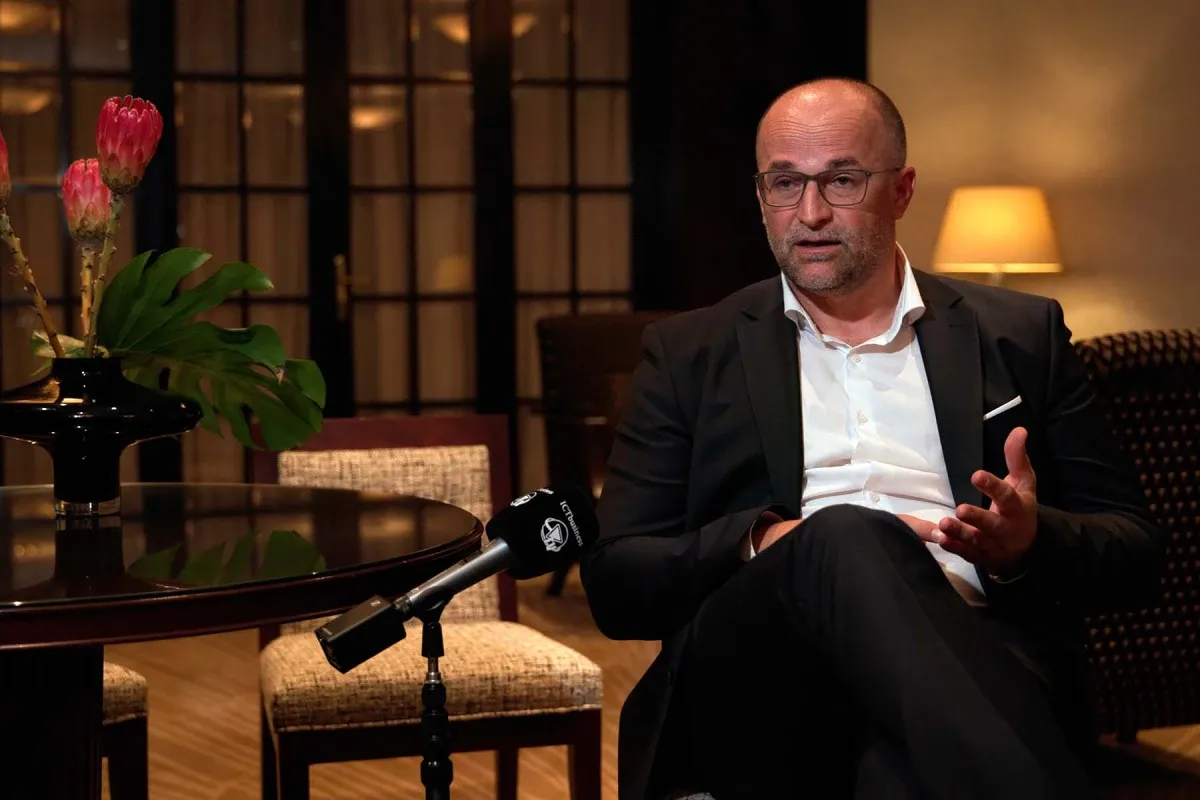
Croatia’s data center industry is at a point where it must decide whether it will remain a local market of smaller infrastructure projects or use the opportunity to position itself more seriously on Europe’s digital infrastructure map. Igor Grdić, Vice President of HRDCA and Regional Director, Central Europe at Vertiv, believes Croatia has the expertise, talent, location, and security framework required for further growth, but that larger investments will depend on faster progress in energy, transmission infrastructure, and regulation.
“Data centers are the digital backbone of countries, continents, and the global economy,” Grdić says. In his view, data centers are no longer merely facilities that house IT equipment, but the foundation of the way modern society functions. “Everything we do and live daily happens digitally, and the support for those digital processes is located in data centers,” he explains.
That is why, in his opinion, the establishment of the Croatian Data Center Association is an important step for the entire industry. The idea, he says, had existed for a long time among people in the sector, before Goran Đoreski, Filip Olujić, and Grdić himself turned it into a formal organisation. “The idea of the association is to bring together a professional community dealing with data centers,” he says, adding that its role is equally important for the market, the public, and the state.
The association’s first task, Grdić believes, is education. In Croatia, data centers are increasingly discussed through large announcements, including the project in Topusko, but the wider industry is still often poorly understood. “We need to explain what data centers are and why they are so important,” he says. The second task is to create a platform for dialogue with the Government and ministries on proposals and regulations that would make Croatia more attractive for data center development.
Grdić points out that state support is already visible, particularly through cooperation with the Ministry of Justice, Public Administration, and Digital Transformation. “It means that the Government and individual ministries understand the relevance of this topic,” he says. But institutional interest is only the first step. Serious projects require clear energy capacity, spatial planning, faster procedures, and an understanding that data centers are not just energy consumers, but infrastructure for the digital economy.
The biggest challenge remains electricity. “To create the preconditions for large projects, we definitely need to work on sources of electrical energy,” Grdić says. He is not referring only to generation, but also to transmission infrastructure. HOPS and the wider electricity network must be part of the same development logic because large data centers cannot be built without transmission lines, substations, and clear grid availability.
In that context, Grdić points to the experience of other countries, especially Poland, which is investing heavily in power generation and transmission. “Croatia should take the best lessons from those countries and implement them here,” he says. Still, he does not see Croatia as starting from zero. The country is geographically well connected, located on important fibre and energy routes, and is a secure state within Western alliances, which is a relevant factor when choosing locations for critical digital infrastructure.
Grdić does not claim that Croatia is necessarily the place for multi-gigawatt projects, but he does see a realistic opportunity in mid-sized investments. “Croatia is an interesting location, perhaps not for one, two, three, or five gigawatts, but definitely for projects of 100, 200, 300, or 500 megawatts,” he says. Such projects could go beyond domestic demand and serve the broader Southeast European region.
For Grdić, the key is not to view data centers only through the needs of Croatian users. “This is a global industry,” he concludes. A data center in Zagreb could serve Southeast Europe, but also wider user and infrastructure requirements, depending on the operating model. If Croatia manages to connect expertise, location, energy, and regulation, it could move from being an observer to becoming a relevant European data hub.