In the Age of AI, the Real Advantage Will Be Knowing How to Ask the Right Questions
Dani komunikacija once again brought together the marketing communications, advertising, media, and creative industries in Rovinj.

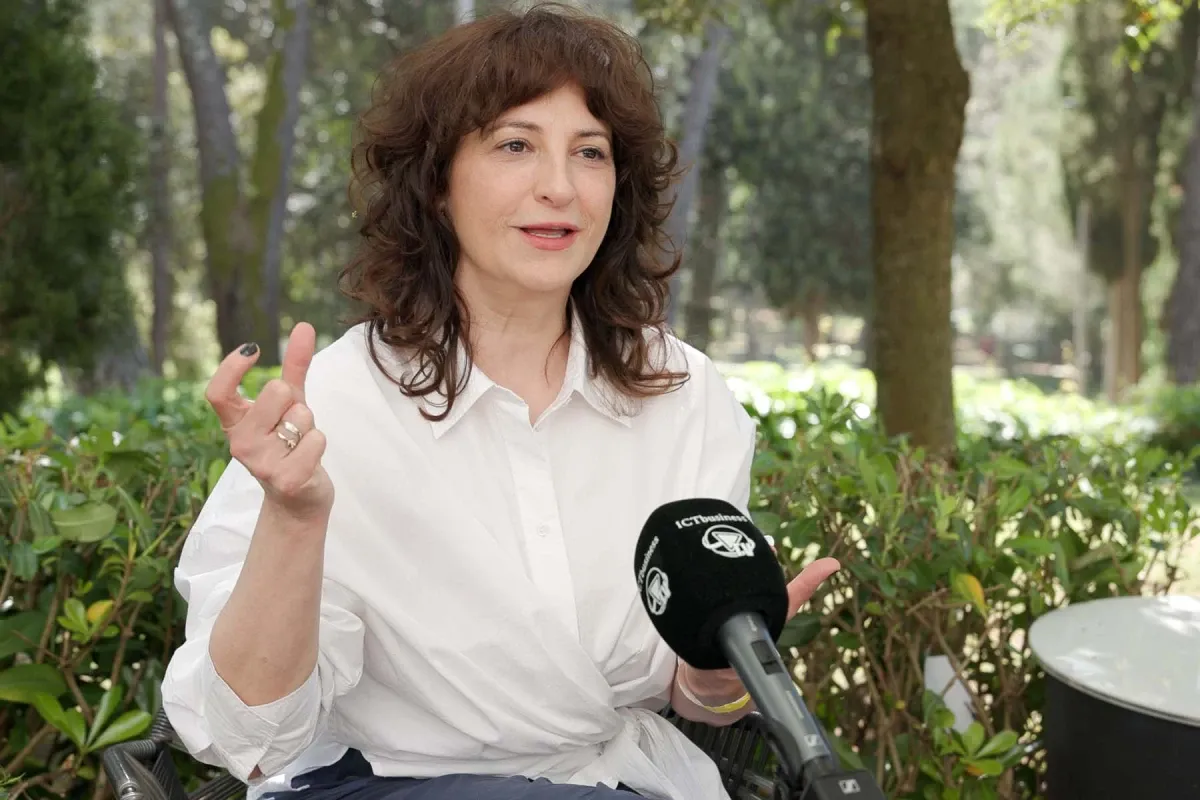
Dani komunikacija once again brought together the marketing communications, advertising, media, and creative industries in Rovinj. However, for Dunja Ivana Ballon, the festival’s director, its role is not merely to gather the profession in one place once a year. Its real value, she argues, lies in pushing the industry beyond what is already known, encouraging it to question its own patterns, learn from global experience, and look ahead.
“Once a year, we bring the profession together in one place, and it is important to us that we do not talk only about what has already happened and what everyone already knows,” says Ballon. That is why Dani komunikacija does not always try to provide ready-made answers. On the contrary, its ambition is to open the space for questions that the industry still needs to face. “Sometimes we do not serve finished answers; we ask the right questions,” she says, adding that the festival must look “not one, but sometimes several steps ahead.”
This approach is particularly important at a time when technology, artificial intelligence, fragmented audiences, and growing pressure for efficiency are reshaping the communications industry. Ballon emphasizes that the Croatian market is neither peripheral nor underdeveloped. In many segments, it operates at a very high professional level. “Our profession in Croatia is quite developed, and very often business is done according to exceptionally high standards,” she says. In her view, the festival contributes to that by connecting the local industry with global leaders, not as decoration, but as a tool for learning and for the growth of the entire market.
Learning is one of the central ideas in her view of the industry. Technology is developing rapidly, and artificial intelligence has become impossible to ignore. Yet Ballon does not approach it defensively. “Artificial intelligence is beautiful. Technology is beautiful. Innovation is wonderful,” she says, noting that the communications industry has traditionally been among the early adopters of new tools, platforms, and formats. Creative professionals, agencies, and marketers have always been quick to play with new technologies, test them, and understand what they mean for brands and audiences.
Still, her view of AI is far from naive. She believes artificial intelligence is already increasing the speed and availability of production, but at the same time creating the risk of even greater sameness. “What is increasingly happening is that all those who are average are becoming even worse, because they are drowning in what we already had,” Ballon warns. In other words, when everyone uses the same tools, similar data, and similar patterns, communication can easily become repetitive. Everything becomes correct, fast, and technically possible, but at the same time less distinctive.
That is why, for her, the real question is not how to get a faster answer from artificial intelligence, but how to develop the ability to ask better questions. “It is no longer about how to search for the right answers, but how to ask the right questions,” she says. This is where the difference will be made between those who simply use technology and those who still have their own perspective, critical thinking, and originality. “Those who stand out will be the ones who, with their originality, their own critical thinking and a forward-looking view, are different, better and of higher quality,” says Ballon.
At this year’s Dani komunikacija, Jürgen Schmidhuber, one of the pioneers of artificial intelligence, played an important role in that discussion. Ballon says she spoke with him about a question that increasingly appears in public debate: what happens if machines one day surpass humans. “I asked him: if all these machines wipe us out one day, are you to blame for that?” she recalls. Speaking about the development toward superintelligence, she says his answer was provocative and unsettling: it may be months, or it may be a year. In that sense, Ballon believes the industry has to prepare for a moment when artificial intelligence may no longer be only a reproduction of existing knowledge, but a possible source of something new.
Even in that scenario, however, she does not believe the human factor will lose its value. On the contrary, the more technology produces content, the more important an authentic human voice becomes. “We all want to return to the roots, to return to the human being,” says Ballon. In a world of generated messages, bots, and synthetic influencers, audiences will increasingly want to know who truly stands behind an idea, an attitude, or a message. “I am interested in what you think. I am not interested in what some bot, AI, or non-existent influencer tells me,” she adds.
That is precisely why she believes the creative industry has a future. It may change, become faster, more technologically sophisticated, and more data-driven, but its core value remains in the relationship between people. According to Ballon, Dani komunikacija demonstrated this through numerous meetings, conversations, and human contacts that cannot be replaced by a digital tool. “A human being still wants to establish contact with another human being,” she says.
Ultimately, her message to the industry is not to fear artificial intelligence, but not to drown in the mediocrity that technology can accelerate. AI will change workflows, create new possibilities, and move the boundaries of efficiency, but it will not automatically produce relevance, meaning, or originality. Dani komunikacija, therefore, remains important as a space for learning, meeting, and critical thinking. In a time when answers are becoming increasingly available, the greatest value will belong to those who know how to ask better questions, take a clear position, and remain recognizably human.
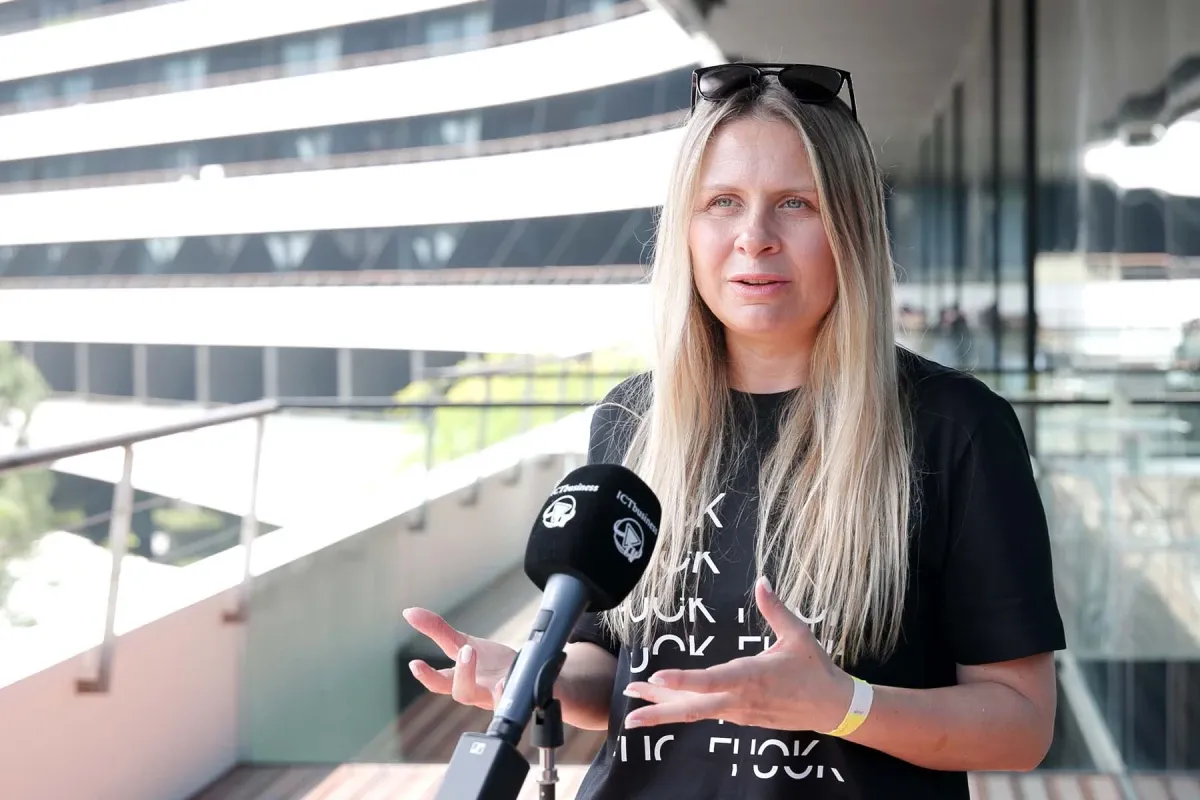
Dani komunikacija once again brought together the marketing communications, advertising, media, and creative industries in Rovinj.

Sony’s semiconductor arm agreed on a preliminary strategic partnership with TSMC to develop and manufacture the next generation of image sensors.

SoftBank Group CEO Masayoshi Son is in talks over a major AI data center investment in France.