AI is a Powerful Tool, but Human Judgment Still Defines Strategy and Creativity
This year’s Dani komunikacija in Rovinj once again showed why the festival has a distinctive role in Croatia’s marketing communications industry.

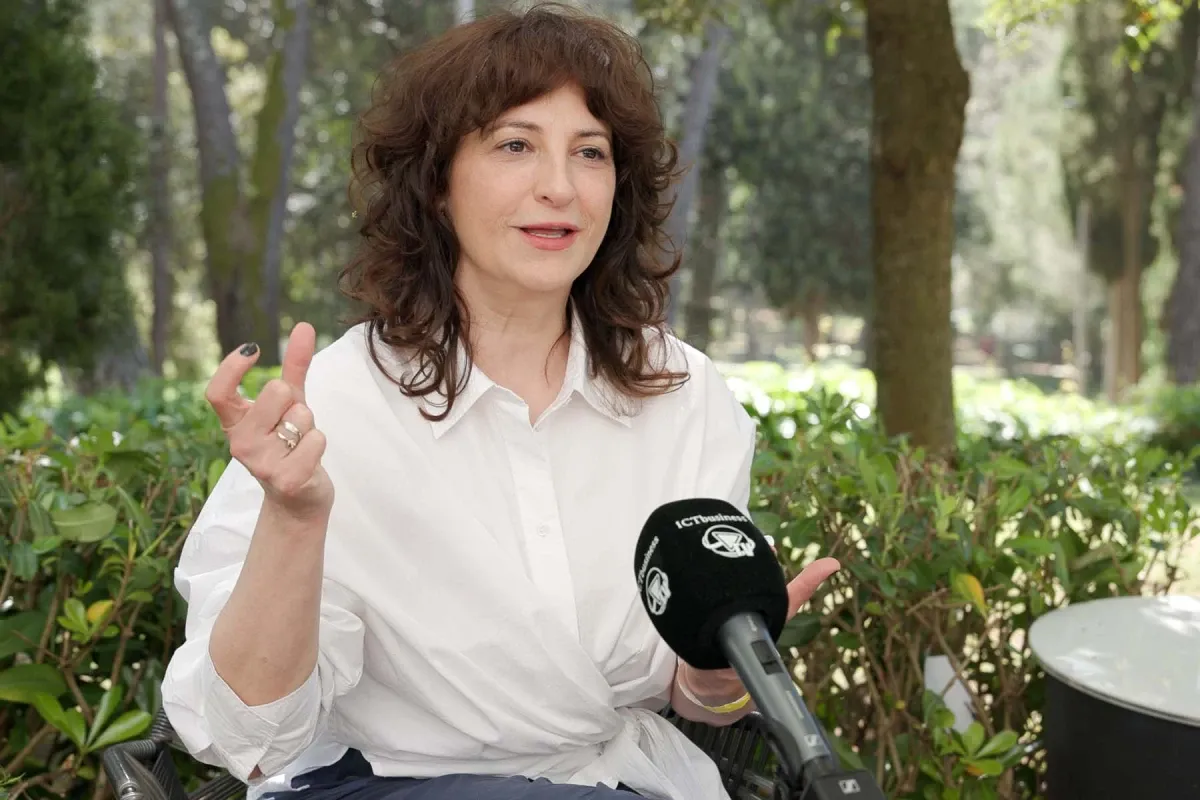
This year’s Dani komunikacija in Rovinj once again showed why the festival has a distinctive role in Croatia’s marketing communications industry. For Jelena Fiškuš, co-founder and creative director of Studio Sonda and President of the HURA Management Board, the value of the festival does not lie in one dominant theme, but precisely in the breadth of topics the industry now has to understand. Communications can no longer be reduced to advertising, creativity, or media alone, because they now touch technology, strategy, social change, politics, digital platforms, and consumer behavior.
“At this year’s Dani komunikacija, we were guided by the idea that we should not have one specific theme, but many different themes,” says Fiškuš. In her view, that approach reflects the nature of the industry itself. Marketing communications today enter almost every segment of business and society, so the festival has to be a meeting point for different perspectives. That is why the stage brought together speakers from artificial intelligence, strategy, branding, PR, digital communications, and political campaigning.
Among the most important names in this year’s program, Fiškuš highlights Jürgen Schmidhuber, one of the pioneers of artificial intelligence, as well as strategic thinkers and practitioners such as Julie Supan and Mark Pollard. This combination, she believes, captures the direction in which the industry is moving: on one side, toward the growing role of technology, and on the other, toward an even stronger need for clear strategic thinking. “It is interesting to see on stage a person who truly participated in creating artificial intelligence as we know it today,” says Fiškuš, adding that it is equally important to hear people who talk about long-term brand building and strategic clarity.
For her, strategy is now one of the key words of the industry. At a time when tools are more accessible than ever, and there is more content than audiences can consume, the difference is not created by production alone, but by the ability to choose, direct, and shape a clear idea. “Good strategy is increasingly important today, not only in our business, but in life in general,” Fiškuš says. In that context, she particularly emphasizes the importance of brands that last, grow, and expand over time, because they show that communication should not be reduced to short-term effects.
Artificial intelligence is an unavoidable topic, but Fiškuš rejects simplistic conclusions that technology will replace human creativity. She does not believe that either extreme in the debate represents the whole truth. AI is neither a magical solution nor a threat to be rejected, but a tool that can be extremely useful when used with understanding. “Artificial intelligence is here today, and it is a wonderful tool if you know how to use it,” says Fiškuš. At the same time, she warns that the quality of the result still cannot be separated from the knowledge, intention, and judgment of the person using that tool.
In her view, it is already clear that AI works best when the user knows what they want to achieve. Otherwise, the output often remains generic, recognizable, and limited. “In most cases, you can see when texts and strategies have been created by artificial intelligence,” she says. That is why professionals in the communications industry must preserve integrity, authority, and the ability to judge what is truly right to communicate. Technology can accelerate the process, but it cannot take responsibility for the meaning of the message.
The key difference between artificial intelligence and human beings, Fiškuš argues, lies in the illogical nature of human behavior. People often make irrational decisions, do things they know are harmful, and act on emotional, contradictory, or unexpected motives. These situations are often the basis for creative concepts. “Human nature is very illogical and comes from some twisted situations,” Fiškuš says. Artificial intelligence, she adds, cannot evaluate this type of human contradiction in the same way because it relies on patterns, data, and logic.
That is why she sees the future of the communications industry as a necessary synergy between people and technology. AI will change processes, speed up execution, and support production and analysis, but human judgment will remain decisive for the quality of content and strategy. “The human hand will, for some time yet, be the factor that decides the quality of content and strategies,” Fiškuš emphasizes. This is especially true in an industry where value does not come only from a technically correct message, but from the ability to understand social context, emotional dynamics, and the real motivations of an audience.
Awards are also an important part of Dani komunikacija every year, and Fiškuš sees them as a snapshot of the state of the industry and a way to set professional standards. They are not merely a ceremonial addition to the festival, but an opportunity to see what has been done, which ideas have succeeded, where the market has moved, and where it still needs to develop. “Awards are important because they show a cross-section of what is happening in our field,” says Fiškuš. When there are works the industry can be proud of, they become a reference point and an incentive for others.
At the same time, she is aware of the limitations of the local market. The Croatian communications industry is small, budgets are often limited, and that frequently pushes advertisers and agencies toward safer decisions. “Our market is small, and there is still room for progress, especially when it comes to strategy and freeing ourselves from a certain stiffness,” Fiškuš says. That is precisely why she believes it is important to publicly recognize the best local work, because it shows that even a small market can produce projects of a very high professional standard.
Ultimately, her view of the industry is neither technologically euphoric nor defensive. The communications industry is entering a period in which artificial intelligence will change tools, processes, and the speed of work, but it will not eliminate the need for strategy, human understanding, and creative risk. Dani komunikacija is therefore not only a festival of talks and awards, but a space in which the industry tests its own maturity. And based on what Jelena Fiškuš emphasizes, the future will not belong to those who merely use new tools, but to those who know why they use them, what they want to achieve with them, and where technology must stop so that the human idea can take the lead.
This year’s Dani komunikacija in Rovinj once again showed why the festival has a distinctive role in Croatia’s marketing communications industry.

Deutsche Telekom maintained its course in volatile times for the markets and even raised its financial targets for the full year.
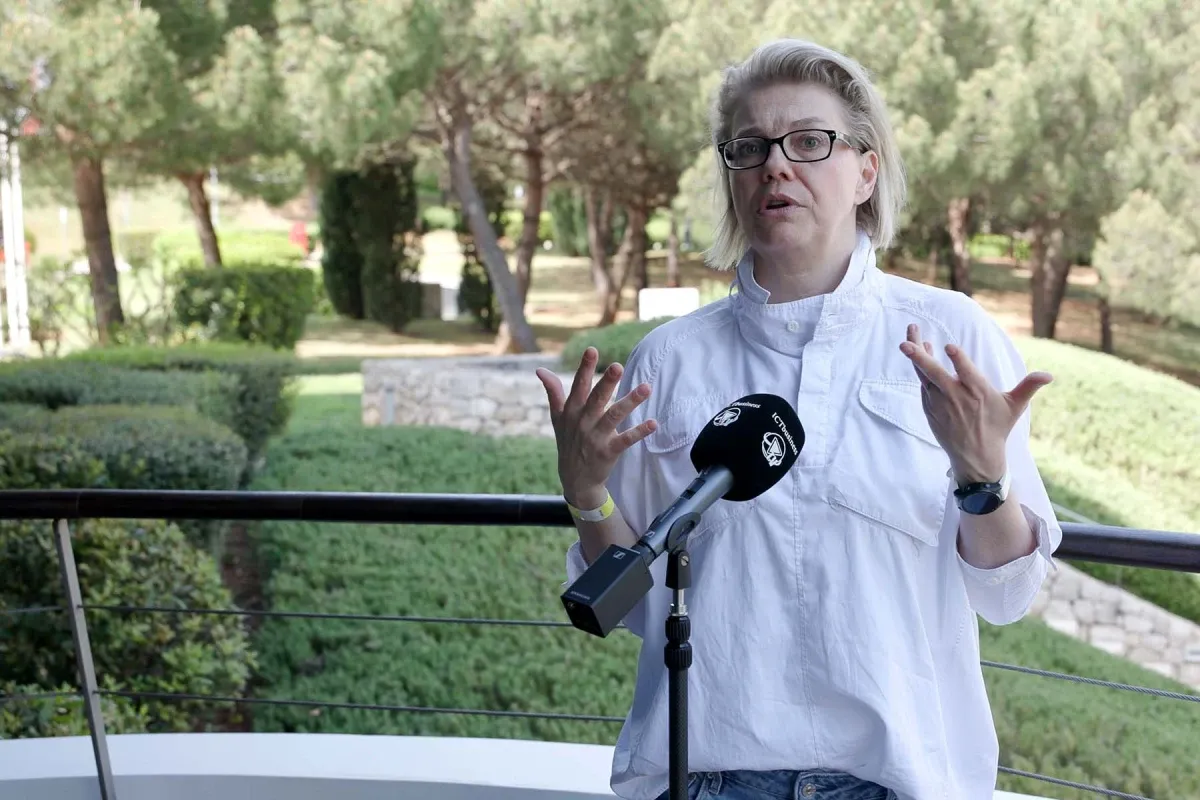
Following another edition of Dani komunikacija, Anđela Buljan Šiber, founder of the Izone agency and a member of the festival’s Organizing Committee, emphasizes that the success of such an event is never the result of short-term preparation.