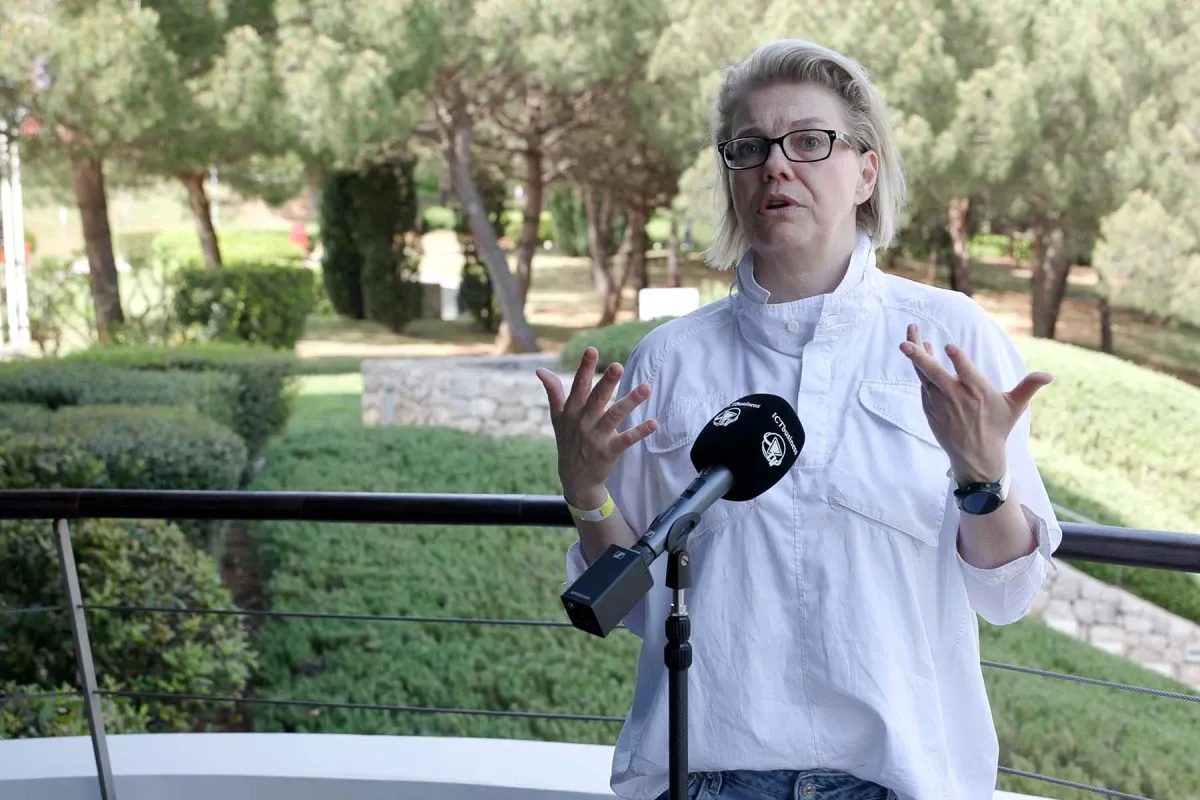
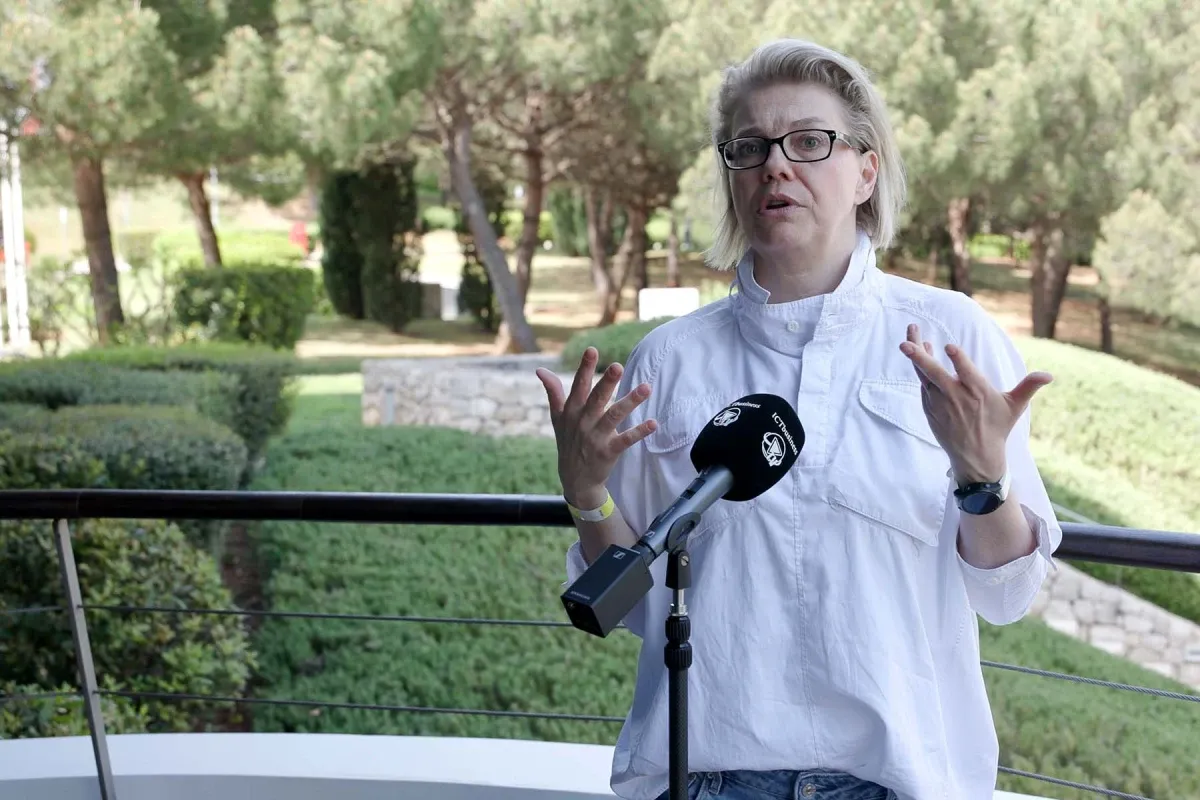
Following another edition of Dani komunikacija, Anđela Buljan Šiber, founder of the Izone agency and a member of the festival’s Organizing Committee, emphasizes that the success of such an event is never the result of short-term preparation. It comes from years of following the communications industry, broader market trends, and people who can open important conversations. Dani komunikacija is therefore not only a festival of marketing communications, but also a place where the industry tests the future of creativity, advertising, technology, and the way audiences receive messages today.
“We work on the festival throughout the entire year, and in fact for years, because we follow the marketing communications scene and broader trends,” says Buljan Šiber. The program, in her view, is not built simply as a sequence of attractive talks, but as a carefully shaped selection of topics and speakers who can bring the industry a new perspective. “We like to question things and bring in people who can provoke us a little and make us think,” she adds, explaining that preparation for the next festival effectively begins as soon as the previous one ends.
One of the central themes of this year’s discussions was artificial intelligence and its impact on the creative industry. Buljan Šiber takes a realistic, but not alarmist, view. She does not see AI as a replacement for human creativity, but as a tool that can significantly change the average level of execution. “I see artificial intelligence as a combination of human and tool,” she says. In her view, AI can accelerate processes, simplify tasks, and reduce the amount of poorly written, superficial, or technically weak communication material, but it cannot independently create something truly new.
This is where she sees the main boundary of today’s technology. “Artificial intelligence works with what is already inside. It cannot generate truly new things,” says Buljan Šiber. For that reason, she believes the average level of industry output will rise, but the question of original creation will become even more important. “On average, humanity will become better, but there will be much less creativity and new creation if we do not step back a little and stop being lazy,” she warns. In other words, AI can help those who know what they want to achieve, but it cannot replace deep thinking, intuition, experience, or the human ability to derive a new idea from the unknown.
That is why, for her, the real question is not whether AI should be used, but how it should be used. The communications, marketing, and advertising industry has always depended on the ability to recognize change, translate it into a message, and find a relevant way to address an audience. AI can be a powerful operational tool in that process, but not the source of genuine innovation. “It certainly will not create Pythagoras’ theorem, and it will not create a new analysis. That is where you need a human being, and that is where humans will always dominate,” says Buljan Šiber. For her, the ability to create something new is the real distinction between processing information and intelligence in the full sense of the word.
When discussing creativity in advertising, she rejects the claim that it has disappeared. The real issue, she argues, is that the market has become so fragmented that big creative ideas are no longer visible in the same way they once were. In the era of dominant television, one campaign could reach almost every generation and social group at the same time. Today, messages are adapted to micro-targets, channels, platforms, and specific audiences, meaning that even people from the industry sometimes miss campaigns of exceptional quality. “I would not say there is no creativity. It is just that everything is so fragmented that we can no longer follow all the information,” she says.
This fragmentation is also changing the aesthetics of communication itself. Something that might have felt completely new ten years ago can now disappear in the enormous flow of content. At the same time, campaign lifespans are shrinking, and content becomes outdated faster than ever. “It often does not pay to make wildly creative videos if they live for literally one or two days,” says Buljan Šiber. But this does not mean creativity is gone. It has moved into different formats, different niches, and different generational codes. “There is a lot of creativity, but it is no longer visible in the same way as before, when major advertisers created the biggest campaigns.”
A particularly important change is the new relationship between large and small advertisers. Digital channels have given smaller companies access to advertising in a way that was once almost unimaginable. Yet smaller advertisers usually do not have the financial resources for long experimentation, broad brand campaigns, or creative risk. “Advertising is more accessible to small businesses, but a small business needs a quick return on investment because it does not have reserves,” says Buljan Šiber. For that reason, their communication often comes down to a very precise reason to buy, a clear call to action, and a measurable result. “A click is not great creativity, but it has its role,” she adds.
This is where the difference between a sales campaign and long-term brand building becomes clear. If the goal is to sell a product or service immediately, communication has to be simple, fast, and very clear. If the goal is to build a brand, it requires time, continuity, meaning, and an emotional connection with the audience. “When you are building a brand in the long term, you will not get much from a click,” says Buljan Šiber. But she also sees this as a natural development path: small advertisers, if they grow and become larger, will eventually have to move toward more serious brand building.
The marketing communications industry is therefore entering a period in which it must simultaneously understand artificial intelligence, channel fragmentation, changing generational habits, and the pressure for measurable results. Audiences are no longer in one place, messages no longer travel through one dominant channel, and creativity is increasingly hidden in smaller, more precisely targeted, and shorter-lived formats. Anđela Buljan Šiber’s conclusion is therefore not pessimistic, but cautionary: creativity has not disappeared, but the way it is created, distributed, and recognized has changed. In this environment, the advantage will belong to those who use AI as a tool rather than as a substitute for thinking, and to those who understand that real communication value is still born where technology ends and the human idea begins.