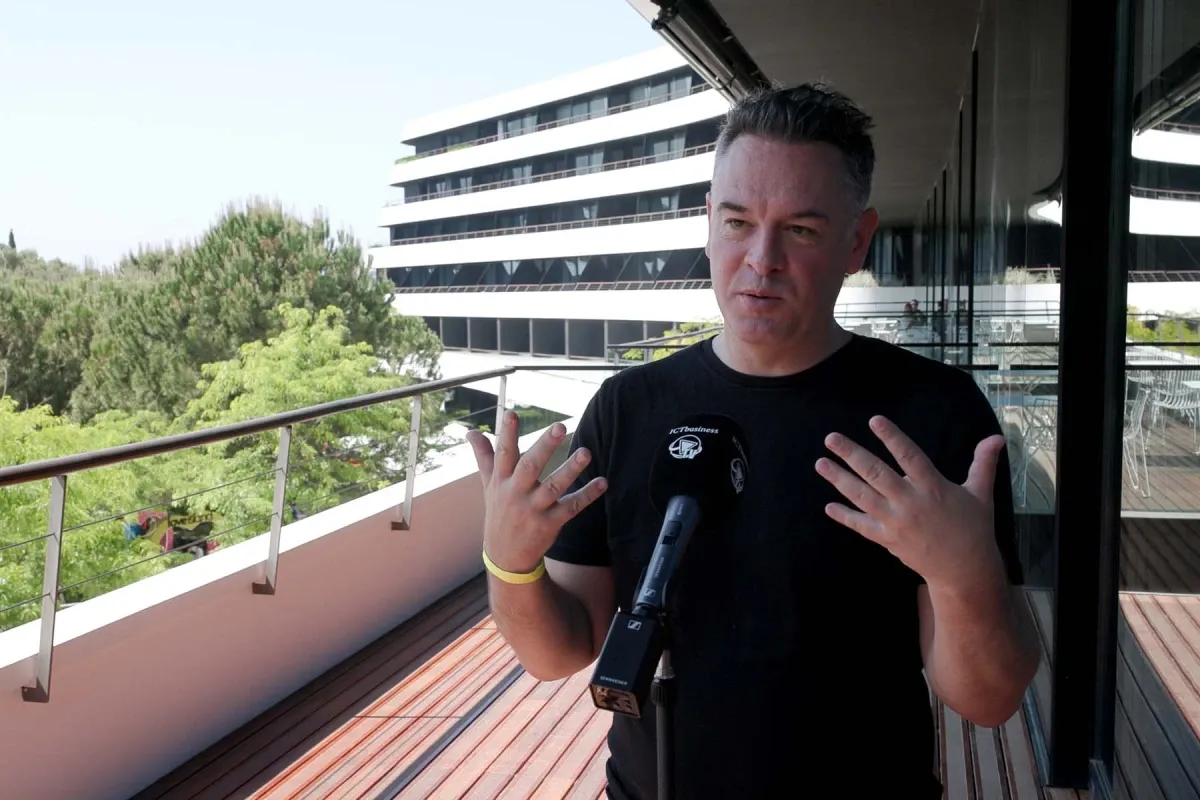
At a time when media, advertising, communications, and marketing are changing faster than ever, Mark Pollard, one of the leading marketing strategy mentors worldwide, believes the central issue is no longer only how to capture attention. The bigger question is how to build a sustainable media model in a world shaped by algorithms, artificial intelligence, political pressure, and increasingly unstable revenue streams. His message is clear: journalism has a future, but only if journalists and media organizations develop stronger individual voices, a clearer understanding of their intellectual property, and new ways of creating value.
Pollard compares the current period with the early explosion of social media, when Facebook, Snapchat, Pinterest, and other platforms constantly changed the rules of engagement. The difference today is that the pace has accelerated, while many channels have also become more homogenized and less interesting than they were a few years ago. “People used to make one- or two-year plans for their businesses, and now everything changes every few months,” he says. In his view, the industry may be less complex in some respects than it was ten years ago, but the environment is far more volatile. “You still need to do provocative and interesting creative work to get people’s attention, but things around you seem to change every 12 to 24 hours.”
The future of journalism is especially important in a media environment dominated by short-form video, influencers, and platforms that are not naturally suited to explaining complex public-interest issues. Yet Pollard does not accept the pessimistic view that journalism has lost its purpose. “Of course, journalism and journalists have a future,” he says. But he also argues that journalists will have to build more independent personalities, separate from their owners, bosses, or institutions. This does not mean abandoning professional standards. It means creating a recognizable voice that can survive beyond the walls of a single media company.
His global experience gives that assessment additional weight. Over the past two years, Pollard has visited around 40 cities and says he sees pressure on the media almost everywhere. In the United States, where he has lived for more than a decade, he sees pressure on the industry to respect or even repeat what political power wants to hear. In other markets, he observes local leaders taking over established media companies and the influence of major powers on information ecosystems. “In some markets, you can smell and see the effect of countries like the US, Russia, and China,” Pollard says, also pointing to the presence of pay-for-play practices in parts of the newspaper industry.
But the problem of mainstream media is not only political or ownership-related. Pollard notes that the audience for traditional media is getting older, while younger generations consume information through different formats, faster rhythms, and more personal interpretation. “When we talk about mainstream media, we are often talking about a much older audience,” he says. For that reason, journalism needs a different style of storytelling. Explainers and explanatory videos remain important, but stronger opinions, sharper interpretations, and more dynamic formats are becoming harder to ignore. “Journalism is typically about explainers, but around the world, you also see hot takes and gossip becoming popular. I think those two will become even more energetic.”
From a business perspective, Pollard is direct about one of the biggest weaknesses of traditional media companies: their dependence on advertising, partnerships, and paid access to content. As advertising budgets are cut and the cost of producing content continues to rise, media organizations need additional revenue streams. “A lot of media organizations haven’t flywheeled their IP in the way they could,” he says. In his view, publishers often fail to recognize that decades of reporting, archives, analysis, and expertise can become the basis for educational products, books, online courses, events, communities, and other formats.
For Pollard, the key concept is the flywheel: taking one idea, one body of knowledge, or one piece of intellectual property and turning it into multiple products, channels, and revenue opportunities. “If you’ve been writing about history for 50 years, work out how to turn that body of knowledge into books, courses, online events, offline events, or other formats,” he argues. Not every format needs to generate large revenue immediately. A book or an educational product can have strategic value for the brand by strengthening authority and opening new commercial opportunities. This matters because, as he observes, journalists are often not naturally commercial, while the tension between editorial and business sides of media organizations never fully disappears.
Artificial intelligence accelerates all of these pressures. Pollard does not see AI as a magic tool capable of replacing creativity, expertise, or professional judgment, but he does believe it changes the threshold of mediocrity. “If you’re not good at your job, AI can quickly make you okay or mediocre,” he says. That is precisely why stronger professionals must push further. “If AI is resetting the boundaries of what it means to be okay, exceptional people will still go further, whether they use it or not.”
Ultimately, Pollard sees the future of media as both more pressured and more open. Technology will amplify existing tensions between speed and depth, populism and serious thinking, personal brand and institutional credibility. “If you want to be in the media space, you have to work out how to be a bigger personality with fresh takes,” he says. In a world with less traditional gatekeeping, opportunities will not belong only to large media companies. They will also belong to those who can find a topic, shape a format, and build a distinctive voice. That is where journalism still has a strong chance: not by returning to the old model, but by turning knowledge, credibility, and storytelling into new forms of value.