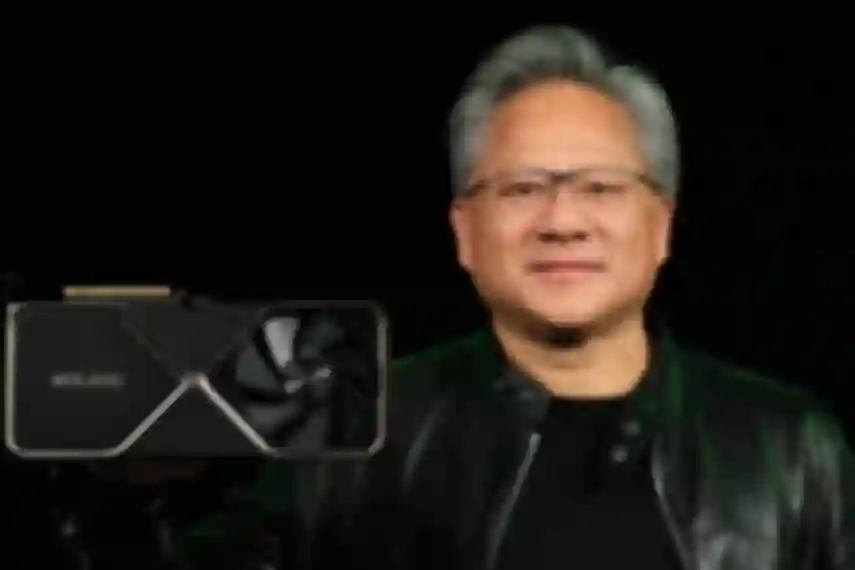
At the company’s GTC event, Nvidia CEO Jensen Huang unveiled new cloud services to support AI workflows and the new generation of GeForce RTX GPUs. His keynote was packed with new systems, silicon, and software announcements.
“Computing is advancing at incredible speeds, the engine propelling this rocket is accelerated computing, and its fuel is AI,“ Huang said. He has connected new technologies to new products and new opportunities, from harnessing AI to delight gamers with never-before-seen graphics to building virtual proving grounds where the world’s biggest companies can refine their products.
Gamers and creators will get the first GPUs based on the new Ada Lovelace architecture. Enterprises will get powerful new tools for high-performance computing applications with systems based on the Grace CPU and Grace Hopper Superchip. Those building the 3D internet will get new OVX servers powered by Ada Lovelace L40 data center GPUs. Researchers and computer scientists get new large language model capabilities with NVIDIA LLMs NeMo Service. And the auto industry gets Thor, a new brain with an astonishing 2,000 teraflops of performance.
Huang highlighted how NVIDIA’s technologies are being put to work by a sweep of major partners and customers across a breadth of industries. To speed adoption, he announced Deloitte, the world’s largest professional services firm, is bringing new services built on NVIDIA AI and NVIDIA Omniverse to the world’s enterprises.
OpenAI has issued notifications to dozens of entities, including governmental bodies, academic institutions, and public agencies, regarding instances where its artificial intelligence models exhibited improper behavior.
Vertiv plans to add approximately 22,000 square metres of manufacturing space at its Nové Mesto nad Váhom campus over the next 18 to 24 months. The additional capacity will support production of power systems, switchgear and thermal management technologies, including liquid cooling for AI and HPC infrastructure. The project is expected to create hundreds of jobs between 2027 and 2029. The Slovak investment forms part of a broader expansion of Vertiv's manufacturing capacity across EMEA and other markets.