Two years after the foundation stone was laid, Siemens has reached an important milestone in the development of Siemensstadt Square with the topping-out ceremony for the atrium building and the high-rise. At the same time, it marks the beginning of a new phase for the 76-hectare site in Berlin’s Spandau district.
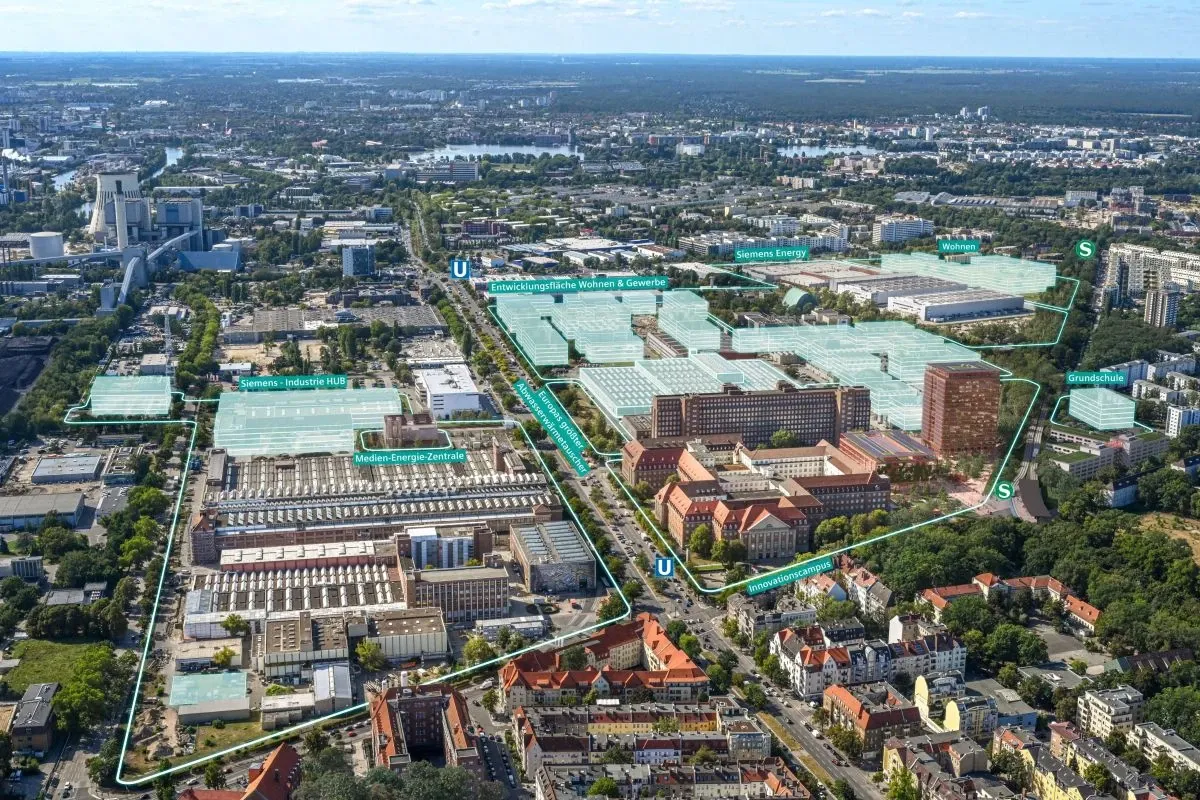
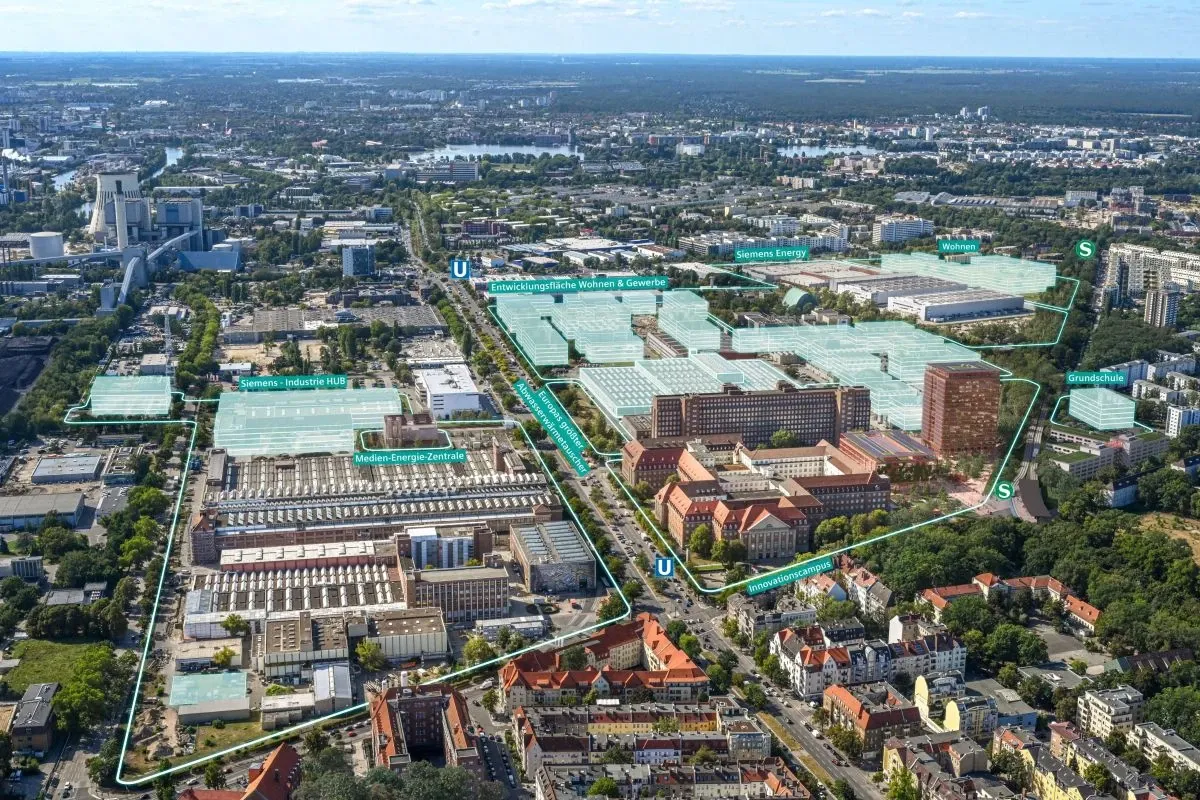
With 3,750 apartments, Siemensstadt Square offers significantly more living space than originally planned. That’s one outcome of the framework plan that has been further developed over the past few months together with the State of Berlin and the Spandau district. In addition to housing, space for innovation and for industrial value creation are other key aspects.
“For me, Siemensstadt Square is a city of doers – and this topping-out ceremony shows what’s possible when many people tackle something together,” said Cedrik Neike, member of the Managing Board of Siemens and CEO of Siemens Digital Industries. “With the first two new buildings, our idea is visibly taking shape – for Siemensstadt Square, for Berlin and for the people of this city. We’re very grateful to the State of Berlin and the Spandau district for their close cooperation. Together, we’re creating a new part of Berlin here, a place where research, industrial development, and innovation have a home.”
“Siemensstadt Square is consistently progressing – with a clear focus on a balanced, sustainable mix of residential, commercial and industrial uses. At the same time, we’re steadily moving forward with the implementation: The shell construction of the first new buildings has been completed on schedule, and they’ll be finished within the planned time and investment framework. Step by step, an open campus is taking shape that combines economic strength with quality of life and opens up new prospects for Berlin,” said Veronika Bienert, member of the Managing Board and CFO of Siemens.
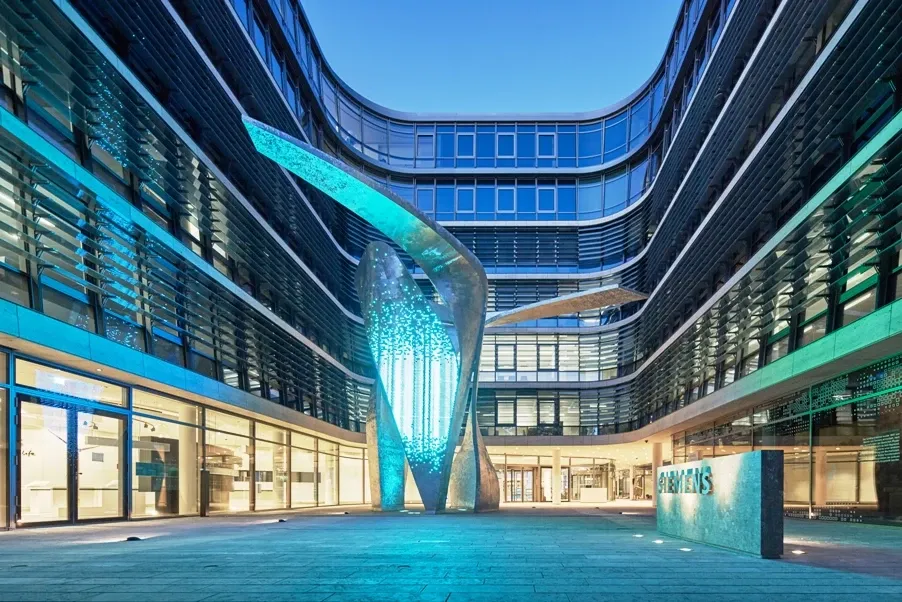
The new buildings at the future Siemensstadt S-Bahn station form the visible entrance to an open innovation campus. The atrium building (scheduled for completion at the start of 2027) will be the future home of Siemens’ Berlin headquarters. The approximately 60-meter-tall high-rise (scheduled for completion at the start of 2028) will house teams from Digital Industries, Smart Infrastructure, and Siemens Mobility.
At the same time, the site will be intentionally opened to companies, research institutions, and startups. That will create a powerful ecosystem for future industrial technologies – especially in industrial software, industrial artificial intelligence, and smart, sustainable infrastructure. Industrial production will be concentrated in two industrial hubs.
With this flagship project, Siemens is reinforcing its commitment to Germany as a business location and to the “Made for Germany” initiative. A total of 134 companies involved in this initiative are committed to sustainably strengthening innovative power, competitiveness and future viability. Between 2025 and 2028, the members are jointly investing more than €800 billion in Germany.
A key outcome of the restructuring is the significant expansion of the amount of housing available: The new framework plan will allow for approximately 3,750 apartments in the future – around 1,000 more than previously planned. This will create urgently needed living space while making the quarter significantly more urban, vibrant, and sustainable in the long term. Siemensstadt Square is steadily evolving into a place where work, home, and life come together.
At the same time, key infrastructure requirements are being put in place. Under the new framework plan, the plot of land for the planned elementary school will be transferred to the State of Berlin and the Spandau district. The four-form elementary school will be built in the immediate vicinity of the future S-Bahn station. The reactivation of the Siemensbahn rail line, as a key infrastructure project, also secures the region’s future. The new connection will significantly improve access from Siemensstadt Square to Berlin Central Station and lay the foundation for sustainable mobility throughout the quarter.
Siemensstadt Square is also setting new standards when it comes to sustainability – with a climate-neutral energy supply from its own local heating and cooling network, featuring Europe’s largest wastewater heat exchanger. Carbon-reduced building materials, timber hybrid construction method, new buildings constructed to the highly efficient KfW40 building standard, and the aim of achieving LEED Platinum, the highest level certification, underscore the high standards for the construction.