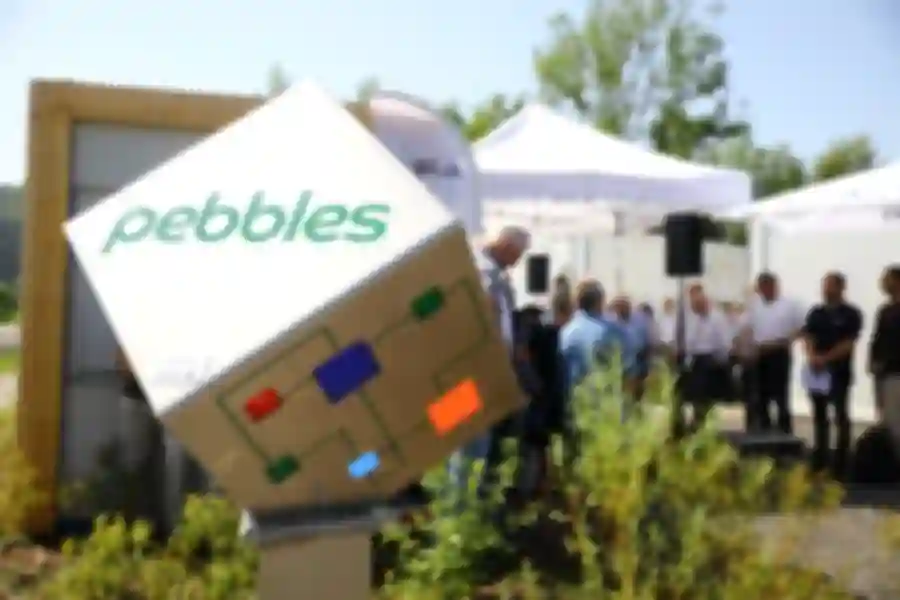
As part of the pebbles research project, Siemens, the regional utility Allgäuer Ãœberlandwerk (AÃœW) and their project partners are developing a local electricity market using blockchain technology. The parties launched pebbles’ electricity trading platform, bringing them one step closer to creating the first local marketplace for optimized electricity trading based on blockchain.
The platform will be utilized in in the town of Wildpoldsried in the Bavarian Allgäu region of Germany. Now, during the platform’s demonstration phase, private producers can use an app to market their electricity directly to local consumers without going through marketers or traditional grid operators. The market platform also supports flexible power from battery storage or controllable loads such as heat pumps or charging stations for electric vehicles. The blockchain technology, which forms the basis for managing market transactions, is designed to create end-to-end transparency and trust between users.
Consumers, also the customers, can define preferences for electricity purchases, such as the percentage and price for electricity from local photovoltaic and wind energy systems. With funding from the German Federal Ministry for Economic Affairs and Energy, the goal of the pebbles project is to demonstrate that bottlenecks in the grid can be avoided through local energy and flexibility trading, therefore lowering the costs associated with the energy transition. Project partners Siemens, AÜW, grid operator AllgäuNetz, Kempten University of Applied Sciences, and the Fraunhofer Institute for Applied Information Technology (FIT) have jointly developed the platform, management systems and app, taking grid limitations, and production and load forecasts into account.
Telecom operators approach AI from two directions: as providers of infrastructure for the digital transformation of other industries and as organisations embedding AI into their own processes. A1 Hrvatska has moved from prototypes to concrete products, from customer support to sovereign European cloud services. Daniel Šimić says workforce profiles are also changing, with fast learning, customer understanding and adaptability becoming more important.
Burra was created as a platform for consolidating IT services companies in Southeast Europe, with a commercial focus on Western Europe and the United States. Its first members, Devōt, Tacta and CoreLine, continue to run their existing businesses while integration is planned gradually, primarily through new projects. Sven Marušić says the aim is not to turn founders into corporate employees, but to build a larger organisation in which they remain shareholders and drivers of growth.
Telecom operators are no longer using AI only for network optimisation and routine operations. They are applying it to faster product development and customer conversations. Matija Ražem says AI enables prototypes in hours, quicker market testing, and automation of many standard support questions. The next step may be a world where personal digital agents interact with agents from telecoms, banks and other large organisations.