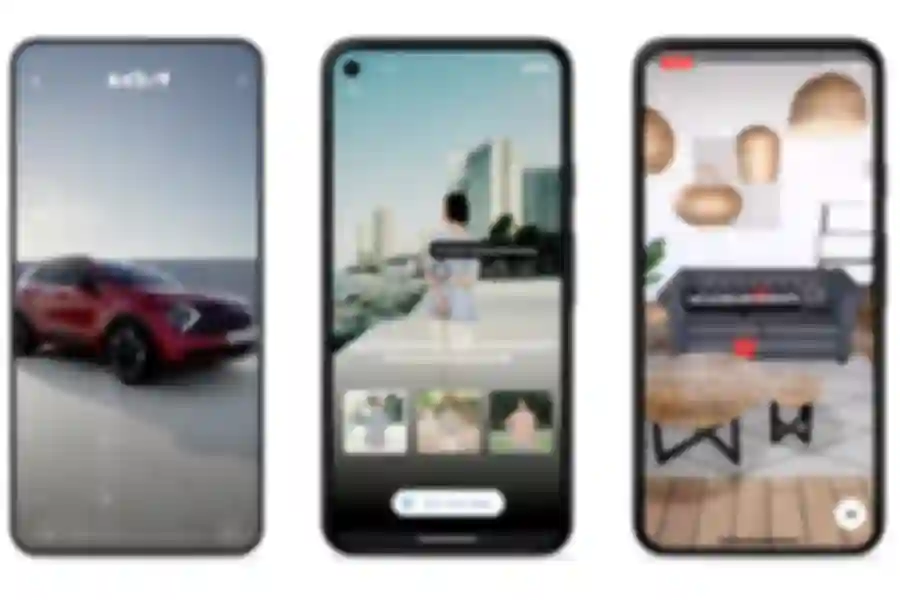
Google Cloud announced the availability of a new feature enabling users to engage in extended reality from their smartphones and eliminating the need to use wearable devices. The company stated the Immersive Stream for XR service, first previewed at Google I/O in 2022, is now available to Google Cloud customers.
The service is powered by cloud-based GPUs allowing customers to render and stream 3D content on their Google apps, running on both Android and iOS smartphones. The XR offering also supports tools developed by Unreal Engine, a 3D graphics generator, used to gain more traction from brands and content creators.
To access Immersive Stream, users are invited to click a link or scan a QR code, to immediately be transported to extended reality. For example, Google said it is using the XR tool for Google Map users to access its immersive view feature. The feature also boasts a landscape mode to enable the use of larger screens, such as tablets or laptop computers. Longer term, Google claimed enabling more accessible XR experiences on mobile can trigger innovative use cases in business and entertainment.
AgentOS is Infobip’s response to a phase in which agents are becoming an important tool for process automation and customer communication. Krešo Žmak says the market is still at an early stage, but clients are moving away from AI for the sake of innovation and towards measurable results. The next challenge will be controlling costs, user experience, and the nondeterministic nature of agentic systems.
Telecom operators approach AI from two directions: as providers of infrastructure for the digital transformation of other industries and as organisations embedding AI into their own processes. A1 Hrvatska has moved from prototypes to concrete products, from customer support to sovereign European cloud services. Daniel Šimić says workforce profiles are also changing, with fast learning, customer understanding and adaptability becoming more important.
Burra was created as a platform for consolidating IT services companies in Southeast Europe, with a commercial focus on Western Europe and the United States. Its first members, Devōt, Tacta and CoreLine, continue to run their existing businesses while integration is planned gradually, primarily through new projects. Sven Marušić says the aim is not to turn founders into corporate employees, but to build a larger organisation in which they remain shareholders and drivers of growth.