IBM and OpenAI Bring Frontier AI to Cyber Defense
IBM joined the OpenAI Daybreak Cyber Partner Program, bringing advanced frontier AI capabilities into security operations to help enterprises counter machine-speed threats.

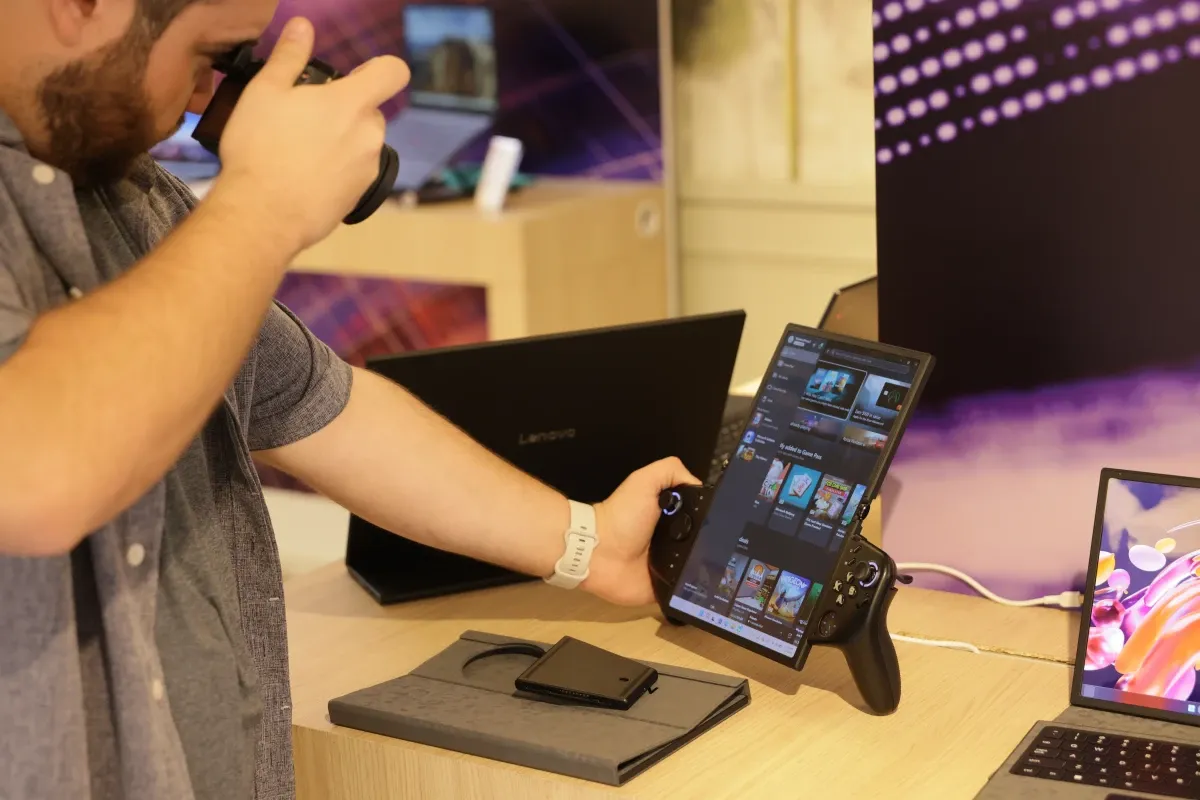
Lenovo no longer sees artificial intelligence merely as a software layer running in the background of a PC, but as an active collaborator capable of taking on parts of everyday work and linking the digital and physical worlds. That was the core message from Vico Song, Senior Manager, Product Management at Lenovo, who spoke on the sidelines of Mobile World Congress about the Lenovo AI Workmate concept and the broader direction of AI device development.
As Song explains, the goal is not to create yet another gadget that showcases AI for its own sake, but a device with a clear role in business environments. “AI can not only deal with digital content, but it could also execute tasks in the physical world,” Song says. That is why Lenovo is exploring form factors designed to operate “not only in the digital world, but in the real office”, helping users in day-to-day working scenarios and raising productivity in practical ways.
At the heart of that vision is a shift in working style. Instead of a model in which a person sits in front of a laptop and manually performs every step, Song argues that “AI could be a partner”. In his view, that partner is not limited to generating content, but can work in parallel, support multiple tasks at once, and relieve people of activities that do not require constant human attention. “You can split the task into two parts,” he says, allowing users to stay focused on higher-value work while handing over “boring or repeatable tasks” to an assistant device.
For now, Lenovo AI Workmate remains a concept, but Song’s description makes clear that Lenovo sees it as more than a conventional AI assistant. He says it can generate content, create summaries, tap into a knowledge base, and independently process multimodal tasks. More notably, he describes it as “a bridge of the digital world and the physical world”, able to project content onto a desk or wall, support both individual work and group discussion, and collect notes and ideas before turning them into summaries and suggested next steps.
The broader implication is that Lenovo does not see the future of AI solely in ever more powerful models, but in new device categories and new ways of working. Song remains cautious when discussing long-range predictions. “Sometimes it’s a mystery,” he says of the future, adding that the only sensible approach is to “keep exploring the possibilities”. That, in essence, is the company’s AI direction: to test new form factors, expand capabilities, and build tools that make “life and work easier”. In that framework, the physical AI assistant is not positioned as a replacement for people, but as a new operational layer of the future workplace.

IBM joined the OpenAI Daybreak Cyber Partner Program, bringing advanced frontier AI capabilities into security operations to help enterprises counter machine-speed threats.

A1 Group announced it is taking another step in the continued development of its network infrastructure.
Siemens announced that European startups can now access its industrial software through their Startups Program.