Lenovo announced a series of new products at a special event in Berlin. The company claims each device is designed to show the future of professional computing and artificial intelligence.
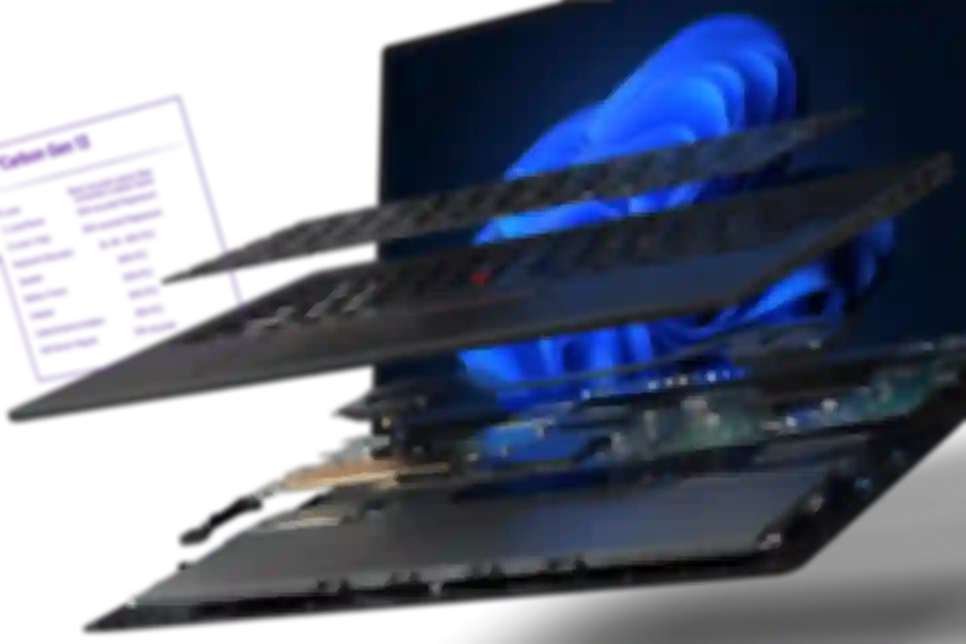
The highlights include the newly designed premium ThinkPad X1 Carbon Gen 13 Aura Edition and Auto Twist AI PC proof of concept. The vendor also featured the ThinkPad T14s Gen 6 and ThinkBook 16 Gen 7 and Gen 7+. Lenovo also announced AI PC Fast Start, a solution designed to help organizations swiftly transition to AI-ready devices.
The relevance of AI PC devices is expected to rise, with over 60% of PCs shipped by 2027 anticipated to be AI-capable. Lenovo said that its AI PCs aim to change user experiences through natural interactions significantly, personalized large language models, and advanced computing architectures, making computing more personal, productive, and protected.
Designed in collaboration with Intel, the Aura Edition series is designed to personalize and simplify user interaction with their devices. More than ten thousand users around the world participated in user experience testing. With findings from that work, Lenovo and Intel brought usability concepts that were narrowed down and tested with four thousand users who helped to prioritize and refine the experiences. Aura Edition laptops include ThinkPad X1 Carbon Gen 13 and Lenovo Yoga Slim 7i.
“Our latest AI PC innovations represent a significant leap forward in making technology more personalized, productive, and protected for our customers,” said Tom Butler, Executive Director at Lenovo Intelligent Devices Group. “By combining cutting-edge AI technology with more sustainable designs and user-centric features, we are not only aiming to lead the market but to redefine what’s possible in the AI era.”
AgentOS is Infobip’s response to a phase in which agents are becoming an important tool for process automation and customer communication. Krešo Žmak says the market is still at an early stage, but clients are moving away from AI for the sake of innovation and towards measurable results. The next challenge will be controlling costs, user experience, and the nondeterministic nature of agentic systems.
Telecom operators approach AI from two directions: as providers of infrastructure for the digital transformation of other industries and as organisations embedding AI into their own processes. A1 Hrvatska has moved from prototypes to concrete products, from customer support to sovereign European cloud services. Daniel Šimić says workforce profiles are also changing, with fast learning, customer understanding and adaptability becoming more important.
Burra was created as a platform for consolidating IT services companies in Southeast Europe, with a commercial focus on Western Europe and the United States. Its first members, Devōt, Tacta and CoreLine, continue to run their existing businesses while integration is planned gradually, primarily through new projects. Sven Marušić says the aim is not to turn founders into corporate employees, but to build a larger organisation in which they remain shareholders and drivers of growth.