Infobip and Haas F1 Team Unveil RaceMate App
Infobip and TGR Haas F1 team are launching Team RaceMate, an AI-powered conversational fan companion on Apple Messages for Business and WhatsApp Business Platform.


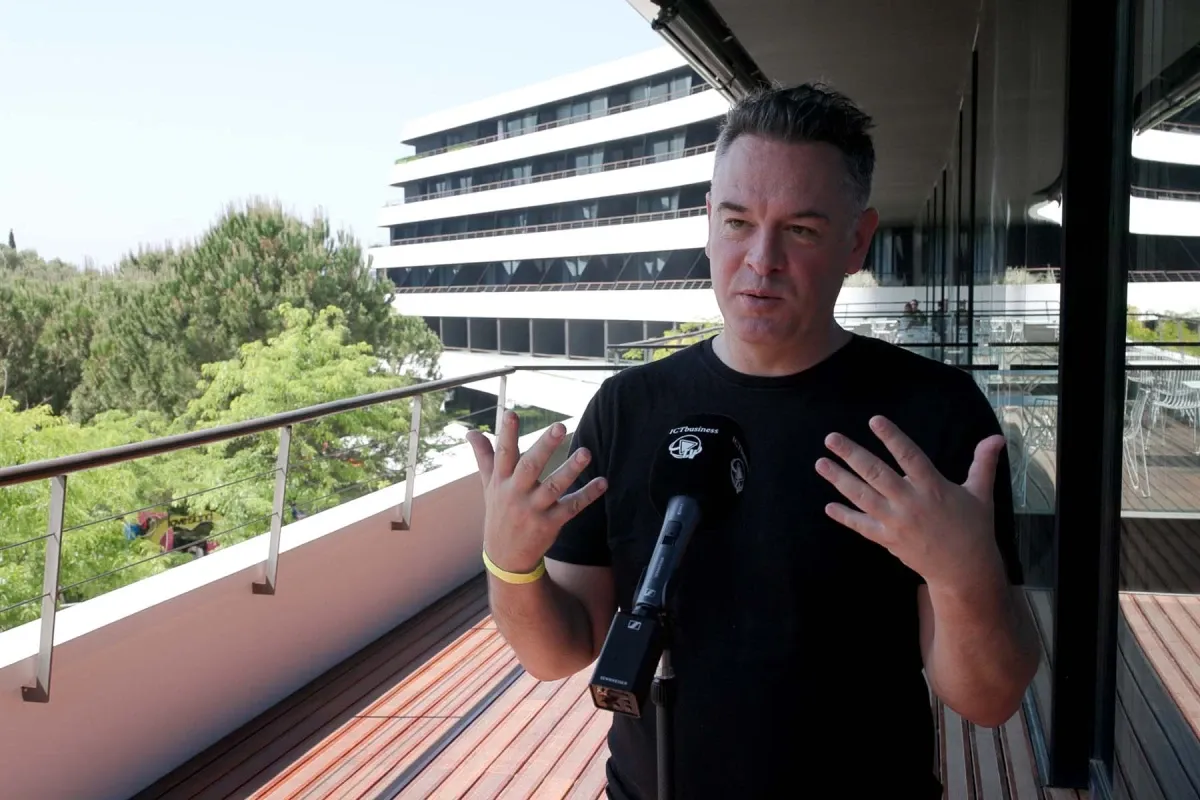
Ericsson Nikola Tesla’s cooperation with Hrvatski Telekom and Crnogorski Telekom shows how the telecom market is moving beyond the traditional focus on coverage and capacity and toward a much broader question: how to turn the network into a platform for new industrial services, critical infrastructure, and security use cases. In an interview for ICTbusiness Media - ICTbusiness.biz, Ivan Barać, a member of the Executive Management Board of Ericsson Nikola Tesla, argues that this is precisely where the next generation of mobile networks is heading, from radio and core network modernization to 5G Standalone architecture, private networks, and new monetization models.
Barać stresses that the company’s cooperation with operators in Croatia and Montenegro is long-term and is now entering a new development stage. “We are very proud of our cooperation with Hrvatski Telekom and Crnogorski Telekom, which has lasted for many years,” he says. According to Barać, the company has “been modernizing the radio network for years”, while also completing projects in the core network segment. The strategic objective is to deliver services based on 5G Standalone, the architecture that finally opens the door to the full technological and commercial potential of 5G.
As a concrete example, he points out the Rijeka Gateway project at the Port of Rijeka, describing it as proof that private 5G networks are no longer a theoretical promise but a real industrial platform. “What we can already see in smaller examples is the Port of Rijeka and the Rijeka Gateway project,” Barać says. He also underlines that it is a project for which “Hrvatski Telekom received an award from the European Union”, reinforcing the idea that the Croatian market can already produce reference-grade 5G Standalone deployments. He sees a similar trajectory in Montenegro, where an agreement has already been signed to expand the radio network through 2028 to prepare that infrastructure for Standalone services as well.
Asked where 5G monetization truly stands today, Barać does not hide the fact that initial market expectations were ahead of reality. “As is often the case with mobile technologies, the early promises were not fulfilled immediately,” he says, while adding that the business case is now becoming clearer. In his view, the first meaningful growth comes from private networks for ports, airports, critical infrastructure protection, and smart factories. He singles out the Smart Airports project as a case that will demonstrate “how low latency and the introduction of artificial intelligence into networks contribute to critical tasks”. In other words, the value of 5G is no longer just higher consumer speed, but the network’s role as a foundation for automation, industrial workflows, and real-time decision-making.
At the same time, Barać sees strong potential in the consumer domain through network slicing and a changing traffic pattern. “You will be able to use the network with guaranteed quality and guaranteed speed,” he says, describing a model of differentiated connectivity that could open up additional revenue streams for operators. He also highlights a structural shift driven by AI. “We are seeing a change in how users consume mobile networks, from downlink to uplink,” Barać explains, as conversational AI and new digital services increasingly require users to send data back into the network rather than simply consume content. That, he argues, creates “an opportunity for additional revenues for operators”, but also demands a different approach to capacity planning and service quality.
The broadest dimension of the interview emerges when Barać turns to security. “Mobile networks are today a de facto part of critical national infrastructure. There is no doubt about that,” he says. In a world of hybrid threats, where risk is no longer limited to conventional military danger but also includes cyberattacks, energy infrastructure disruption, and psychological pressure on society, the role of telecom networks is expanding rapidly. Barać points to Ericsson’s work on network sensing, where the network can passively detect objects and act as a form of sensor layer. That opens an entirely new application domain for mobile infrastructure in space protection, critical systems monitoring, and crisis-response coordination.
That is why Barać sees Croatia’s homeland security framework as a natural basis for integrating civil and military components, from police and armed forces to firefighters and civil protection. “Croatia’s homeland security system is an excellent framework for integrating all components,” he says. In that picture, Ericsson Nikola Tesla wants to play a major role not only as part of the global Ericsson group, but also as a domestic company with “more than 1,800 software developers and 3,000 employees in total”. The wider industry message is clear: the future of mobile networks will no longer be measured only by the number of base stations or download speeds, but by the ability of telecom infrastructure to become a backbone for industrial digitalization, national resilience, and Europe’s emerging security architecture.

Infobip and TGR Haas F1 team are launching Team RaceMate, an AI-powered conversational fan companion on Apple Messages for Business and WhatsApp Business Platform.

Telefonica unveiled a domestic end-to-end drone service in Spain.

As the global economy faces the need for greater transparency, electronic invoices offer a solution that satisfies both tax authorities and private entrepreneurs.