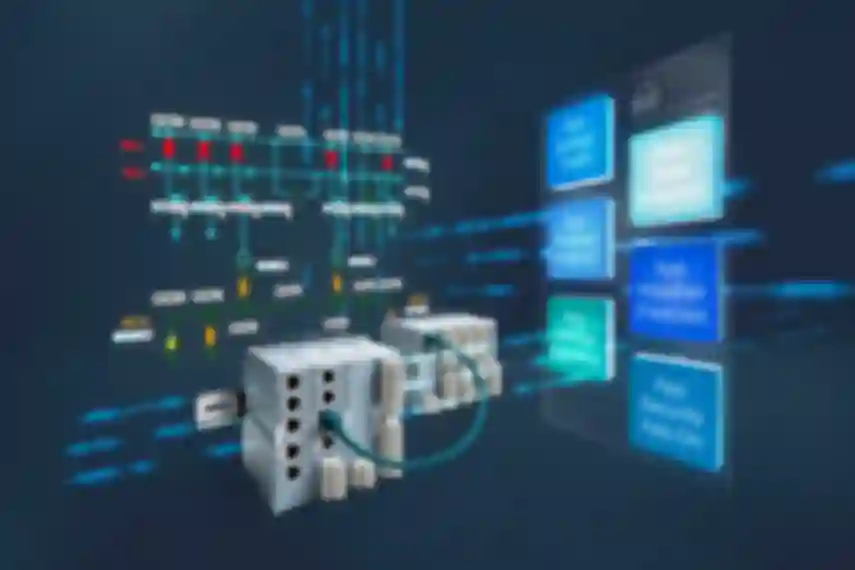
Siemens Smart Infrastructure is expanding the options for distribution grid applications with the new Siapp, a software license for the Sicam A8000 automation and remote terminal unit. The Siapp application is based on the Sicam A8000 with the powerful CP-8050 processor module. Siapp allows up to three separate custom applications to be developed, parameterized and loaded onto the remote terminal unit. Only one runtime license is needed. Siapp complies with the strictest data security standards and benefits customers including major energy suppliers, municipal utilities and industrial companies.
The apps serve different purposes. For example, the first one analyzes weather data. The second app controls wind turbines based on these analyses, while the third is used to optimize the storage of the energy generated. The shared database with the remote terminal unit (RTU) supports consistent, distributed data processing and simultaneously reduces the number of hardware interfaces needed. As a result, it is possible to operate three completely independent applications on a single hardware component, keeping control cabinets compact. This saves space, reduces installation costs as well as spare parts inventory expenses. The devices can be serviced quickly and easily via remote access.
“The new Siapp application enables customers to create their own functions and adapt global products to local requirements. They can also develop their own dashboard,“ said Robert Klaffus, CEO Digital Grid at Siemens Smart Infrastructure. “It’s now possible to combine different access-protected functions on a single, reliable processor module, as if the hardware were proprietary. With this easy-to-implement distributed solution, we are once again at the forefront of energy automation. Our first customer is already running Siapp successfully.“
AgentOS is Infobip’s response to a phase in which agents are becoming an important tool for process automation and customer communication. Krešo Žmak says the market is still at an early stage, but clients are moving away from AI for the sake of innovation and towards measurable results. The next challenge will be controlling costs, user experience, and the nondeterministic nature of agentic systems.
Telecom operators approach AI from two directions: as providers of infrastructure for the digital transformation of other industries and as organisations embedding AI into their own processes. A1 Hrvatska has moved from prototypes to concrete products, from customer support to sovereign European cloud services. Daniel Šimić says workforce profiles are also changing, with fast learning, customer understanding and adaptability becoming more important.
Burra was created as a platform for consolidating IT services companies in Southeast Europe, with a commercial focus on Western Europe and the United States. Its first members, Devōt, Tacta and CoreLine, continue to run their existing businesses while integration is planned gradually, primarily through new projects. Sven Marušić says the aim is not to turn founders into corporate employees, but to build a larger organisation in which they remain shareholders and drivers of growth.