Infobip and Haas F1 Team Unveil RaceMate App
Infobip and TGR Haas F1 team are launching Team RaceMate, an AI-powered conversational fan companion on Apple Messages for Business and WhatsApp Business Platform.

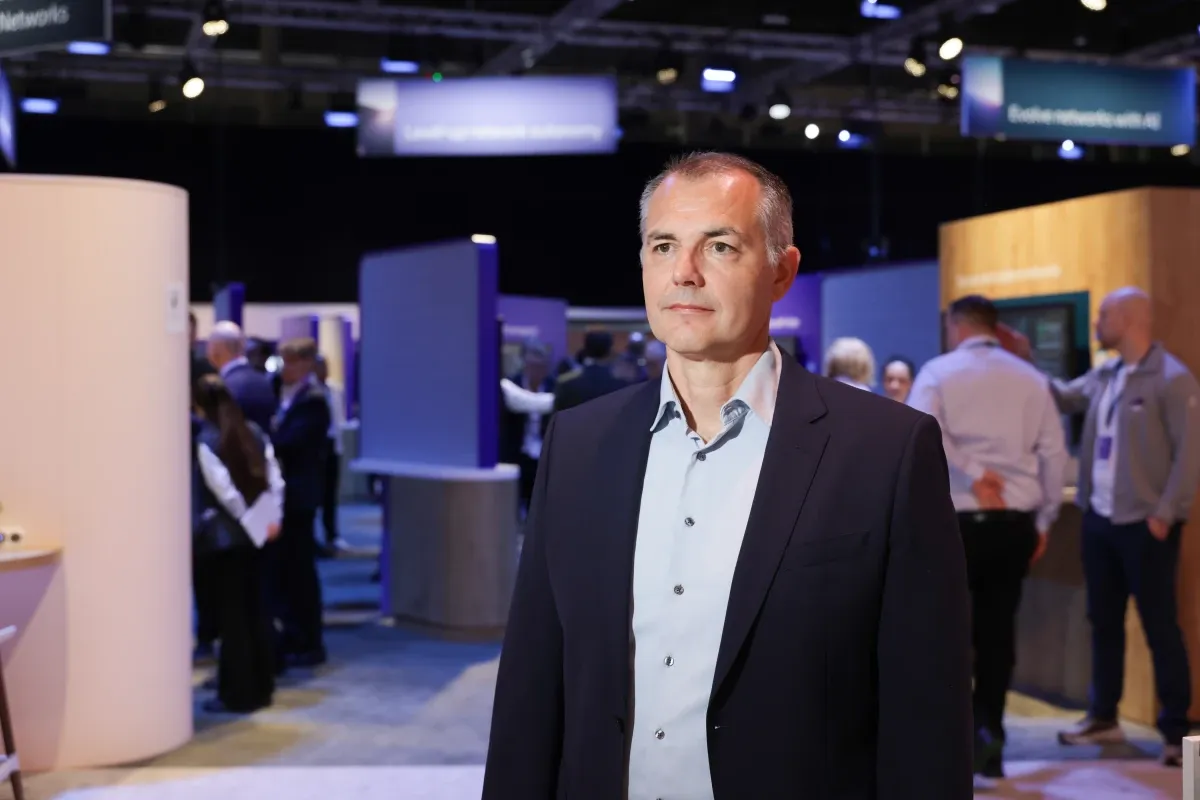
At this year’s Mobile World Congress, artificial intelligence was no longer just a major technology theme. It was presented as a concrete operational tool moving directly into the heart of the telecom industry. That is how Hrvoje Benčić, Member of the Management Board of Ericsson Nikola Tesla and Head of Customer Solutions and Services, for ICTbusiness Media - ICTBusiness.biz, sees the current moment. In his view, the market is finally shifting from broad expectations to real deployment scenarios. As he puts it, “the whole Mobile World Congress is marked by artificial intelligence”, and the industry is now “finally seeing concrete examples” of how it can improve operators, user experience, and society more broadly.
Benčić says Ericsson is embedding AI “across all levels of its solutions”, from the radio layer of the network to management and optimization systems. That includes neural networks built into infrastructure itself, but also a growing role for AI agents capable of taking over tasks that were previously handled manually or only once a problem had already appeared. “The system itself optimizes the network,” he says, enabling “a productive rather than reactive way of solving problems”. For operators, that matters because it can lower operating costs, accelerate response times, and reduce dependence on slower interventions after service issues arise.
But for telecom operators, AI is not only about efficiency. It is also about revenue. Benčić argues that AI models are increasingly being used so operators can “define a new service faster”, “monetize it faster,” and tailor it more precisely to the needs of each user. In that combination of lower costs and faster rollout of personalized services, he sees the main business potential of the current phase. In other words, operators are no longer looking only for another network upgrade. They are looking for a platform that helps them become more efficient while also becoming more commercially agile.
One of the most significant elements of his view concerns the next stage of the industry. While many AI models are still being layered on top of today’s 5G infrastructure, Benčić believes that in the 6G era, artificial intelligence will become native to the network architecture itself. “In 6G, AI will be native,” he says, and all these models will be used “to their maximum”. That will not apply only to software agents, but also to what he describes as physical AI, meaning the growing presence of robots, drones, and other autonomous systems that will require vast amounts of network data and ever greater computing power to act in real time.
At the same time, Benčić stresses that the growing importance of AI inevitably brings security to the forefront. This is, he says, an area becoming “increasingly significant”, especially as telecom networks, critical infrastructure, and even defense-related environments become more tightly linked. That expands the role of telecom technology far beyond connectivity. The network is no longer just a communications layer, but a platform for security-sensitive, industrial, and socially critical systems. That is why the development of AI in telecom cannot be separated from resilience, reliability, and the protection of the wider digital environment.
None of that, however, works without people who can build, integrate, and use these systems. Benčić is explicit on this point: the capabilities linked to AI “are not the future, but the present”. He highlights machine learning, MLOps, cybersecurity, and cloud-native software development as critical skills for future systems. Ericsson Nikola Tesla has therefore established a dedicated “Center of Excellence for AI development” to standardize knowledge internally, accelerate the spread of best practices, and strengthen capabilities across teams and projects. Alongside end products, the company is also focusing on operational efficiency and the software development process itself, where AI is becoming an increasingly important tool for faster and better execution.
The broader message of the conversation is that the telecom industry has entered a decisive phase. Artificial intelligence is no longer an add-on to the network. It is becoming part of its operational layer, its development toolset, and the basis for future business models. Operators and technology partners that manage to connect automation, security, personalization, and skills development will have a major advantage in the period when the next steps of 5G evolution, and the foundations of 6G infrastructure and services, are being defined.

Infobip and TGR Haas F1 team are launching Team RaceMate, an AI-powered conversational fan companion on Apple Messages for Business and WhatsApp Business Platform.

Telefonica unveiled a domestic end-to-end drone service in Spain.

As the global economy faces the need for greater transparency, electronic invoices offer a solution that satisfies both tax authorities and private entrepreneurs.