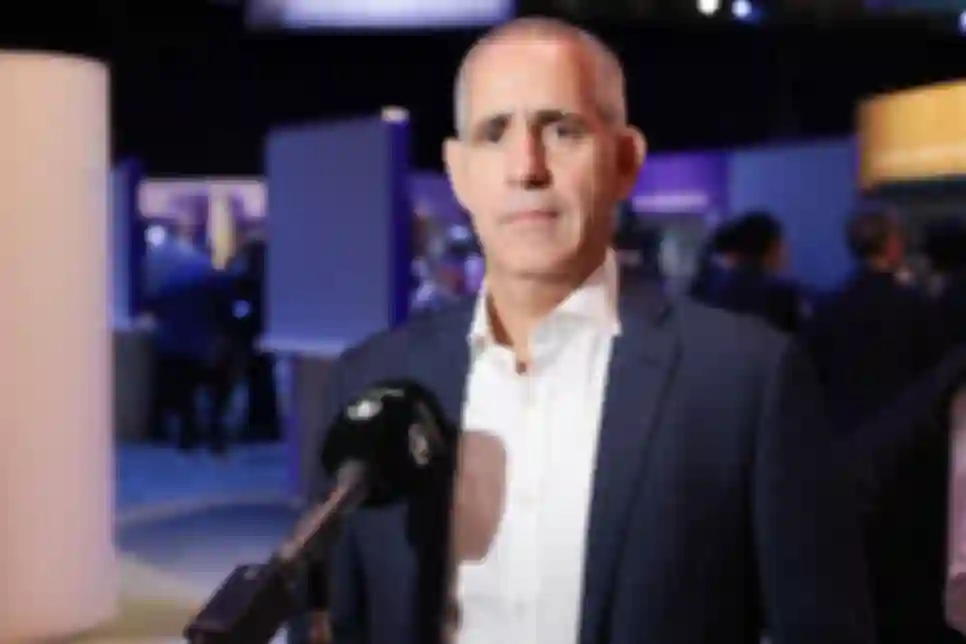
At this year’s Mobile World Congress in Barcelona, one of Ericsson’s central messages was that the telecom industry is no longer going through a simple technology upgrade cycle, but a much deeper transformation of business models, operations, and the role of the network itself in the digital economy. Luca Orsini, Head of Customer Unit North Europe at Ericsson and President of the Supervisory Board of Ericsson Nikola Tesla, argues that operators are now simultaneously pursuing infrastructure monetisation, higher levels of automation, stronger cyber resilience, and network readiness for the AI era. His remarks in Barcelona suggest that the future of telecom is no longer defined only by coverage and capacity, but by network intelligence and its ability to serve a far broader set of industrial and societal needs.
Orsini says Ericsson structured its MWC presence around the themes emerging directly from customer dialogue. “Every customer is looking to monetize the infrastructure,” he says, which is why the company is placing so much emphasis on practical business cases. Those include fixed wireless access, 5G-connected laptops that can replace reliance on Wi-Fi, and service differentiation through different tariff models and service-level agreements. In his view, operators are increasingly segmenting customer needs more precisely and trying to turn the network into a platform for more targeted commercial offers.
A second major area is the deep integration of artificial intelligence across the entire technology stack. “AI is already entering the stack,” Orsini says, stressing that AI is now being embedded both in software and in radio chips. The goal is not merely to improve the efficiency of individual functions, but to enhance the output of the whole system, from performance optimisation to more intelligent resource management. At the same time, Ericsson is also working on “network for AI”, preparing telecom infrastructure to support AI use cases, including learning and training across both centralised and distributed data sets.
That is also where Orsini sees the next major turning point for the industry: autonomous networks. “Soon it will take away any type of human intervention,” he says of AI. In his vision, the network will “listen, learn, correct and adjust”, making changes on its own, segmenting resources and optimising performance for different applications. This goes well beyond today’s automation models. It points to an operating concept in which the human role gradually retreats from the day-to-day operational layer, as intelligent systems take over self-healing, recovery, expansion, and ongoing network management. “Autonomous network means zero human intervention in operations,” Orsini says.
Yet this technological evolution is not happening in isolation. Orsini, whose remit covers Northern Europe, including the UK, the Nordics, Germany, Poland, and several other markets, argues that operators are moving through an increasingly complex geopolitical and security environment. “We see security across,” he says, because telecom networks are now supporting a much wider range of critical applications than before. In the Nordics, the UK, and Germany, he notes, networks are increasingly underpinning mission-critical systems, vital national infrastructure, public safety, utilities, and rail. That makes cyber security, staff clearance, and overall network resilience central issues for the entire sector.
Orsini identifies three themes currently shared across European operators. The first is monetisation, or the search for additional revenues on top of already deployed infrastructure. The second is security, which is moving from a technical requirement to a board-level strategic priority. The third is network autonomy and the drive to reduce the need for human intervention in operations and maintenance. “Everyone is working to reduce human intervention in network operation,” Orsini says, neatly capturing a trend that is becoming a common denominator across the telecom sector.
Part of the discussion also focused on Ericsson Nikola Tesla, the company he now follows from his role as President of the Supervisory Board. He makes it clear that his connection with the company predates that appointment. “I am very passionate about this company,” Orsini says, recalling that throughout his two decades at Ericsson, he frequently worked with Croatian colleagues who contributed expertise in project execution, design, and other disciplines. That is why he sees Ericsson Nikola Tesla as much more than a local subsidiary or engineering outpost.
“I see a massive opportunity for strengthening the collaboration with Ericsson,” Orsini says. Ericsson Nikola Tesla, he explains, is already used for both research and development and project execution, but his view goes well beyond that. He believes the company offers “a fantastic platform to develop the business locally and neighboring countries,” especially at a time when demand for connectivity, enterprise digital transformation, and advanced network capabilities is expanding well beyond the traditional telecom market. “I’m very optimistic about the future of ENT,” he concludes.
That makes Orsini’s message from Barcelona more than a summary of one vendor’s technology roadmap. It also reflects the broader direction of the European telecom industry as it tries to address three challenges at once: how to extract more value from existing infrastructure investments, how to make networks secure enough for critical national systems, and how to hand over operations to increasingly autonomous, AI-driven systems. The future role of telecom, as the backbone of a digital society, will be shaped precisely within that triangle of monetisation, security, and autonomy.