UK Operators to Disable Stolen Smartphones
VMO2 and VodafoneThree announced they would use the technology designed to disable smartphones stolen from their retail stores.


The telecom industry can no longer be viewed simply through the old split between mobile and fixed networks. It is increasingly becoming a broader ICT environment where connectivity, automation, security, and data services overlap. In that context, for ICTbusiness Media - ICTbusiness.biz, Ivan Visković, Director of the Core Network and Services Division at Hrvatski Telekom, said that artificial intelligence is the defining theme of the current stage of industry development. As he puts it, “AI is the dominant topic”, not as an abstract idea, but as a set of technologies already entering live network operations.
Visković says AI in telecom is currently developing along two main paths. The first is network automation, while the second is the emergence of concrete use cases, especially in security and positioning. In automation, the focus is increasingly on intelligent agents capable of handling specific operational tasks, from configuring network elements and identifying anomalies to supporting traffic optimization. “This is becoming reality,” he says, stressing that the real shift lies in the ability to translate human intent directly into network action. In other words, networks are increasingly being managed through intelligent systems that can interpret a request and convert it into an operational task.
At the same time, Hrvatski Telekom’s perspective is far from techno-utopian. Visković makes it clear that automation does not remove people from the process. “The human is still the one who verifies the action,” he says, describing human validation as the essential operational and security checkpoint in current AI-based network workflows. In practice, that means engineers still define the intent, review the result, and approve the final step. The benefit for operators is obvious: processes become faster, configuration differences are easier to identify, and the system can surface a potential issue or optimization opportunity much earlier. “You cannot do it without experts, and I do not think you ever will,” Visković says. In that sense, AI is an efficiency multiplier, not a replacement for expertise.
Security is an equally important part of the discussion, particularly at a time when the geopolitical environment is making resilience an even more visible concern for telecom operators. Visković acknowledges that AI now sits on both sides of the equation. On the one hand, it can improve analysis, detect patterns, and support specific scenarios such as positioning people, objects, or drones, where the footprint of the mobile network provides a broad operational advantage. On the other hand, excessive dependence on automated systems can itself become a risk. “If we rely too much on AI, that becomes a security threat,” he warns. That is why he does not frame security as a fixed condition, but as a constant balancing act between protection and service quality. “It is always a game between good and evil,” he says, arguing that every additional security layer can also slow performance, forcing operators to continually optimize between resilience and speed.
This is also the lens through which he looks at the next technology cycle. Even as the industry continues to debate whether 5G has delivered on all its original promises, the conversation around 6G is already well underway. Visković’s assessment is unambiguous: “6G is currently in the standardization phase,” and that phase will determine how much simpler, more harmonized, and more operationally efficient the next generation of networks will be. In his view, the industry has learned from earlier generations, which were often too complex and insufficiently harmonized, and is now trying to define a framework that is “simpler and harmonized”. That matters because the next network generation will not be just another infrastructure upgrade. It will also have to function as a platform designed to work natively with AI-driven tools.
At the same time, the need for the next wave of network evolution is not driven only by low-latency ambitions or advanced industrial scenarios. It is also a response to a more basic reality: traffic volumes continue to rise sharply. “We expect application traffic to keep growing,” Visković says, adding that it is not only demand for specific use cases that is increasing, but also the broader “hunger for bandwidth”. Future networks will therefore need to deliver coverage, high capacity, and flexibility to support entirely new categories of digital services. That means core network development can no longer be separated from the software intelligence used to run it.
The broader message from Visković is that telecom networks are entering a phase in which their value will be measured less by raw speed and coverage alone, and more by their ability to recognize, predict, and optimize increasingly complex processes. Yet even as AI moves deeper into the network core, human expertise remains indispensable. It is precisely this combination of automation, security, and expert oversight that will shape the next stage of telecom industry development.

VMO2 and VodafoneThree announced they would use the technology designed to disable smartphones stolen from their retail stores.
Ericsson, Telia, and other partners have opened a test center in Sweden that would focus on the development of AI, 5G, and 6G technologies.
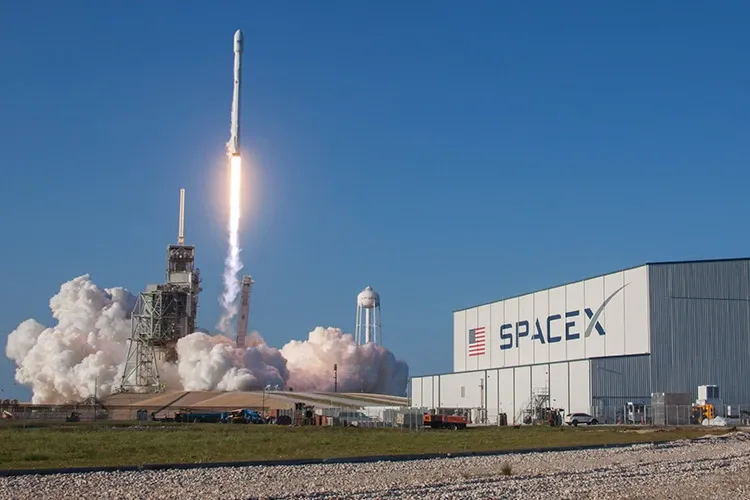
SpaceX hit out at a European Commission plan for distributing satellite spectrum across the bloc.