French and Polish Companies Combine on Satellite Defence Project
French company Thales Alenia Space signed an agreement with Polish Radmor and Airbus to develop a telecoms defence satellite for the Polish armed forces.

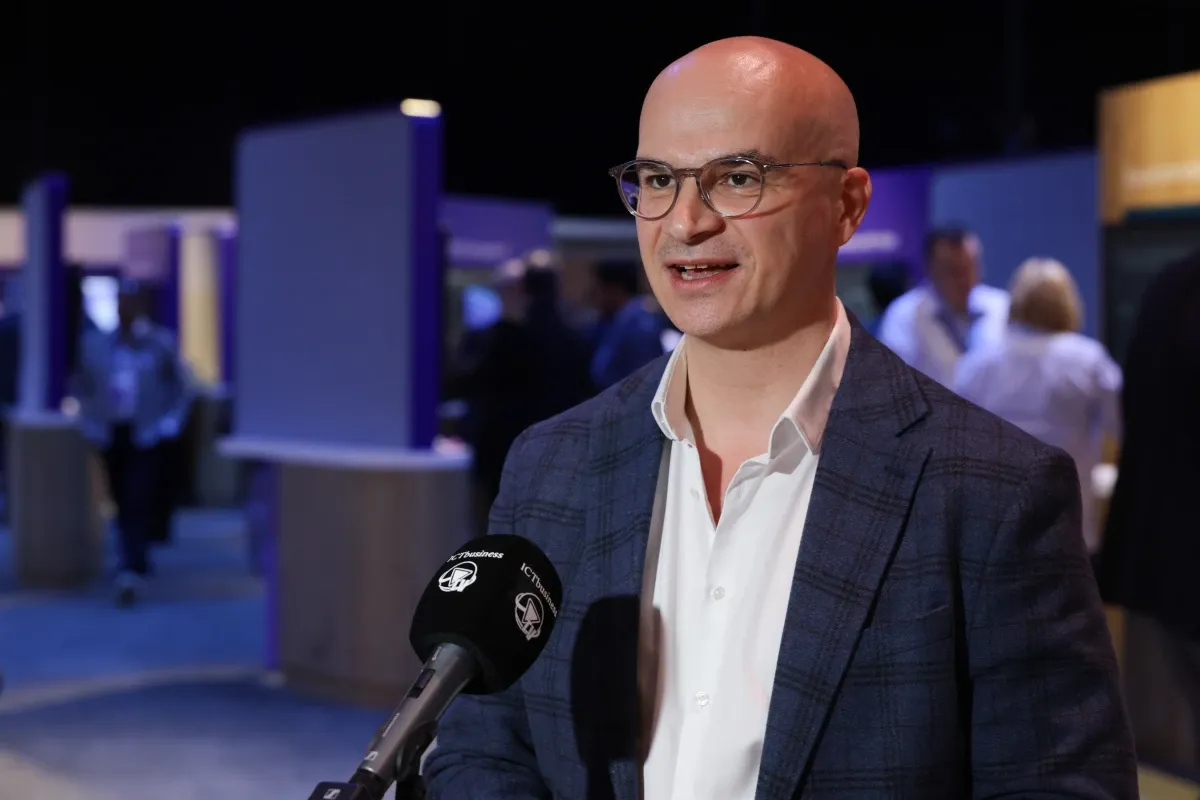
Crnogorski Telekom is entering a new phase of mobile infrastructure development with a clear message: network quality alone is no longer enough. It has to become a platform for new services, a stronger customer experience, and long-term growth. In an interview with ICTbusiness, Stjepan Udovičić, President of the Management Board and CEO of Crnogorski Telekom, explains why the company used this year’s Mobile World Congress to sign a continuation of its cooperation with Ericsson Nikola Tesla and why it is accelerating 5G investment right now. His core argument is straightforward: the network remains the heart of a telecom operator, but future competitiveness will depend on what the operator can build on top of it.
Udovičić says the new agreement is driven by a very concrete market need rather than by investment momentum alone. The previous contract, he notes, had already exhausted its planned volumes faster than expected, reflecting the pace of traffic growth and the need for additional capacity. “The mobile network is our core product,” Udovičić says, arguing that for Crnogorski Telekom it was only logical to continue the modernisation programme once the benefits of earlier investments had become visible. He points in particular to progress in the low-band 700 MHz spectrum, but also to further strengthening of the high-band 5G layer, where the operator sees room for another leap in performance and user experience.
That strategy has already produced tangible results. According to Udovičić, Crnogorski Telekom now has “96 per cent plus 5G population coverage”, which he says is “significantly above the European Union average”. For a relatively small market, that is a notable signal that Montenegro can keep pace with more developed European countries in mobile infrastructure and, in some respects, even move ahead of them. “We are not lagging behind in any way. You could even say we are ahead of certain countries,” he says, positioning the network as one of the key areas where the operator intends to build competitive advantage.
What matters just as much, however, is what comes after the network rollout. In Udovičić’s view, the European telecom market is moving into a phase of even sharper competition, revenue pressure, and a search for new growth engines. Traditional services such as mobile, fixed, broadband, and TV are increasingly standardised and harder to differentiate. That is why operators have to look beyond the traditional core. “The main challenge in our industry is to look for growth opportunities,” he says, describing this as a “beyond core” strategy, expanding outside basic telecom services while staying close enough to existing capabilities to create real customer value.
Artificial intelligence is an important layer of that transition. Udovičić remains pragmatic rather than evangelical: AI is not yet a universal answer, but real use cases are already emerging and producing results. He sees the clearest applications in customer care, fault handling, user information, and support interaction optimisation. “Very interesting things are starting to happen,” he says, suggesting that practical AI deployment will be one of the factors separating agile operators from those that fall behind. In his framing, AI is not just another technology trend, but a tool for lowering the cost base, improving network operations, and managing customer experience more efficiently.
5G monetisation remains one of the sector’s central unresolved questions. The issue has been debated for years, yet there is still no universal playbook. Udovičić openly admits that “no one has found a magic wand for monetising 5G”, and attempts to sell 5G to end users as a premium service have not delivered the expected results. Customers, he argues, quickly absorb the benefits of higher speeds and lower latency, but their willingness to pay extra remains limited. “Users expect the fastest and the best, but the appetite to pay is very small,” he warns. That is precisely why the network must be excellent as a foundational service, while revenue differentiation has to come from new layers of value. “Value-added services have to come on top of that network,” Udovičić says.
Looking ahead two to three years, Udovičić sees several parallel paths of development, but also very clear criteria that will separate winners from losers. The first is the ability to manage networks and customer experience with a lower cost base. The second is creativity in designing services that go beyond entertainment and deliver tangible additional value. The third is access to talent. “What will determine the winners and losers over the next three years is whether operators can understand how to manage networks and customer experience with a lower cost base,” he says. He adds that success will also depend on “new engineers, product managers, and people who know how to create services on top of those networks”.
The broader message goes well beyond Montenegro. The telecom industry in the region and across Europe is clearly entering a period in which connectivity alone is no longer enough as a differentiator. Operators that want to grow will have to invest simultaneously in networks, automation, new services, and the people capable of combining technology with market understanding. Crnogorski Telekom is trying to position itself as an operator that does not wait for the market to change but actively accelerates that change through investment and new development models. That is why this latest network modernisation step is not just a technical project. It is also a signal that the future of telecom will be measured less by coverage alone and more by the ability to build new value on top of it.

French company Thales Alenia Space signed an agreement with Polish Radmor and Airbus to develop a telecoms defence satellite for the Polish armed forces.

Orange, Bouygues Telecom, and Free-Iliad Group have sent a new offer worth €20.4 billion to buy rival SFR from Altice Group and split the assets.

Supermarket chain Lidl is planning to expand its MVNO footprint to a potential 30 countries.