
Mobile Sector GDP Contribution Set to reach $11 Trillion
New research from the GSMA has found that the mobile industry is moving beyond connectivity.

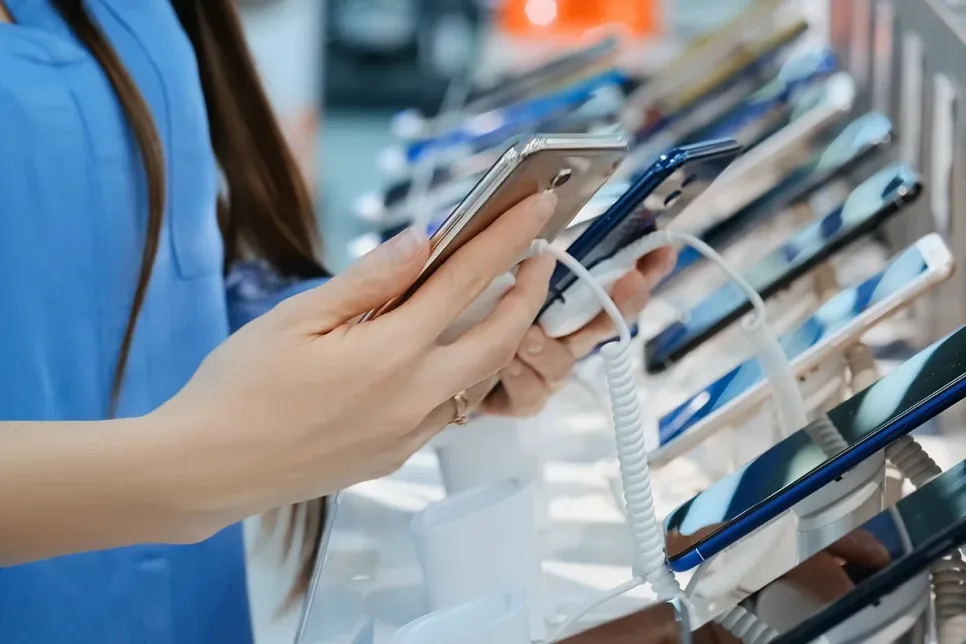
Global smartphone shipments grew for the second consecutive year in 2025, registering 2% growth, according to preliminary estimates from Counterpoint Research. The market sustained its growth momentum throughout 2025, primarily driven by premiumization facilitated by financing options and effective marketing, and the increasing adoption of 5G devices in emerging markets.
“In 2025, the smartphone market continued its gradual shift toward higher price tiers, driven by consumers upgrading to premium devices. Concurrently, demand for 5G handsets rose sharply across developing regions. Tariff-related concerns prompted OEMs to front-load shipments in H1, but as the year advanced, the impact of tariffs proved milder than anticipated, curbing their influence on H2 volumes. For the entire 2025, growth remained uneven across regions. Markets such as Japan, the Middle East and Africa (MEA), and certain parts of the Asia-Pacific (APAC) offset the weakness in mature markets,” said Shilpi Jain, Senior Analyst at Counterpoint Research.
In 4Q25, smartphone shipments closed the year on a modest note, growing by 1% owing to inventory built up in previous quarters. Apple led the quarter, accounting for one-fourth of global shipments, its highest-ever share, followed by Samsung at 19%. Apple also led the global smartphone market in 2025 with 20% share and 10% YoY shipment growth, the highest among the top five brands.
“Apple’s growth in 2025 was driven by its expanding presence and rising demand across emerging and mid‑size markets, supported by a stronger product mix. The iPhone 17 series gained significant traction in Q4 following its successful launch, while the iPhone 16 continued to perform exceptionally well in Japan, India, and Southeast Asia. This dual momentum was further amplified by the COVID‑era upgrade cycle reaching its inflection point, as millions of users were due for replacement,” said Varun Mishra, Senior Analyst at Counterpoint Research.
Samsung, with 19% market share and modest 5% shipment growth, took the second spot in 2025. Its growth was driven by the Galaxy A series, supported by mid-range demand, while the Galaxy Fold7 and S25 series drove traction in premium segments, outperforming their predecessors. While Samsung is under pressure in Latin America and Western Europe, its 2025 growth was aided by strong momentum in Japan and sustained growth in its core markets.
Xiaomi retained the third spot with 13% market share, showing stable performance supported by its premiumization strategy, resilient demand in emerging markets, and balanced product mix across flagship and mid-tier devices. Strong execution in Latin America and MEA, coupled with effective channel management, helped sustain shipments despite industry headwinds. vivo came in fourth, with a 3% growth driven by its premiumization strategy, strong offline execution in India, and a streamlined product portfolio that captured both high-value upgrades and resilient mid-tier demand.
OPPO, on the other hand, declined 4% YoY due to weak demand and fierce competition in its home market, China, and the Asia-Pacific. Though it grew in markets like India and the MEA, that was insufficient to offset declines in other regions. With moves afoot to integrate realme into OPPO, the 2025 shipment share for the combined entity will be 11%, taking fourth position in the global smartphone market. Outside the top five, Nothing and Google did well, recording 31% and 25% growth, respectively, in 2025.
“The global smartphone market is set to soften in 2026 amid DRAM/NAND shortages and rising component costs, as chipmakers prioritize AI data centers over smartphones. Price hikes in smartphones have already begun to surface. Against this backdrop, we have revised our forecast for 2026 by reducing shipment estimates by 3%. Though the supply crunch will weigh on shipments, Apple and Samsung are likely to remain resilient, supported by stronger supply chain capabilities and premium market positioning, whereas Chinese OEMs concentrated in lower‑price segments will face greater pressure,” said Tarun Pathak, Research Director at Counterpoint Research.
New research from the GSMA has found that the mobile industry is moving beyond connectivity.

Worldwide smartphone shipments are forecast to decline 12.9% year-on-year (YoY) in 2026 to 1.1 billion units, according to IDC.

Global spending on ICT is forecast to reach $4 trillion in 2026 and surpass $6 trillion by 2029, according to IDC. Excluding the consumer segment, the ICT market is projected to grow 10% in 2026, driven by the rapid adoption of AI platforms, which will grow over 70% by the end of the year.


