


PC Shipments Declined 22.4% in 3Q26
Worldwide PC shipments totaled 55.4 million units in the third quarter of 2026, down 22.4% from the third quarter of 2025, according to preliminary results from Gartner.
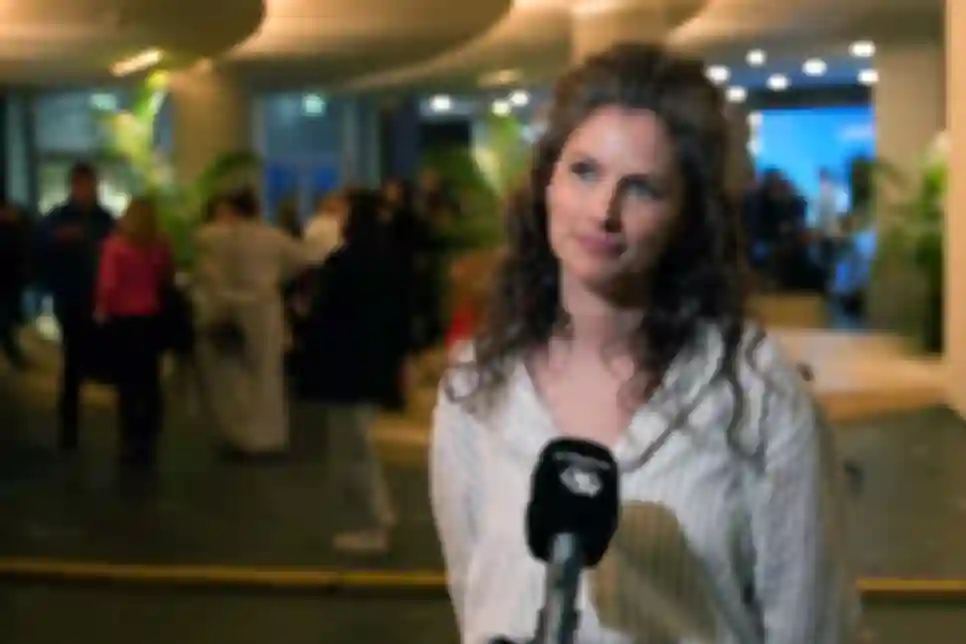
Märtha Rehnberg, futurist, entrepreneur, and policy advocate, argues that the technology sector is still asking the wrong opening question. Instead of focusing first on products, market fit, and operational efficiency, she believes innovation should begin with a far more fundamental debate: what kind of people we want to become, and what kind of society technology is meant to build. In her view, business transformation cannot be reduced to digital upgrades or smarter deployment of tools. It has to start with a deeper human, philosophical, and strategic reset.
As she puts it, companies should not begin with the product roadmap but with a broader reflection on “who do we actually want to become as humans”. Only then does it make sense to ask “what industries do we need”, “what organizations do we need”, and finally “which products we need to push out to society”. The problem, she says, is that most businesses still think in the opposite order. The harder move is to “free ourselves and try to put the human at the center”.
That perspective becomes even sharper in a market that increasingly treats technology as a synonym for efficiency. Rehnberg rejects that premise. “We cannot use technology for efficiency alone, because that means more and more of what we are already doing today,” she says. Speaking from an ecological standpoint, she notes that technology has also enabled the planet’s rapid depletion, which is why she sees a major missed opportunity when innovation is framed only as automation, acceleration, and scale. For her, the real promise of technology lies in opening a serious discussion about “who we can actually become” and “what better lives we can create”.
She applies the same logic to the debate over sustainability and competitiveness. In her reading, this is not a binary choice. “It’s not one or the other. It’s both,” Rehnberg says. She acknowledges the backlash against parts of the ESG agenda, but argues that financial markets are already pricing environmental decline into corporate balance sheets through floods, extreme heat, and other climate-related shocks. Once “the right price is put on nature”, she says, a “creative constraint for innovation” emerges, one that can support dematerialized business models, circularity, and new forms of value creation.
That is also why she has little patience for the idea of innovation without serious exposure to risk. “If it’s compatible with exponential tech, then no,” she says bluntly. Risk, in her view, must be “invited as a friend, not something to circumvent”. That argument matters particularly for capital-intensive sectors that change slowly. Rehnberg does not see heavy industries as obsolete or defensive. She describes them instead as “guardians of deeper time” because their assets and balance sheets force them to think 50 or even 100 years ahead.
For that reason, she believes sectors such as energy and maritime can become powerful engines of renewal. She points to a hydropower company aiming to become nature-positive by 2035, despite not yet knowing exactly how to get there. For Rehnberg, that willingness to question the boundaries of the current business model is precisely what bold innovation looks like when it is anchored in long-term ethics rather than quarterly reflexes.
Her message to Europe follows the same line. She believes EU industrial policy has done useful work by investing across value chains and supply networks, but argues that Europe still lacks enough courage to choose areas where it can leap ahead rather than merely catch up. “We need to ask ourselves when we are catching up and when we can leapfrog,” she says. That means placing moonshot bets not just on today’s technologies, but on tomorrow’s, including fields such as nuclear fusion. At a time when innovation is too often measured by productivity alone, Rehnberg’s case is that the next real technology leaders will be the ones willing to redefine the purpose of progress itself.

Worldwide PC shipments totaled 55.4 million units in the third quarter of 2026, down 22.4% from the third quarter of 2025, according to preliminary results from Gartner.

European businesses are increasingly reliant on artificial intelligence, according to the results of the latest Eurobarometer survey.

The global smartphone market contracted by 22% year-on-year to 255.3 million units in the third quarter of 2026, according to preliminary data from IDC.


