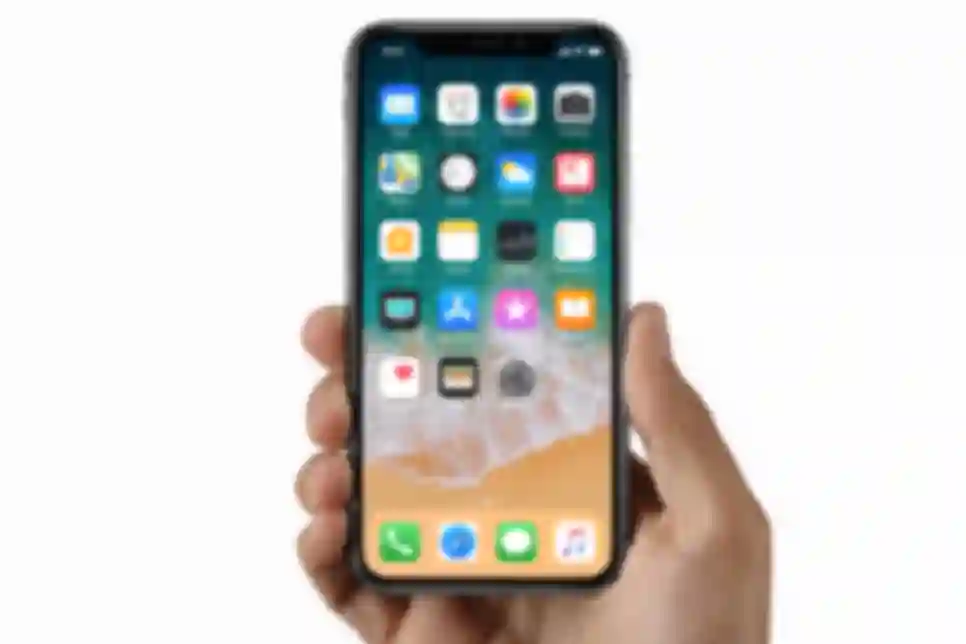
Shares of Apple and some of its suppliers fell on signs that demand for the new iPhone 8 models isn’t as strong as anticipated while buyers await the release of the higher-end iPhone X, according to Bloomberg.
The Taipei-based Economic Daily News reported that Apple cut orders for its latest model, which went on sale last month, by more than 50 percent. The newspaper didn’t identify its source or elaborate on what sort of orders had been pulled, or how it arrived at that number. An Apple spokeswoman declined to comment.
AT&T’s customers upgraded 900,000 fewer handsets in the three months through September than a year earlier, it said in a regulatory filing. The trend hints at customers waiting for the flagship iPhone X to buy a new phone. Many analysts already expected that the iPhone 8 would be overshadowed by stronger demand for iPhone X, which is scheduled to be released next month. But investors are sensitive to any potential demand weakness for Apple products.
Earlier reports have also flagged weak demand for the iPhone 8, though investors are mostly expecting a sales surge from the high-end iPhone X when it becomes available Nov. 3. With its $999 price tag, the iPhone X will do more to help boost Apple’s margins. The top-of-the-line model includes a facial recognition system that uses a 3-D scanner to unlock the handset, replacing the fingerprint sensor in the iPhone 8 and other earlier versions.
Apple forecast total sales of $49 billion to $52 billion in the three months through September, a projection investors understood to signal resilient iPhone demand that could also carry over into the December quarter, given the staggered phone release dates. Analysts see total sales in the holiday quarter jumping 10 percent to $87 billion.
Automated systems and bots now generate more than half of internet traffic, forcing hosting companies to manage performance, security, and infrastructure costs at the same time. Ivan Čačija argues that business users are no longer buying only storage and computing resources, but the availability and performance of their own operations. AI will reshape both data-centre management and infrastructure requirements, while regional providers can compete through local presence, predictable costs and hybrid models. Fastserver sees its partnership with Blackwall as part of a broader shift towards an integrated platform combining infrastructure, security, traffic protection and automation.
The President of the European Commission, Ursula von der Leyen, has unveiled comprehensive plans to restrict children’s access to social media platforms through the proposed EU Kids Act.
Ericsson Nikola Tesla no longer views artificial intelligence solely as a tool that helps developers write code, but as part of the entire software development lifecycle. At the upcoming ENT Technology Days, taking place from 21 to 25 September, artificial intelligence will also be among the central topics.
Siniša Krajnović, PhD, President of the Management Board of ENT, sees the transformation brought about by artificial intelligence through products, internal processes, and changes in the way work itself is performed, while Jelena Jurišić, Director of Technology of the ENT Group (CTO), explains how specialized AI agents are now part of analysis, design, implementation, testing, and verification. In such a model, autonomy increases gradually, with quality control and human decision-making at critical points. At the same time, the change does not diminish the importance of engineers, but increasingly shifts their role toward architecture, domain understanding, and the management of complex automated systems.