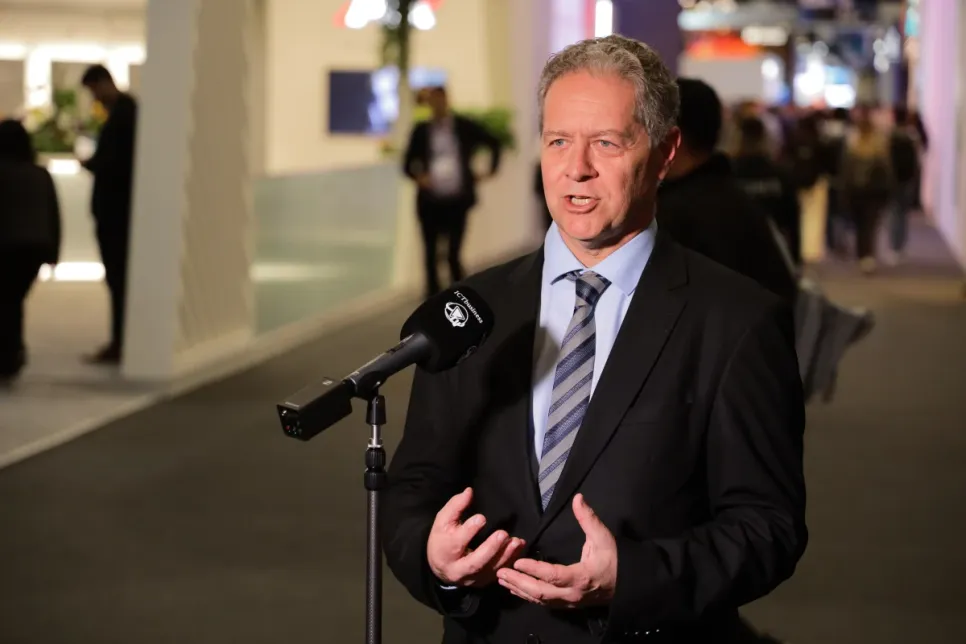
The Croatian telecommunications market has entered a phase in which infrastructure progress is increasingly colliding with economic reality. While urban areas have for years been within the zone of gigabit connectivity, the remaining parts of the country are becoming the most expensive and most demanding for further network build-out. According to Tonko Obuljen, President of the Council of HAKOM, the national telecom regulator, Croatia is around the European Union average in terms of key indicators, but it is precisely this final segment of coverage that will determine the overall success of the strategy. Without state aid and EU funds, full fibre coverage by 2030 remains a very optimistic scenario.
Simultaneously, investments in fibre and 5G continue to grow, driven by changes in user habits and the needs of the economy. There are no regulatory barriers to new technologies, but market decisions and return on investment remain the key filters. Projects financed through the National Recovery and Resilience Plan (NPOO) and the Broadband Infrastructure Development Program (PRŠI), which cover areas without commercial interest, are gaining particular importance. The new EU regulation is further shaping the framework within which operators plan investments. In this context, Croatia’s experience at the European level, including its presidency of BEREC, is becoming an important tool for protecting the interests of the domestic market and users.
Deployment of Fixed Fibre Infrastructure in Croatia
In recent years, Croatia has been investing intensively in the development of fixed fibre infrastructure – from major telecom operators to smaller players and projects in rural areas. How close is Croatia today to the goals of Gigabit Europe and full fibre coverage of households?
Urban parts of Croatia have, for some time, been enjoying gigabit connectivity; however, without state aid, all rural areas will not be able to be covered, at least not by 2030. According to statistics, Croatia is within the EU average, but the remaining uncovered areas are also the most difficult and the most expensive to cover, while operators have no commercial interest in investing in areas with too few residents to justify a return on investment.
What Are the Key Obstacles in Network Deployment – Administrative, technical, or Investment-Related?
The obstacles in deploying very high-capacity networks are largely linked to the investment and organisational challenges of each operator. On the investment side, the primary issue is the commercial unsustainability of building new VHCN networks in rural areas. In addition to the significant investments required to connect end users to fibre networks in rural areas, there is also a shortage of qualified personnel, both for building fibre networks and for connecting end users. Administrative obstacles do exist and most often stem from unresolved property-rights issues or from a lack of understanding that the infrastructure is intended for the provision of public services.
How Have Investments in Fixed Infrastructure Changed After the Pandemic and the Growth in Demand for Digital Services?
Even before the pandemic, a wave of investments in fibre networks had begun, and it is still ongoing. Investments in these networks have been increasing quarter by quarter for quite some time, with EU fund support contributing significantly. The pandemic and the need for remote work and distance learning helped raise awareness among citizens of the importance of a good internet connection, creating demand for higher speeds. This has somewhat accelerated migration to newly built VHCN networks.
What Are Currently the Biggest Challenges in Expanding Fibre Infrastructure to Rural and Less Developed Areas?
The biggest challenge is the commercial unprofitability of such projects, which are unlikely to happen without state aid. In rural and less developed areas, investments per user are several times higher than in the construction of fibre networks in urban, densely populated areas. We can expect such networks to be built more slowly, and that in some of the least populated areas, commercial interest from operators will be entirely absent. For such areas, incentives for construction should be envisaged, and alternative technical solutions such as wireless and satellite communications should also be considered.
How Fast Is FTTH (Fiber-to-the-Home) Expanding and What Are the Key Coverage Targets for the Next Few Years?
Coverage has increased in recent years as a result of investments, and Croatia has reached the EU average in terms of overall coverage. In the latest Commission report on progress towards the Digital Decade targets, Croatia also made progress in rural coverage. The number of active VHC connections is also growing and, since the middle of this year, has exceeded the number of copper connections. The common EU goal is that by 2030, all households should have the possibility of connecting to gigabit networks; however, for the reasons mentioned above, this will be challenging to achieve. Realistically, primarily due to the total cost of investment, this is a very optimistic and difficult-to-achieve scenario. Success will, in fact, be measured by how close each Member State comes to achieving this goal. It is considered that FTTH networks can cover up to 95 percent of users, while other technological solutions will be sought for the remainder.
How Do You Assess Cooperation Between Telecom Operators, Local Governments, and Regulatory Bodies in Accelerating Fibre Development?
Cooperation is generally good and, I would say, appropriate to the roles of all stakeholders. There is certainly room for improvement and better mutual understanding, which is why we continuously organise workshops where we exchange views and experiences, present proposals, and introduce new developments in relevant regulations. With the entry into force of the European Gigabit Infrastructure Act (GIA), a new framework has been established to support faster deployment of new networks. The GIA promotes improved transparency and coordination of civil works, as well as the simplification and digitalisation of administrative processes.
Deployment and Commercialisation of 5G Networks, with a Special Focus on 5G Standalone (SA)
Commercially available 5G networks are already present, but the transition to 5G Standalone marks a new phase of development with real opportunities for industry and society. When can we expect wider adoption of 5G SA networks in Croatia, and which verticals will benefit first?
5G SA is the next step in the development of mobile communications networks, enabling the full functionality of 5G technology and a wide range of new services tailored to different sectors and use cases. It is important to listen to market needs and work on developing new solutions tailored to the needs of potential users. These new use cases will stimulate further market development with an impact on certain economic sectors. From the regulator’s perspective, there are no obstacles to the introduction of 5G SA, and all further steps depend on the business decisions of individual operators. Implementation requires significant professional and financial investments, and it is to be expected that Croatian operators are preparing for this.
What Is the Level of Interest from the Business Sector in Private 5G Networks, and How Do Domestic Operators Fit Into This?
Interest from the business sector in private 5G networks exists, mainly in the field of logistics. We believe this could further raise awareness among others of the benefits of introducing new technologies into business operations. Mobile operators can deploy private networks for closed user groups within their existing networks, which do not necessarily have to be based exclusively on 5G technology, as 4G can also be used.
EU Funds and the NPOO Have Played a Key Role in Accelerating Croatia’s Digital Transition
How much have projects financed through the NPOO and PRŠI really contributed to the development of broadband infrastructure in less populated areas?
PRŠI projects have contributed to the increased availability of broadband infrastructure for 146,000 households and enabled the use of services via new infrastructure. NPOO projects are ongoing, infrastructure construction has only just begun, but they will certainly contribute, as, like PRŠI, they cover areas that are not commercially attractive to operators. What still needs to be worked on is the utilisation of already built networks and finding a solution for projects that were intended to be financed from the NPOO but will not be, because an operator owned by a foreign fund, which won the subsidy tender, withdrew after signing the co-financing contract. This is a missed opportunity, and the state will have to find a way to bridge this gap. As a market regulator, we are always ready to be a constructive stakeholder, even though we are not directly involved in or responsible for granting such subsidies. What I consider important to highlight is that penalties for companies that apply and then withdraw are too small, and the EU should change its rules. Optix in Croatia assembled a team that strongly wanted success, but ultimately, the will of the owner prevailed.
Is There Better Coordination Between Local Authorities, Operators, and State Bodies Than in the First Cycle?
PRŠI projects from the first cycle revealed certain shortcomings in cooperation, primarily between operators and local authorities. This is something that definitely needs improvement and that we plan to address for NPOO projects, possibly through a kind of practical handbook or thematic workshops with local governments.
Can We Expect a Stronger Focus on Smart Networks, Green Infrastructure, and Digital Resilience in the New Financial Period?
The focus of the new financial period is precisely on network resilience and security. This is particularly emphasised for submarine cables, which are considered especially critical infrastructure. Green infrastructure has been in focus for some time, as have smart networks.
How Crucial Are EU Funds and NPOO Resources for Financing Large Fibre and 5G Network Projects in Croatia?
EU funds are crucial for achieving the final five percent of coverage. The targets are set at 100 percent, and it is always hardest to cover the last parts that are unprofitable for anyone. This is even more pronounced for fibre networks than for 5G, which already has nearly 95 percent coverage, with the national target effectively being 99 percent, considering that it is a wireless technology.
Can You Highlight Concrete Examples of Successful PRŠI Implementations So Far?
We have not yet analysed all completed PRŠI projects, so I would not single out any, but it has been shown that expertise is decisive. PRŠI projects implemented by local government units have been somewhat less successful than those carried out by operators with existing experience in network construction and management and with a larger pool of experts. However, in both cases, networks have been built, and new connections are available to users.
Are There Regulatory, Technical, or Administrative Barriers in Drawing EU Funds and Building Networks?
Construction with co-financing support certainly has certain constraints, mainly administrative. There are deadlines by which the network must be completed, a lot of additional documentation that must be maintained, and significantly more reporting. From a regulatory standpoint, it must be proven that there is no commercial interest in a given area for it to be eligible for co-financing, and certain procedures must be followed. But, logically, you must justify how and for what the money is spent.
The Telecom Market Is Entering a Phase of Intertwined Technological, Regulatory, and Business Changes
From the Digital Networks Act to investments in AI-driven networks, what do domestic operators and the regulator expect from 2026? Will the focus be on 5G SA, AI-managed networks, or a new wave of consolidation? How does the new EU regulation affect investment plans and business models of telecoms in Croatia?
New EU regulation, the Digital Networks Act (DNA), was presented a few days ago, but it will not significantly affect the business models of telecoms in Croatia for some time. However, DNA is not the only new regulation; there will be further changes in the area of cybersecurity and in rules governing digital markets and services. What we are observing, which is not linked to the new EU regulation, is that all mobile network operators in Croatia have separated their antenna towers into separate companies, following a global trend.
How Realistic Is It for Croatia to Meet All Digital Decade Strategy Targets by 2030?
The targets are very ambitious, but some of them could be met or come very close to being met. It is unlikely that all will be achieved to the extent envisaged, but the European Commission is aware of this: without a high bar, no one would strive, and at this point, we would not even be at the current levels.
What Key Changes and Challenges Do New EU Regulations and Strategies, Such as the Digital Decade and the Gigabit Infrastructure Act, Bring for Telecom Operators?
We believe that full implementation of the GIA in Croatia could further reduce the costs of deploying electronic communications networks, although we do not expect a major impact, as in Croatia, the physical infrastructure of non-telecom entities, such as the national power utility, has for some time been available and used for deploying fibre networks. As for the new EU regulatory framework, it has not yet been presented, and even once it is, some time will pass before it is adopted and implemented.
What Do You Expect Over the Next One to Two Years in Terms of Investment, Market Consolidation, and New Business Models?
We expect continued investment in the deployment of VHCN networks in commercially viable areas. We can also expect continued network virtualisation and a growing shift towards the IT sector. We do not expect major consolidation, as the market is already fairly consolidated, but acquisitions of smaller local operators by national operators may occur. We would like, since we believe we have created all regulatory conditions, to see at least one MVNO start operations.
To What Extent Can the Croatian Market and Regulator Proactively Respond to the Demands of European Digital Transformation?
When it comes to connectivity and digital infrastructure, the Croatian market is currently responding successfully to the demands of digital transformation. All indicators are on the rise, but additional efforts will certainly be needed to increase the use of newly built networks. When speaking of proactive responses to European requirements, we must take into account that HAKOM is an independent regulator with clearly defined statutory tasks. Our proactive action included partial deregulation of fibre, which stimulated market development, and EU indicators confirm this. Another direction of our proactive approach is openness and transparency towards the market, all stakeholders, and users. We are here for them, not the other way around.
Croatia at the Centre of European Telecom Policy – You Chaired BEREC
What was your personal experience of chairing BEREC from the position of a Croatian regulator – what challenges and advantages did this bring?
The challenges were numerous, but if I had to highlight one, it would be the parallel work of chairing BEREC while fulfilling regulatory tasks “at home” in Croatia, which could not suffer because of the presidency. During the preparation year, and especially during the presidency year, it was often necessary to be physically present at events, most often in Brussels but also frequently elsewhere in Europe or the world, so airports, airplanes, and hotel rooms became temporary offices. The support of my team was outstanding, as was the support of the BEREC Office in Riga and colleagues in the presidency team.
Can You Name the Main Achievements or Initiatives You Launched or Coordinated During That Mandate at the European Level?
I would say that the main achievement was the implementation of BEREC’s annual work programme within the set deadlines. The BEREC working groups did an excellent job, and we were there to assist and intervene if something got stuck. We received feedback from multiple sides that, as chair, we found the right balance between giving working groups freedom to do their job and ensuring that the entire process stayed on track. As a particular success, I would highlight the adoption of BEREC’s contribution to the public consultation on the European Commission’s strategic document – the White Paper on measures for European digital infrastructure. BEREC’s position on this issue was very important for all stakeholders and for the Commission itself. We had to work hard to produce a document that was constructive and sufficiently clear on key positions, reconciling different ideas about both the concept and the content. In the end, we achieved almost unanimous support.
How Can Experience from European Regulatory Work Improve Croatian Telecom Regulation and Market Development?
European regulation is also Croatian regulation. In the field of electronic communications, Member States have very little room for autonomous regulation, but participation in the EU regulatory process from the very beginning, starting with strategic documents that precede the regulations themselves, is invaluable experience for understanding and applying regulation once it is adopted.
What Does This Mean in Practice for Croatia and How Has the Domestic Regulator Positioned Itself Within the EU Regulatory Framework?
Our involvement from the earliest stages ensures that the interests of Croatia, as a small state and market, are not overlooked. We know what is important for our market and users, and we advocate those interests while identifying others with similar positions. This greatly facilitates all later phases of adopting and implementing regulations.
What Were the Main Priorities of BEREC During the Presidency – from Net Neutrality to Investment in Gigabit Infrastructure?
The priorities are defined by BEREC’s strategy: promoting full connectivity, fostering open and sustainable digital markets, and protecting end users. Within these priorities, there were many interesting and important projects and documents. I would highlight work on analysing how new technologies affect network architecture, analysis of how large platforms influence the telecommunications market, and the document on quality-of-service parameters.
What Is It Like to Manage European Regulation at a Time When Key Decisions About the Future of Digital Europe Are Being Made?
BEREC is not a direct participant in the EU legislative process. However, it has the reputation of an independent and expert body that is trusted. That is why it was very important what BEREC would say about the European Commission’s strategic plans. Chairing BEREC proved to be a demanding role involving extensive coordination, patience, respect for differing views, and the search for compromise.
What Were the Greatest Achievements of the Croatian Presidency, and How Can the Domestic Market Benefit in the Long Term?
I would say the consistent advocacy of principles that are important to us, namely the protection of competition and ensuring the best possible conditions for end users. These are also the long-term interests of the Croatian market and of each of us as users of services.