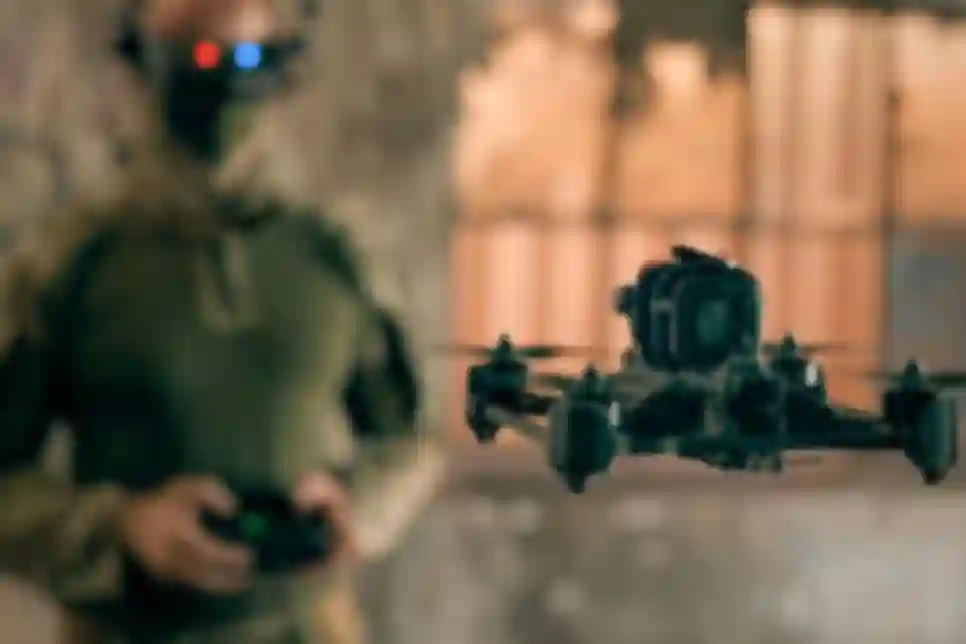
Croatia-based Orqa, Europe’s leading developer of FPV (first-person view) and unmanned aerial systems (UAS), has significantly expanded manufacturing at its headquarters in Osijek, Croatia. The facility can now produce up to 280,000 NDAA-compliant drones per year using Orqa's proprietary components, helping reduce the industry’s dependence on Chinese supply chains.
The expansion follows growing demand for reliable, defence-grade UAS systems that are free from Chinese components. Orqa’s fully vertically integrated model, where all key components are designed, engineered, and manufactured in-house, ensures complete control over performance, reliability, and security.
“This milestone reinforces our conviction that Europe can build a secure and independent industrial capacity for defence technology,” said Srđan Kovačević, CEO of Orqa. “We’ve proven that high-performance drone production can be scaled outside of China, supporting the creation of resilient and trusted global supply chains. As demand accelerates, we’re ready to deliver securely and at scale.”
The expanded facility strengthens Orqa’s engineering and precision assembly capabilities, enabling the company to produce both its own systems and high-performance components for trusted partners. Alongside this domestic investment, Orqa has also begun extending its production model globally through a decentralised network of strategic manufacturing partners, with deals in key territories already in place.
Spanish telecommunications group Telefónica and Portuguese telecommunications and IT company NOS Comunicações have agreed to strengthen their cooperation in developing advanced digital technologies for European defense and security applications. The agreement covers secure communications, advanced connectivity and digital services intended to support military operations, autonomous systems and other emerging defense requirements. The partnership also reflects the growing importance of telecommunications infrastructure in Europe's efforts to strengthen technological sovereignty and improve interoperability between national defense systems.
Artificial intelligence is no longer a specialised experiment in web development; it is part of programmers’ daily work. “There is no job in which we do not use artificial intelligence,” Hrvoje Nekić, CEO of WEB Marketing, tells ICTbusiness Media – ICTbusiness.info. He sees the change as both a productivity opportunity and the beginning of a different relationship between users and software.
Daytona, the technology company led by Croatian entrepreneur Ivan Burazin, has raised $60 million in a Series B funding round that values the business at $1 billion. The round was led by FirstMark Growth and brings total capital raised to $91 million. The company is building infrastructure that enables autonomous AI agents to execute complex digital tasks in their own computing environments.