Italian Fastweb + Vodafone End Tower Deal with Inwit
Swisscom-owned Fastweb + Vodafone will terminate its Master Services Agreement (MSA) with Italian tower company Inwit.


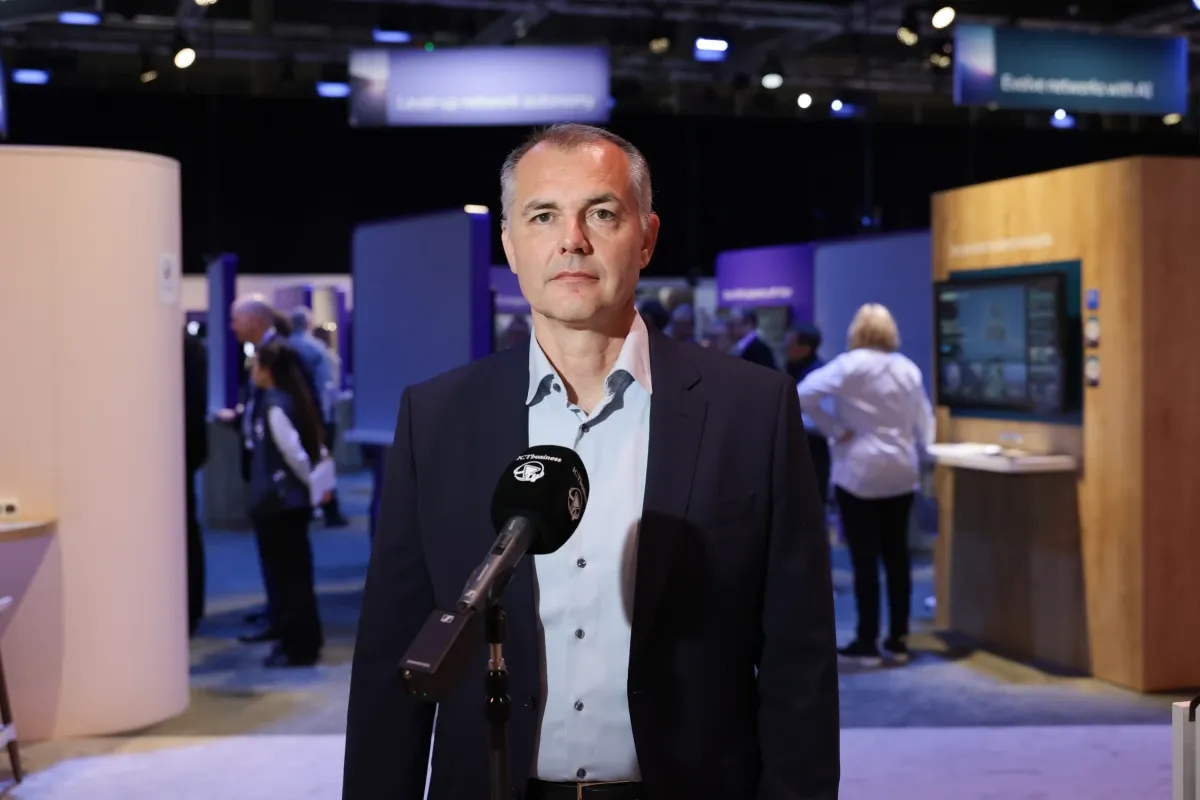
The next phase of digital transformation is no longer defined by whether companies adopt artificial intelligence, but by how they deploy it securely, sovereignly, seamlessly, and with energy efficiency in mind. That, according to Luq Niazi, IBM’s Global Managing Partner for Industries, is where the real battle is now being fought across regulated sectors, telecoms, and industries that need to accelerate innovation without losing control over data, processes, and infrastructure.
Niazi for ICTBusiness Media - ICTbusiness.biz argues that business leaders are entering a new reality in which “AI is scaling rapidly around the world”, but that such growth immediately raises hard questions around local compliance, legislation, and operational trust. IBM’s answer is what he describes as a “sovereign by design” approach, built around Red Hat and OpenShift, allowing cloud and AI environments to operate within the legal and regulatory constraints of specific countries or regions while still supporting global consistency. That matters most in highly regulated verticals such as financial services and government, where compliance is not a feature but a condition for moving forward at all.
In that context, deployment speed becomes a competitive differentiator. “What used to take six to nine months can now be established in a matter of days,” Niazi says, making the point that sovereignty should not slow down transformation but be embedded into it from the start. The significance goes beyond a single market. In Europe, especially, the ability to create trusted multi-country operational zones could become a key part of the next-generation cloud and AI architecture.
At the same time, IBM sees a major shift in how AI is actually being used. “We’re moving away from chatting with AI to allowing AI to operate through key workflows autonomously,” Niazi says. In practice, that means enterprises are starting to think less about assistants and more about agentic AI that can identify problems, recommend action, and increasingly execute within real business processes. He points to supply chains and telecom networks as prime examples, where “autonomous agents” can detect constraints, propose solutions, and, over time, automate parts of the response, initially with humans kept firmly in the loop.
That transition, however, depends on something far less glamorous than AI demos: integration. Niazi stresses that enterprises need robust integration frameworks and API-based models to connect modern AI capabilities with legacy operational and business systems. In telecoms, that challenge is strategic. Operators, he argues, have an opening to move beyond being “the pipe” and become a “value-added platform” built around secure communications, edge processing, AI-enabled services, and, eventually, quantum-era capabilities. Crucially, he does not frame this as a zero-sum contest with hyperscalers, but as a collaborative model in which trusted local infrastructure and global technology ecosystems work together.
The third pillar is sustainability. Niazi warns that the explosive growth of AI could push markets toward “brownout” scenarios, where energy capacity fails to keep pace with digital demand. That makes sustainability a core infrastructure issue rather than an ESG side note. IBM sees room for action in tracing emissions across the supply chain, securing reporting processes, and improving cloud efficiency. He highlights the problem of “zombie data” — data that consumes energy without creating real value — and argues that eliminating such waste can deliver meaningful savings while easing pressure on infrastructure.
The broader implication is clear. The future of AI will not be determined solely by model performance, but by whether organizations can make AI compliant, interoperable, and energy-aware at scale. In that environment, the winners will be those able to combine sovereignty, automation, and ecosystem collaboration into a workable industrial model.

Swisscom-owned Fastweb + Vodafone will terminate its Master Services Agreement (MSA) with Italian tower company Inwit.

The next phase of digital transformation is no longer defined by whether companies adopt artificial intelligence, but by how they deploy it securely, sovereignly, seamlessly, and with energy efficiency in mind.

Arm unveiled its first in-house data center processor, shifting away from licensing chip designs for other companies to use their own production silicon.