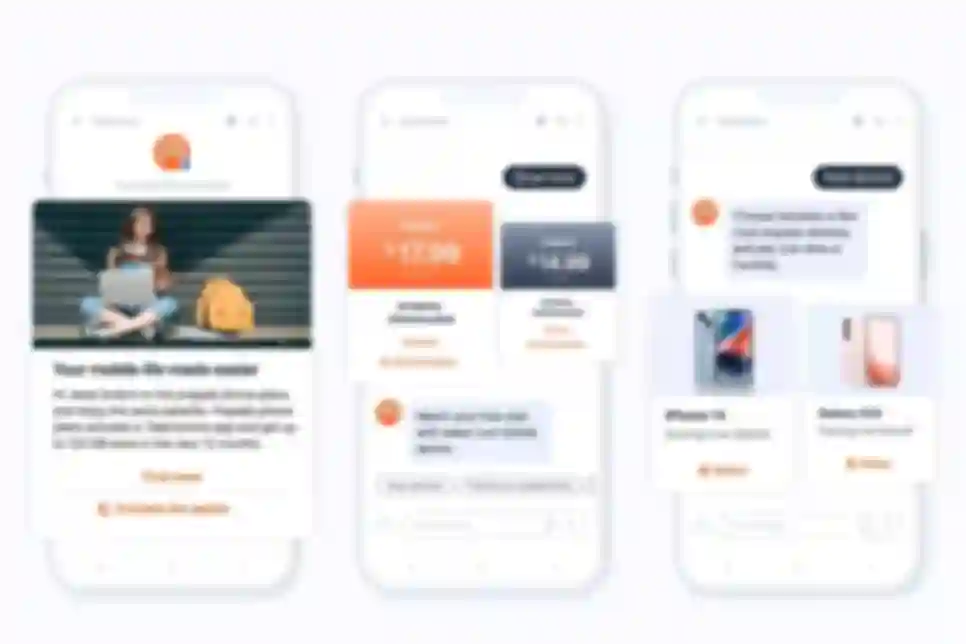
At the Mobile World Congress in Barcelona, Infobip will introduce its Rich Communication Services (RCS) Business Messaging Solution (RBM). It should enable MNOs and enterprises to engage with customers and create memorable experiences by delivering rich conversational messages.
RBM usage will grow from just under one billion users in 2023 to more than two billion by 2028. Moreover, the RBM traffic is expected to increase by 350% in the next five years. Given this growth, Infobip has launched its RCS Business Messaging Solution to enable MNOs to offer RCS Business Messaging to enterprise customers on their network, whilst providing the MNO control and analysis of the traffic. By introducing the innovative solution, Infobip is driving the growth of the whole messaging ecosystem and increasing the reach of Rich Business Messaging.
Infobip enables telcos and enterprises to benefit from RCS Business Messaging through its Messaging-as-a-Platform (MaaP) service. Infobip’s MaaP solution, which sits on top of Google’s Jibe RCS platform, provides RBM agent lifecycle management. MaaP provides messaging benefits, including throughput control, content, and spam control, whilst Infobip’s wider CPaaS offering enables connectivity with other Mobile Network Operators (MNOs). Operational benefits include detailed billing and reporting, faster brand and partner approval, additional user control, and managed service options.
”2024 is an important change for RBM following Apple’s planned support for RCS on its operating system and with the expected growth in RCS Business Messaging users and traffic over the next five years. When 85% of Mobile Network Operators are yet to adopt RBM, we see this as a significant opportunity to help MNOs and enterprises seize the benefits of RCS Business Messaging and deliver rich conversational messaging for customers. Through our RCS Business Messaging and MaaP solutions, we can help MNOs launch RCS Business Messaging and enable them to monetize it more quickly by being both their technical and business enablement partner in RCS,” said Matija Ražem, VP of Business Development at Infobip.
AgentOS is Infobip’s response to a phase in which agents are becoming an important tool for process automation and customer communication. Krešo Žmak says the market is still at an early stage, but clients are moving away from AI for the sake of innovation and towards measurable results. The next challenge will be controlling costs, user experience, and the nondeterministic nature of agentic systems.
Telecom operators approach AI from two directions: as providers of infrastructure for the digital transformation of other industries and as organisations embedding AI into their own processes. A1 Hrvatska has moved from prototypes to concrete products, from customer support to sovereign European cloud services. Daniel Šimić says workforce profiles are also changing, with fast learning, customer understanding and adaptability becoming more important.
Burra was created as a platform for consolidating IT services companies in Southeast Europe, with a commercial focus on Western Europe and the United States. Its first members, Devōt, Tacta and CoreLine, continue to run their existing businesses while integration is planned gradually, primarily through new projects. Sven Marušić says the aim is not to turn founders into corporate employees, but to build a larger organisation in which they remain shareholders and drivers of growth.