Infobip and Haas F1 Team Unveil RaceMate App
Infobip and TGR Haas F1 team are launching Team RaceMate, an AI-powered conversational fan companion on Apple Messages for Business and WhatsApp Business Platform.


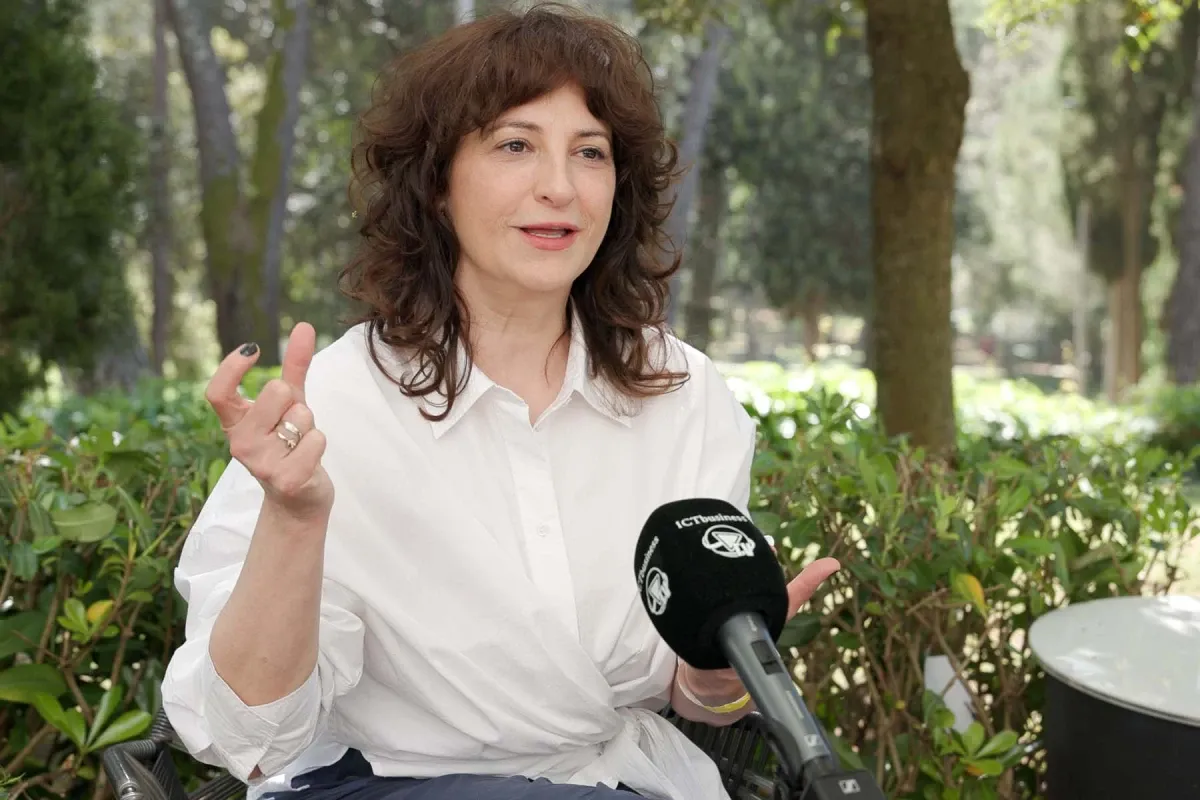
In the commercial segment, Lenovo is increasingly signalling that the future of the laptop is not just about slimmer chassis and faster components, but about making the device itself more adaptable. That is the premise behind a new modular ThinkBook concept presented by Erin Sallese, Senior Product Marketing Manager, Commercial Segment at Lenovo. The idea is to fit multiple work scenarios into a standard 14-inch footprint, from presentations and hybrid collaboration to more flexible peripheral connectivity.
As Sallese explains, the concept builds on Lenovo’s Magic Bay ecosystem and starts from a simple assumption: a laptop no longer needs to have a single fixed mode of use. “It looks like a traditional 14-inch notebook,” she says, yet on the reverse side, it carries “a full 14-inch display” that can serve as a world-facing screen for presentations or for engaging with someone sitting across the table. In that sense, the device moves beyond the conventional notebook role and becomes a collaboration tool as well.
The second display is also central to the product’s modular logic. Sallese notes that it can be detached through a magnetic attachment system and supported by an integrated kickstand, effectively giving users “their very own portable monitor” housed within the same device. The panel can also work in portrait mode and can be repositioned where the keyboard would normally sit, turning the system into a dual-display setup when needed. That makes the concept less about novelty for its own sake and more about compressing a broader workspace into a portable form factor.
The same thinking applies to the keyboard. “When you take the keyboard off, the keyboard becomes a Bluetooth keyboard,” Sallese explains, adding another layer of flexibility for users who work across multiple locations. Lenovo has extended that modularity to I/O as well, with interchangeable ports on both sides of the device. As she puts it, a user can “pop out your USB-A and then pop your HDMI right back in” for a presentation, or rearrange USB-C and other connections depending on the setup.
The broader message is clear: productivity is increasingly defined not only by performance, but by how easily a device adapts to changing work contexts. Sallese captures that directly when she says users can “create the space that will make you most productive”, all “within this 14-inch footprint”.
Lenovo is not yet putting a launch date on the concept. Sallese says she does not have that answer yet, stressing that this remains a proof-of-concept exercise. Devices like this are shown at trade shows first, the company then speaks with customers and evaluates “what’s driving the most user value” before deciding how best to commercialise the idea. Early feedback, she says, has been strongly positive, especially because customers can see practical answers to real employee needs, such as a portable display, a separate keyboard, and more flexibility in one device. That is why this ThinkBook concept matters: it is not just a design exercise, but a glimpse of where commercial PCs may be heading next.

Infobip and TGR Haas F1 team are launching Team RaceMate, an AI-powered conversational fan companion on Apple Messages for Business and WhatsApp Business Platform.

Telefonica unveiled a domestic end-to-end drone service in Spain.

As the global economy faces the need for greater transparency, electronic invoices offer a solution that satisfies both tax authorities and private entrepreneurs.