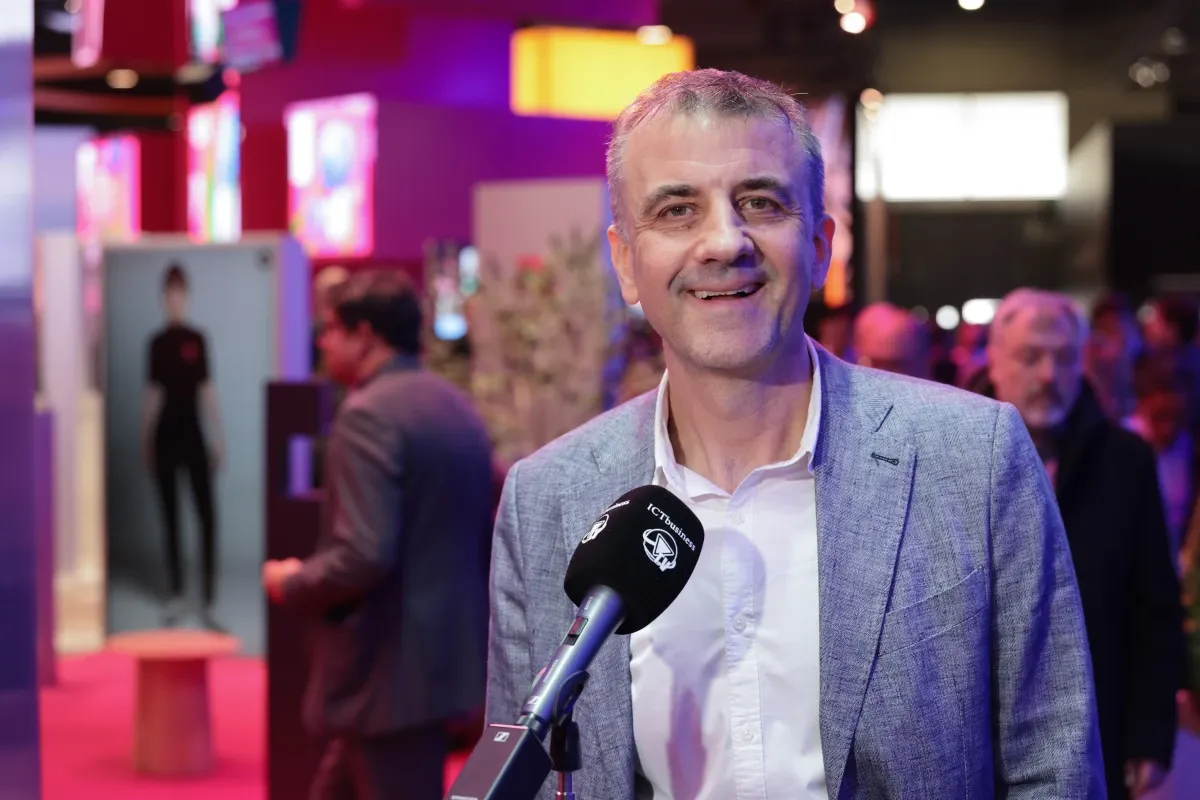
For telecom operators, the residential market can no longer be viewed only through coverage, access speeds, or the number of channels in a package. In discussing the future of content, streaming, and sports rights, Krešimir Madunović, Member of the Management Board and Chief Operating Officer Residential at Hrvatski Telekom, makes it clear that an operator’s value is increasingly measured by its ability to deliver a complete user experience – from a high-performance network to seamless access to the content people actually want to watch.
The starting point, however, has not changed. “The network has to be top-class,” Madunović says, especially when it comes to live sports, where latency directly shapes the viewing experience. While services such as Netflix depend primarily on picture quality and delivery stability, live sport is unforgiving: every second of delay matters. That is why network development still relies first on fibre and 5G, supported by additional connectivity models and technology upgrades designed to reduce bottlenecks and improve content delivery quality.
It is precisely at this intersection of network and content that Madunović sees the telecom industry’s new role. HT, he says, wants to “position itself as the network of all networks for people in Croatia”, meaning that the network is no longer just infrastructure, but the platform on which experience, availability, and differentiation are built. Behind that, automation, analytics, and AI are becoming increasingly important. “We are very close to using AI and agentic models in network quality management and in delivering content to the end user,” he says, stressing that technology matters only insofar as it improves the customer experience. “It is not only about technology, but about customer experience as well.”
One of the clearest examples of that approach is sports rights, which remain one of the few content categories that still preserve the power of live, linear viewing. “We have secured exclusive TV rights for the next five years of the Croatian football league,” Madunović confirms. But the key element in the new agreement is not exclusivity alone. Part of the investment, he explains, has been structured to support infrastructure, not only in the narrow sense of broadcasting rights, but in ways that improve the quality of the product that ultimately reaches viewers. “We made sure that part of the money from the new contract goes into infrastructure investment,” he says.
At one level, that means investment in pitches – which may sound like a sporting issue rather than a telecom one, but Madunović also sees it as a production issue. “Better pitches improve the quality of football, but they also improve production quality,” he argues. In the next phase, he adds, some of the funds can also be directed towards technological modernisation, including automated cameras, digitalisation, and production automation. The goal is to make it possible to broadcast more events, especially local sports content that has often lacked both airtime and an economically viable production model. “That money can be used not only for pitches, but also for automated cameras, digitalisation and automation so we can bring more local sports content to viewers,” he says.
This approach shows that the battle for customers is no longer only about who owns the rights, but also about who can better organise the entire value chain – from infrastructure and production to final delivery. In that context, Madunović rejects the simplistic idea that streaming platforms and telecom operators are inherently at odds. What used to be a relationship of mutual suspicion has, in his view, evolved into a partnership. “We have now reached a very good partnership with Netflix, and soon with others as well,” he says. Integration is the key term here: the operator is no longer selling access alone, but helping users navigate an increasingly fragmented universe of content.
Madunović sees HT as “a good hub integrator for all that content”, and that role is becoming ever more important in a market where consumers choose between hundreds of channels and multiple streaming services. “We want to make it easy for users to reach the content they want, without having to search through 600 channels and eight streaming platforms,” he says. In other words, the future of television and video will not necessarily belong to the company with the biggest library, but to the one that can organise, recommend, and deliver it most effectively.
At the same time, linear television is not disappearing any time soon. Madunović openly acknowledges that “not everyone is on streaming yet” and that a substantial share of users still watch traditional channels. That reality also shapes operators’ negotiating position with content providers. Placement on the platform, visibility, and ease of access still have a direct impact on audience figures and, therefore, on commercial value. Telecom operators, he argues, have a legitimate claim to a share of that value because they are the ones investing in the platform, the network, and the relationship with the end customer.
The broader message in Madunović’s view of the market is that the telecom industry is entering a phase in which infrastructure, content, and digital customer experience can no longer be treated separately. The network remains the foundation, sport remains the most demanding test of its quality, and content integration is becoming a new competitive advantage. In that model, the operator is no longer just a distributor, but the technological orchestrator of the entire experience.