Google Orders 3 Million AI Chips for 2028 from Intel
Google placed an order with Intel to manufacture more than 3 million of its specialized AI chips in 2028.

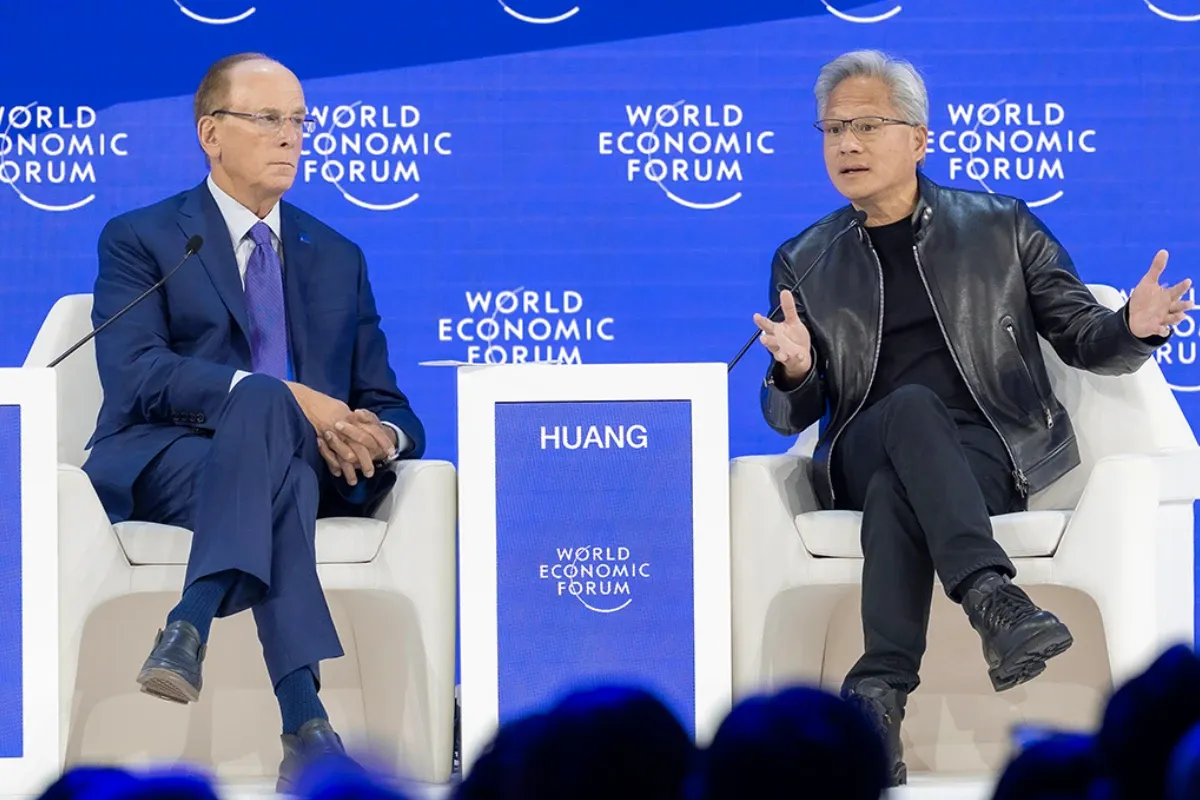
From skilled trades to startups, AI’s rapid expansion is the beginning of the next massive computing platform shift, and for the world’s workforce, a move from tasks to purpose. At a packed mainstage session at the annual meeting of the World Economic Forum in Davos, Switzerland, NVIDIA founder and CEO Jensen Huang described artificial intelligence as the foundation of what he called the largest infrastructure buildout in human history, driving job creation across the global economy.
Speaking with BlackRock CEO Larry Fink, Huang framed AI not as a single technology but as a five-layer cake, spanning energy, chips and computing infrastructure, cloud data centers, AI models, and, ultimately, the application layer. Because every layer of AI’s five-layer stack must be built and operated, Huang said the platform shift is creating jobs across the economy — from energy and construction to advanced manufacturing, cloud operations, and application development. The application layer might focus on integrating AI into financial services, healthcare, or manufacturing. “This layer on top, ultimately, is where economic benefit will happen,” Huang said.
From energy and power generation to chip manufacturing, data center construction, and cloud operations, Huang said the AI buildout is already creating demand for skilled labor. He added that the largest economic benefit will come from the application layer, where AI is transforming industries such as healthcare, manufacturing, and financial services — and changing the nature of work across the economy. Huang pointed to venture capital investment as a signal of how quickly AI is reshaping the global economy.
He said 2025 was one of the largest years for VC funding on record, with most of that capital flowing to what he described as AI-native companies. These firms span healthcare, robotics, manufacturing, and financial services — industries where, Huang said, for the first time, the models are good enough to build on top of. That investment, Huang said, is translating directly into jobs. He highlighted demand for plumbers, electricians, construction workers, steelworkers, network technicians, and teams responsible for installing and operating advanced equipment.
For developing countries, Huang said AI offers a chance to narrow long-standing technology gaps. “AI is likely to close the technology divide,” he said, citing its accessibility and abundance. Turning to Europe, Huang highlighted manufacturing and industrial strength as a major advantage. “You don’t write AI — you teach AI,” he said, urging countries to fuse industrial capability with artificial intelligence to unlock physical AI and robotics. “Robotics is a once-in-a-generation opportunity,” he said, particularly for nations with strong industrial bases.
Fink summarized the discussion by saying that what he heard suggested the world is far from an AI bubble. Instead, he posed a different question: Are we investing enough? Huang agreed, saying large investments are required because the infrastructure buildout is necessary for all of the layers of AI above it. The opportunity, he said, is really quite extraordinary, and everybody ought to get involved.
Google placed an order with Intel to manufacture more than 3 million of its specialized AI chips in 2028.

Apple plans to open a specialized facility for developers in Berlin, Germany.

Telefonica chairman and CEO Marc Murtra said that European sovereignty will only be possible with simplified regulation and a commitment to building technology within Europe.