Infobip Launches PitchMate, An AI Fan Companion for Football
Infobip launched PitchMate, a new AI-powered conversational agent that brings football fans closer to the action of the world’s biggest football tournament.

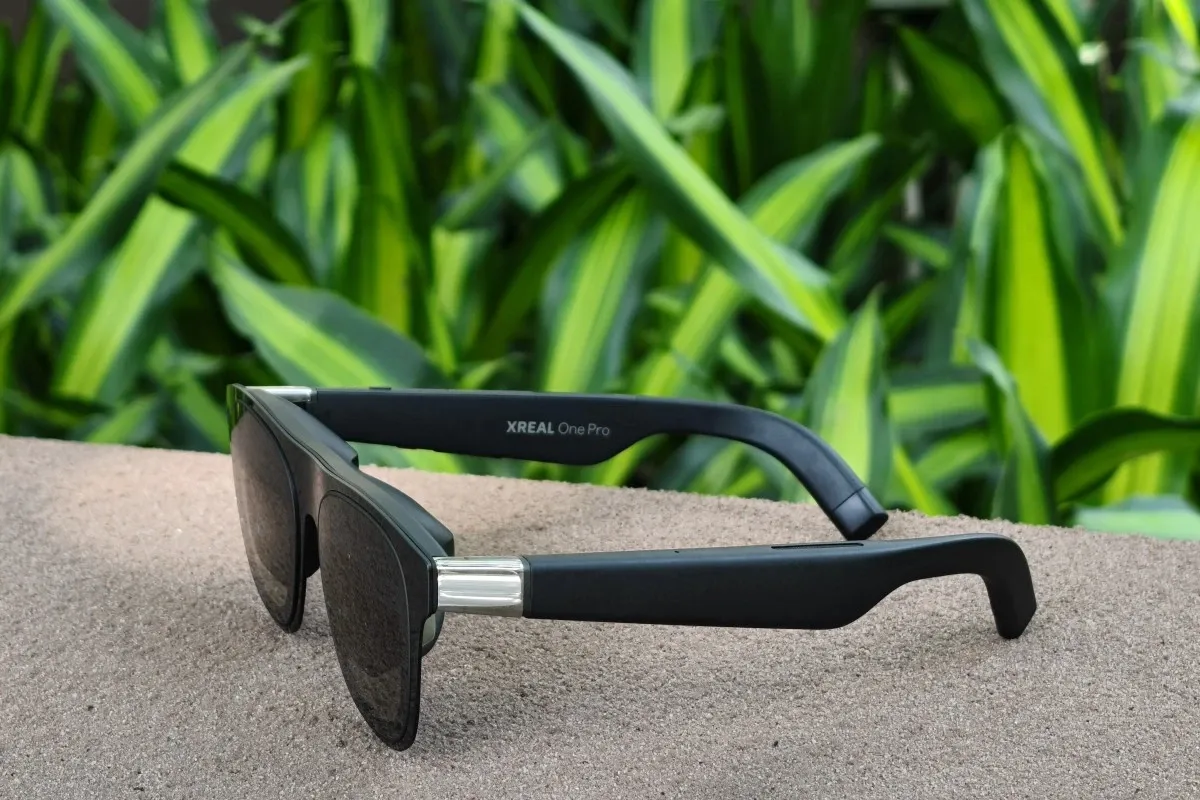
RayNeo is not approaching augmented reality with just another wearable device, but with a broader claim: AR glasses could become one of the most natural interfaces for artificial intelligence. That is how Sophie Li frames the company’s MWC showcase, where RayNeo presented two related but distinct product directions: the AR 4 Pro as a premium entertainment-focused device and the X3 Pro as lightweight AI AR glasses designed to evolve into an everyday digital assistant.
Li describes the AR 4 Pro as part of a “new AR series” and calls it the “world’s first HDR-enabled AR glasses”, with the emphasis on richer visuals and stronger detail. RayNeo is also pushing the audio angle, aiming to deliver a “premium, high-quality audio experience” and what Li calls an “immersive cinematic level entertainment experience”. In practical terms, that positions the AR 4 Pro as a personal large-screen device for commuting, long-haul flights, and gaming, but also as a productivity tool for users who no longer want to work from a small phone display. As she puts it, the glasses can turn a compact screen into a “giant screen” for video, films, and work documents.
The second product line is even more ambitious. Li describes the X3 Pro as “one of the world’s most advanced AI AR glasses”, stressing its 76-gram weight, full-colour display, and AI functions including translation, navigation, teleprompting, and meeting summarisation. That is why she repeatedly frames it as a “live assistant” able to support users across both work and personal scenarios. In meetings, the glasses can record audio and “send a summary to you right away”, create memos and to-do lists, and in international settings they can “translate instantly” what other participants are saying.
Its travel and everyday use cases are just as central to the pitch. Li says users can ask the X3 Pro to capture photos or videos without interrupting their experience of a place, while navigation becomes particularly relevant in situations such as cycling, where it is neither practical nor safe to keep reaching for a phone. In a restaurant with an unfamiliar menu, a user can take a picture and request a translation. That is why Li sums up the device as a “life assistant both for business, travel, and even entertainment”.
The most important part of the conversation, however, concerns the next three to five years. Li argues that AR is “one of the best products to realize AI features” because it brings artificial intelligence closer to the user’s real-world context than a smartphone can. But mass adoption will not be driven by features alone. The glasses, she says, still need to become “lighter”, “more fashionable”, “smarter”, and “more affordable”. At $1,299, the X3 Pro remains too expensive for many consumers, and the category is still searching for the “killer app” that would give users a clear reason to choose glasses over a phone. That tension between design, price, and genuinely useful AI functionality is what makes RayNeo’s strategy notable: the market is no longer looking for a technology demo, but for a wearable device that fits naturally into everyday life.

Infobip launched PitchMate, a new AI-powered conversational agent that brings football fans closer to the action of the world’s biggest football tournament.

Beyond Now, a fast-growing AI-first ecosystem orchestration and digital platform provider, announced the next phase of its work with Hrvatski Telekom.

WhatsApp is preparing to strengthen user privacy by allowing users to connect without sharing their phone numbers.