Transformation Begins Only When You Can No Longer Go Back
In the business world, digital transformation is often too casually reduced to the procurement of new systems, migration to the cloud, or the introduction of artificial intelligence.

In the business world, digital transformation is often too casually reduced to the procurement of new systems, migration to the cloud, or the introduction of artificial intelligence. But reality is far more demanding and is measured not by technology in itself, but by a real shift in the way work is done. When decisions are made faster, processes become shorter, and the customer experience becomes consistently better, then we can speak of a change with strategic weight. Anything below that remains at the level of a technological refresh.
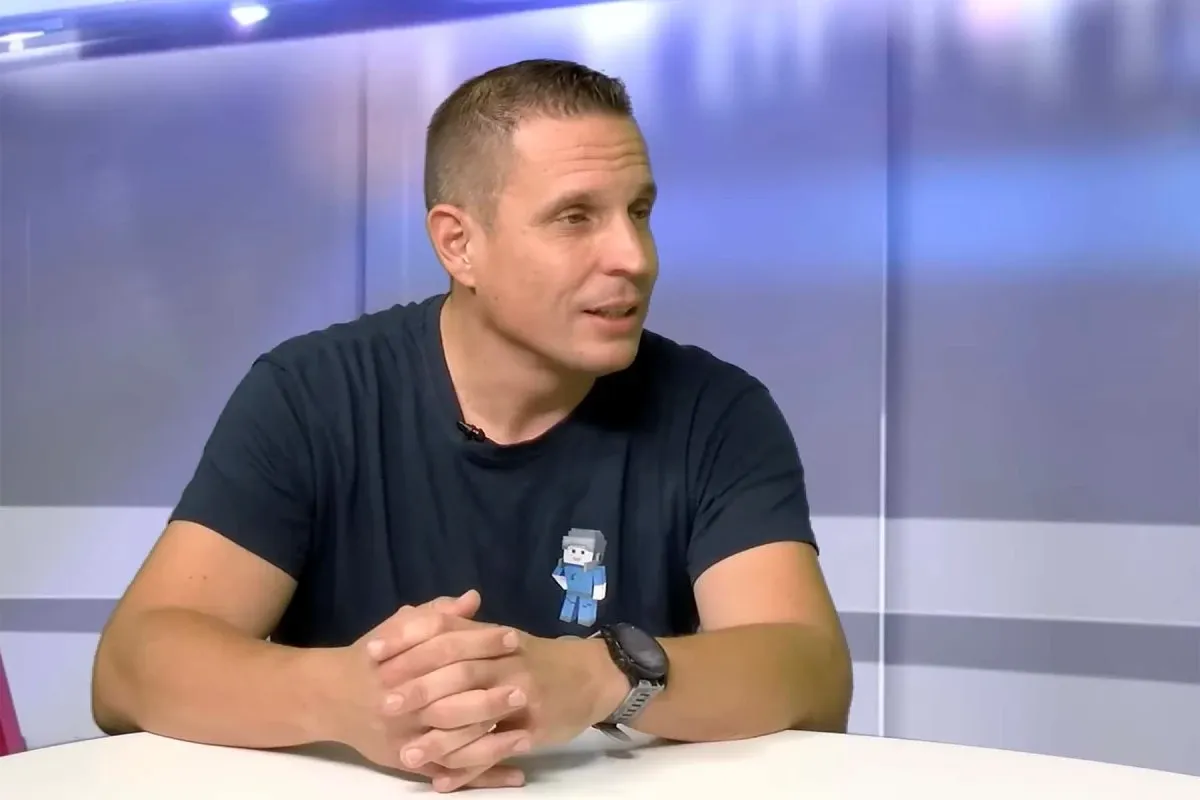
In a conversation with Boris Sesar, CEO of mStart, for ICTbusiness Media – ICTbusiness.info, this very key question is opened: when does a system truly cross the line between computerization and transformation? It is particularly interesting how this distinction appears in complex business environments with heavy operational loads and a large number of connected processes. In such systems, it is no longer enough to accelerate existing steps, but it is necessary to redefine the logic by which the business operates. That is why topics such as inventory management, demand planning, logistics, and coherent architecture are far more than technical questions. They become a matter of competitiveness, resilience, and speed of adaptation. That is precisely why this interview is not only about IT, but about what business looks like when change stops being a project and becomes the new natural state of the system.
Q: How do you define the moment when a system has truly transformed rather than merely been technologically refreshed?
Transformation does not happen when you replace technology, but when you change the way the organization creates value. The real moment is recognized when you can no longer return to the old way without losing competitiveness, when the new operating model stops being a project and becomes the natural state of the system.
You can see it in day-to-day work: decisions are made faster, processes are shortened, and the customer experience becomes consistently better. If technology merely accelerates existing processes, we are talking about modernization. If it makes them unnecessary, then we are talking about transformation.
Q: Where is the line between computerization and transformation? Can you give an example?
Computerization optimizes what already exists. Transformation changes the reason why you do something in the first place.
The example of logistics shows this very clearly. Digitizing a warehouse means introducing a WMS and scanners, and increasing efficiency. Transforming logistics means moving to a predictive distribution model, where goods move in line with demand before they are even ordered. At that point, logistics is no longer a reactive function, but an anticipatory system. That is no longer an IT project, but a business strategy.
Q: Which areas are the most profitable candidates for transformation, and how quickly does ROI arrive?
The fastest return comes where there is major operational friction and a high degree of repetition: inventory management, demand planning, customer support, and real-time retail management.
In the Fortenova environment, that is, above all, retail, Konzum, Mercator, and IDEA are the most dynamic parts of the system and the largest generators of revenue. Any optimization there becomes visible very quickly, both in financial results and in the customer experience. Right behind that comes logistics, where consolidation and continuous optimization can generate significant savings while also ensuring better product availability on shelves.
The first results are visible within a few months, most often between three and six. The full effect comes within one to two years. If it takes years to see the first signal, that is a sign that the initial assumptions are wrong and need to be continuously adjusted.
Q: Technology versus organizational change?
Today, technology is a smaller part of the challenge, around 30 percent. The rest is organization.
You can implement the most advanced systems, but if the way decisions are made does not change, the effect will be absent. The biggest challenge is aligning goals so that finance, operations, and sales measure success in the same way.
Transformation often gets stuck precisely there. Systems are implemented, but KPIs remain silo-oriented. In such an environment, even the best technology cannot deliver its full effect. At a time when AI is entering the operational layer of business more and more, integration and a holistic view of the system are becoming a key prerequisite, not just a competitive advantage.
Q: How do you distinguish where AI creates value and where it is merely an experiment?
AI creates value only where it improves a decision that is made frequently, has a measurable outcome, and relies on high-quality data. If you cannot clearly define what you are optimizing and how you are measuring it, then you are not introducing a solution, but an experiment.
At the same time, it is important to understand that AI is not just another technological innovation. It is a paradigm shift unlike anything we have seen since the introduction of the internet, but with a significantly higher pace of development. It does not evolve gradually, but in leaps, and that is why old planning models no longer apply. Stability no longer comes from static systems, but from the ability to adapt continuously. Change becomes a constant.
Q: Where is AI truly mature today?
The most mature segments in our business are demand planning, inventory management, anomaly detection in finance, and customer support through first-line automation.
On the other hand, “universal” AI assistants without context and fully autonomous business decision-making are still overrated. But development is extremely fast, and it is realistic to expect that even these segments will mature significantly within the next few years.
Q: What are the key prerequisites?
There is no point in introducing AI without high-quality and clearly defined data, integrated systems, clear accountability for decisions, and strong governance and security.
At the same time, there is the opposite extreme, waiting for perfect conditions. If you wait for perfect data, you will miss the moment. AI requires an iterative approach: start with a basic model, learn from it, and continuously improve it.
Q: Agentic AI, where is the limit of autonomy?
Agentic AI makes sense where risk is low, decisions are reversible, and the impact is limited. For example, automatic ordering of goods within defined parameters makes sense. On the other hand, strategic decisions such as pricing still require oversight.
The boundary is clear: if an error can significantly affect financial results or reputation, a human must remain in the decision-making process.
Q: How should the relationship with vendors and integrators be set up?
A partner is not the one who delivers a system, but the one who shares responsibility for the outcome. If a vendor does not understand your business model, then they are a cost, not an investment.
Today, a clear paradigm shift is taking place. IT is no longer a separate function that reacts to business requests, but an integral part of the business itself. The speed of change is such that teams must work together continuously if the market is to be addressed at all.
There is still a perception that IT is a necessary cost, but in reality, it is becoming a key driver of business agility. At the same time, human knowledge and business instinct have never been more important; only their roles are changing.
Q: What distinguishes a strategic partner from a traditional vendor?
A strategic partner understands where your value is created, knows your operational peak-load periods, and proposes solutions before the problem arises. Their success is measured by your results.
A vendor, on the other hand, delivers what has been agreed, but does not take responsibility for the broader context. The difference lies precisely in that level of involvement.
Q: How do you test whether they truly understand the business?
Not through references, but through concrete situations. Through scenarios, simulations, and PoCs on your own models. In the end, the most important thing is how a partner thinks, because technology changes, but a way of thinking remains.
Q: How should responsibility and KPIs be set?
Shared responsibility is the only sustainable model. The SLA must be tied to business metrics, not just technical ones. Because a system can work perfectly while the business is declining.
If, after a project, the result is “the operation was successful, but the patient died,” then the project makes no sense. Transparent change management is crucial because a project rarely remains within the original plan. What matters is having a partner who takes the initiative in such situations.
Q: How do you ensure a coherent architecture?
Architecture is not an IT diagram, but business logic translated into systems. Coherence exists when all systems use the same data language and support the same processes.
Without that, you end up with a set of disconnected solutions that someone later has to integrate, often at high cost and with limited effect.
Q: How critical are ERP, the integration layer, and the data platform?
They are not an option, but a foundation. Without a stable core, there can be no serious automation or AI.
How do you decide what to modernize and what to build from scratch?
Decisions are based on the strategic importance of the system, its flexibility, maintenance cost, and integration capability. If a system cannot support change, there is no point in patching it endlessly; that is, when a new layer must be built that can.
Q: How crucial are APIs and the data model?
They are crucial, especially in a complex system such as Fortenova. They connect headquarters, logistics, sales, and partners into a single operational whole.
Without that, there is no unified system, only a collection of applications. That is why we prefer a standardized approach, a kind of “common rail,” which allows all systems to communicate in the same way.
Q: How do you balance innovation and risk?
Innovation without control is gambling, and control without innovation leads to stagnation. Balance is achieved through a clear understanding of where you can experiment and where you cannot.
You need to be bold enough to move forward, but also disciplined enough not to take uncontrolled risks.
Q: How important is secure by design?
Today, it is a basic prerequisite. Security must be built into the architecture from the start, through identity, access, and continuous monitoring. If it comes later, you are already behind.
Q: How do you decide between cloud and on-premises?
The model is hybrid, and the decision depends on data sensitivity, latency, regulatory requirements, and business continuity.
Cloud is not the goal, but a tool. The question is not whether we are moving to the cloud, but what goes where and why. In this, we are cautious, both because of our own experience and because of the risk of vendor lock-in.
Q: Will the key advantage be ecosystem management?
Yes. The advantage will no longer be the technology itself, but the ability to manage complexity, partners, platforms, data, and cloud environments.
That is why teams are now being built that combine technology, business understanding, and data management. This is no longer support for the business; it is becoming its core.
In the business world, digital transformation is often too casually reduced to the procurement of new systems, migration to the cloud, or the introduction of artificial intelligence.

Global smartwatch shipments grew 4% in 2025, recovering from a decline in 2024, according to Counterpoint Research.

Today, it is no longer enough to ask which technology will be decisive for Europe’s future.