
The Technical Reality Behind Croatia’s Largest Tax Digital Reform
The introduction of Fiscalization 2.0 has delivered the most significant change in invoice exchange in decades, placing information intermediaries at the very center of the process.


The introduction of Fiscalization 2.0 has delivered the most significant change in invoice exchange in decades, placing information intermediaries at the very center of the process. The first weeks of the law’s implementation exposed technical, organizational, and operational challenges that cannot be resolved through improvisation. System stability depended on the quality of the architecture, the experience of technical teams, and the ability to collaborate with other stakeholders. Particular attention was drawn to the scalability of the Domibus application and its integration with metadata services.
In an interview for ICTbusiness Media – ICTbusiness.info, Matija Ekart from Elektronički računi, the company behind the MER system and one of the largest information intermediaries in Croatia, explains in detail how they addressed these challenges. He speaks openly about real-world issues encountered in production, but also about why he does not see room for catastrophic scenarios. His answers provide a rare insight into the technical backbone of the reform and raise the question of long-term consolidation in the information intermediary market.
How did you address ambiguities in the technical specifications of the Domibus application in practice, and how did you make decisions regarding system configuration?
Fortunately, MER has a highly competent technical team with extensive experience in configuring various data exchange solutions. Another important factor is that we are part of the very large Visma group, which includes more than 180 companies and several information intermediaries operating in different countries.
There is one level of complexity involved in setting up Domibus, or any other AS4 access point, to run independently on a single machine. It is something entirely different to build a scalable environment consisting of multiple redundant Domibus nodes capable of handling several million exchanged documents per month.
For a simple setup, the published guidelines may have been sufficient. However, in our case, we really had to dig deep below the surface and achieve a thorough understanding of the Domibus software solution we use as our access point.
As already mentioned, unlike most other intermediaries that rely solely on their own resources, we have more than 16,000 colleagues across around ten countries within our organization whom we can consult when challenges arise. This certainly helped us obtain the necessary information and find the right solutions without excessive trial and error.
In any case, we are proud that our environment, after the initial ramp-up period, has proven to be reliable and stable, successfully handling the load expected of the largest intermediary on the market.
To what extent did issues with TLS settings and SSL certificates affect the stability of e-invoice exchange, and what corrective measures did you have to take?
This was not just about TLS settings and SSL certificates, but about configuring the entire defined exchange system, which is relatively complex. The exchange involves access points that had to be set up by all information intermediaries and by taxpayers who decided to operate independently. For access points to exchange invoices with each other, they must be connected to Metadata Services, which are a separate software solution with their own specifics, and ultimately to the Metadata Services Directory provided by the Tax Administration.
In the early days, before full interoperability was established, this is where most problems and configuration errors occurred. For example, some intermediaries used one set of certificates for their metadata service and another for their access points. Each system worked independently, but unfortunately, they did not work together once connected. It is like finding the name “Ivan” in a directory and then suddenly being introduced to “Marko” in communication.
We communicated directly with most intermediaries while establishing data exchange and, in most cases, especially with larger ones, resolved the issues relatively quickly and established technical interoperability. The intermediary community functioned quite well, as we all shared a common interest in getting everything up and running as soon as possible. In some cases, we helped colleagues, and in one instance, colleagues pointed out a flaw in our initial configuration. In any case, communication was established within a few days.
What would certainly have been better is if all of this had been completed before production went live. However, only a few intermediaries were interested in testing ahead of the law’s implementation. We tested as much as we could with those who were willing, but the lack of certain test environments where the entire developed solution could be tested end-to-end was also a limiting factor.
Do you believe that more centralized and detailed technical guidelines would have significantly reduced the initial issues and accelerated system stabilization?
Smaller systems would likely have benefited from having access to preconfigured, ready-to-use software solutions for access points and metadata services that they could simply download and install. This would certainly have helped users who decided to set up their own access points and smaller intermediaries with very limited resources to establish interoperable services more quickly and easily.
It would also have been better if the certification process itself had been more rigorous, rather than testing only rudimentary functionalities. In that way, many issues that could have been resolved during certification were instead pushed into the start of production.
However, it is also important to point out another fact: information intermediation is a serious business that requires serious resources and in-depth expertise. If you want to operate in a way that ensures customer satisfaction, you cannot start with a single server, two development engineers, and a telephone answering service recording calls from mostly dissatisfied users.
At the European level, market consolidation is already underway, and we believe that only those who can deliver this service in a sufficiently professional and high-quality manner will survive. According to some estimates, given the size of the market, there is room for a limited number of high-quality and proven intermediaries.
Therefore, unrealistic expectations should not be placed on the regulator either. It is not the regulator’s responsibility to provide ready-made solutions for everything. The Tax Administration has made a significant effort in educating users, holding numerous workshops, and answering countless questions. But those who want to act as information intermediaries, and ultimately earn revenue from it, must also do their part.
Given the different Domibus configurations and issues with TLS ports, do you believe that FINA or the Tax Administration issued sufficiently precise technical specifications, or were you forced to improvise to establish connections with other points?
First, it is important to distinguish the roles of FINA, APIS, and the Tax Administration within the system. FINA is one of the information intermediaries, just like us, and therefore did not have the responsibility in this segment to issue specifications. FINA has a special role as a central platform for public sector contracting authorities, but beyond that, it did not influence the exchange itself. The greater challenge was informing public sector users how to ensure that invoice exchange goes through the central platform and how to select the appropriate access point. Users wanted to meet their obligations on time but could not do so, and some did not select the central platform as an intermediary in the AMS system, even though they were required to do so according to the published guidelines.
Regarding specifications, we believe that a bigger challenge than their level of detail was the fact that they were published relatively late, then changed over time, and again revised at the very end, in December. This left intermediaries with very little time for testing.
At the same time, one must consider another important fact. Croatia financed the entire reform with EU funds from the National Recovery and Resilience Plan, which defined 1 January 2026 as the final deadline for drawing down the funds. At that point, further postponements were no longer possible. These were objective circumstances that shaped the entire process. It should also not be overlooked that Croatia is one of the few countries that financed a comprehensive tax reform aligned with the EU’s VAT in the Digital Age initiative, which is scheduled to be implemented across the EU by 2030, using EU funds.
We often complain about being at the tail end of European development trends. This time, we were pioneers, and that truly deserves recognition, as the reform will bring significant benefits for the digitalization of the economy.
How often do your technical teams need to intervene due to invalid SSL certificates on metadata services or unavailability of the central platform, and what financial and operational burden does this create for your business?
Certificates themselves or the central platform are not significant obstacles affecting system operations. Most of these issues were resolved within the first week, and we now see that exchange, at least among the major intermediaries, is largely stable.
Some challenges remain with the compliance of invoices themselves. Until now, the EU standard was used primarily for exchanges with the public sector, but now the use of e-invoices has been extended to the entire economy. Some ERP systems and companies were not able to implement all the required adjustments in time to send fully compliant invoices into the system, which is a prerequisite for electronic exchange.
There is a well-known saying that “paper tolerates everything,” and this was also true for paper invoices. We still see certain difficulties when all the diversity of invoice formats that exist in the real economy must be fitted into the relatively rigid structures defined by the EU standard.
However, we have already gone through a similar reform in 2019 and were prepared for what was coming. We established the largest customer support service on the market, introduced AI-assisted tools, and we are proud of the quality of responses our virtual assistant “Meri” provides to users. We are doing everything we can to help our customers adapt as smoothly as possible to this major change.
We held numerous workshops before the law came into force and will continue doing so in January. We therefore believe that users will soon fully adapt to all the changes we are collectively facing. We are also actively working with ERP partners, who are currently under significant pressure as well, but we believe that together we will soon start reaping the benefits of this extensive and valuable reform.
This is where the difference in intermediary quality becomes apparent: whether they are able to provide appropriate support to their users and ensure the quality of their business operations, or not.
If the current “teething problems” in exchange and receipt are not resolved before the full scope of Fiscalization 2.0 is applied, do you foresee the possibility of a system collapse, and who would be responsible for damages to businesses?
We truly do not see any risk or realistic possibility of such a catastrophic scenario. The changes in business operations are indeed significant. Preparation time was relatively limited, but we see that the number of successfully exchanged invoices continues to grow.
The Tax Administration is also actively communicating with all market participants to resolve outstanding ambiguities as quickly as possible. One important issue that needs to be addressed is that all intermediaries must handle e-invoice validation in the same way. If one intermediary accepts an invoice while another rejects the same invoice, it is only natural that users become confused.
A sense of insecurity among users is also fueled by certain associations and social media, which constantly emphasize errors and penalties. As a result, users and their accounting departments continuously monitor the fiscal application out of fear of fines. Monitoring system performance during such a large reform is useful and necessary, but it should be approached with a reasonable measure and with time allowed for stabilization, rather than immediately declaring that “nothing works” if a single invoice fails to match.
The Tax Administration has clearly stated that it will apply the principle of opportunity in the enforcement phase, meaning that guidance will be provided for errors or lack of knowledge, while punitive measures will be reserved only for those who deliberately and seriously ignore legal obligations.
We can also draw a parallel with a similar reform implemented in 2013, Fiscalization 1.0. At that time, there were also many questions in the media, but what followed was the development of a market for cash register solutions that actually made life easier for small vendors. There were many solutions initially, but only those of sufficient quality survived.
We believe the same will happen with this reform, which is broader and more beneficial than Fiscalization 1.0. We are already seeing the emergence of numerous new services, intermediaries, and digitalization tools. The digitalization of business processes will stimulate the creation of additional value in the economy, and after some time, we will look back with a smile as colleagues in other EU countries adapt to what we have already successfully completed.
Those who are more agile will certainly use this opportunity to expand their business or services into some of those markets as well.

The introduction of Fiscalization 2.0 has delivered the most significant change in invoice exchange in decades, placing information intermediaries at the very center of the process.
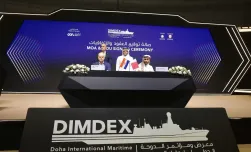
Croatia-based Orqa announced the signing of a Memorandum of Understanding (MoU) with Barzan Holdings, Qatar’s Defence and Security Company.

The UK government opened a consultation into the use of social media by under-16s.


