The telecom industry is going through one of the most dynamic phases in its history, with operators rapidly expanding beyond their traditional role into digital and AI-driven services. In this environment, performance is no longer determined solely by network footprint, but by an operator’s ability to translate technology into measurable value for customers and the broader economy. Telemach Croatia continued its strong growth trajectory in 2025, reinforcing the idea that sustained investment in infrastructure and service quality delivers tangible results.
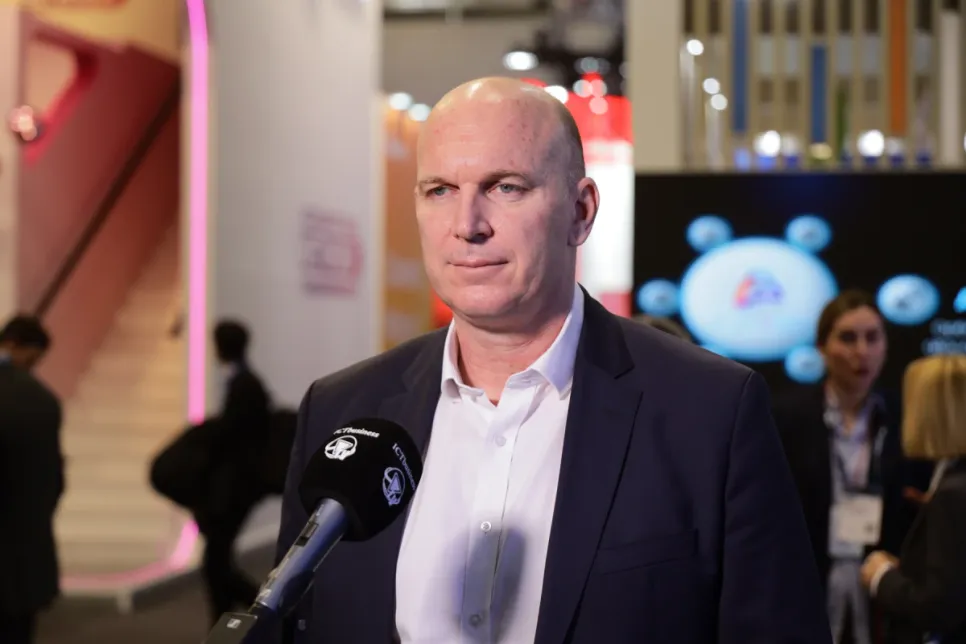
Simultaneously, the market is becoming more demanding, with users increasingly expecting stability, security, and a personalized experience. Artificial Intelligence is emerging as a key catalyst for change, both in network operations and in the customer relationship. We spoke with Adrian Ježina, President of the Management Board and CEO of Telemach Croatia, about strategic decisions, investments, and how he sees the telecom industry evolving in the years ahead.
How would you assess Telemach’s performance in 2025, and what were the key highlights?
Last year was very strong for Telemach. For the third year in a row, we stood out as the operator with the highest net gain of mobile users. We achieved significant growth in both the residential and business segments, where major market players recognized us as a partner for digitalization. That is particularly important to us because it confirms that the quality and reliability we have been building over the long term genuinely make sense.
We also received additional confirmation through two international awards for the quality of our 5G and fiber networks, based on independent measurements of real user experience. It is a strong signal that our multi-year investments in the network were not only ambitious but also the right business decision.
Which market changes had the greatest impact on your business, and what were the biggest challenges and opportunities?
Digitalization continued at a strong pace, and today there is virtually no industry that does not depend on high-quality connectivity. On the other hand, users expect more than ever: stable service, ease of use, and an experience tailored to their needs. In parallel, Artificial Intelligence is entering day-to-day operations faster and faster, changing how we work.
AI is also the greatest opportunity for the telecom industry. In the years ahead, it will redefine many aspects of our business, from internal processes and new services to how we communicate with customers. Telecom already uses AI for advanced network management and real-time data analytics, enabling proactive problem resolution, higher network stability, and more efficient use of resources. AI also improves customer support through intelligent chatbots and smarter routing of complex queries, reducing waiting times and raising overall service quality. It plays an important role in cybersecurity as well, enabling faster threat detection and timely response in an environment of increasingly sophisticated AI-assisted attacks.
Which projects and investments would you highlight as the most important in 2025?
As in previous years, the most important investments were in infrastructure. We continued developing our 10 Giga fiber network, which we can now offer to around 300,000 households, and we further strengthened our 5G network, which today covers almost the entire population of Croatia. These are the foundations of any serious digital development, for citizens and for the economy.
Which projects and activities are defined beyond 2025, beyond the classic infrastructure investments?
Alongside continuous investment in network infrastructure, we placed a strong focus on developing advanced ICT solutions for business customers and on improving the overall customer experience. Today, our ICT portfolio includes all the services needed for modern business: from cloud services such as Infrastructure-as-a-Service (IaaS), to cyber resilience and security capabilities such as a Security Operations Center (SOC), Disaster Recovery-as-a-Service (DRaaS), and Backup-as-a-Service (BaaS), as well as IT consulting provided by our experts. All of our solutions are modular, scalable, and personalized, with an emphasis on security, availability, and cost optimization.
In addition to technology development, we launched two initiatives with clear societal impact because we believe technology only makes sense if it delivers real value. The Sretno More project demonstrated how 5G can be used as a tool for environmental protection. By connecting technology, local communities, and education, the initiative removed more than 4.5 tons of waste from the Adriatic, with more than 170 young people participating in educational activities.
Job Lab, on the other hand, addresses the mismatch between labor market needs and young people’s competencies, focusing on skills that are difficult to replace with AI. After being included in the curriculum of the Regional Competence Center at the Medical School Bjelovar, its expansion to other vocational schools in Croatia is planned for 2026.
How did these projects affect Telemach’s market position?
I believe they further strengthened our position as an operator that not only delivers quality service but also aims to be an active partner for the community. In an increasingly competitive market, network quality remains the foundation, but values are becoming ever more important as well: how you treat customers, employees, and the society in which you operate.
What are your expectations for 2026?
We enter 2026 with optimism, primarily because of what is happening across the ICT sector. Digital transformation is moving into a phase where the focus is increasingly on concrete outcomes: what technology actually delivers for business and for users. This is especially true for AI, automation, and data, where the emphasis will be on productivity, more efficient processes, and a better customer experience.
I also expect growing demand for reliable low-latency infrastructure, as well as for edge and cloud solutions, because serious AI adoption is not possible without them. ICT will remain a horizontal engine of change across nearly all industries, from manufacturing and logistics to healthcare and public services.
Which key trends do you expect in the telecom industry?
Artificial Intelligence will be the main catalyst of change. Telecom operators are evolving from traditional connectivity providers into technology platforms offering digital and AI-based services. This process is already underway, but it will accelerate further in the coming years.
What are your priorities for the year ahead?
We are fully aware that, under the strong influence of technology, many things are changing extremely rapidly today. New services, business models, and ways of using technology will continue to emerge at an ever faster pace, yet certain telecommunications services will remain standard, fundamental, and indispensable – for both citizens and businesses. That is why our priorities are clear and consistent: to continue investing in a superior network, in people, and in the community. I believe this combination represents the best long-term path to sustainable growth and that users will continue to recognize the value and quality we deliver to them in the future.